Nigeria Secures Release of Detained Air Force C-130 and 11 Personnel From Burkina Faso After Diplomatic Mission
Nigeria’s diplomatic push frees its detained C-130 and 11 military personnel in Burkina Faso, easing tensions and underscoring West Africa’s regional cooperation.
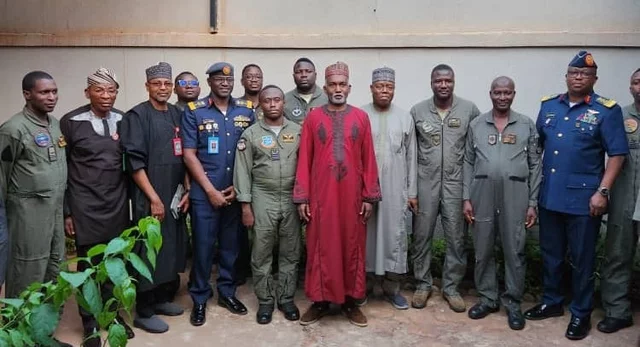
A high-level Nigerian delegation has successfully secured the release of a Nigerian Air Force (NAF) C-130 aircraft and 11 military personnel detained in Burkina Faso, ending a diplomatic standoff that drew regional and international attention. The breakthrough follows intensive talks between Nigeria’s Foreign Affairs Minister Ambassador Yusuf Tuggar and Burkina Faso’s military leader, President Ibrahim Traoré, aimed at de-escalating tensions and reaffirming bilateral ties. (Business Insider Africa)
The aircraft and crew were released after nearly nine days in Burkina Faso following a forced precautionary landing in Bobo-Dioulasso on 8 December 2025, when the NAF transport plane - on a ferry mission to Portugal - encountered a technical issue shortly after departing Lagos. Nigerian authorities have maintained that the diversion adhered to international aviation safety protocols, prioritizing crew safety. (The Traffic NG)
Diplomacy Prevails Over Escalation
The Nigerian Foreign Ministry’s spokesperson, Kimiebi Ebienfa, confirmed late Wednesday night that both the aircraft and the 11 military personnel have been released following sustained diplomatic engagement led by Tuggar. The delegation also included senior officials from the Ministry of Defence and the Nigerian Air Force Headquarters. (Vanguard News)
Speaking in Ouagadougou, Minister Tuggar said the visit was undertaken at the instance of President Bola Tinubu to secure a “peaceful resolution” of the matter and to uphold long-standing ties between the two West African neighbours. (Western Post)
Tuggar acknowledged procedural irregularities regarding the aircraft’s authorization to enter Burkinabe airspace, expressing Nigeria’s regret over the misunderstanding while reaffirming respect for Burkina Faso’s sovereignty and international aviation norms. (The Whistler Newspaper)
What Triggered the Diplomatic Incident
Initial reactions from Burkina Faso’s military administration - and its allies in the Alliance of Sahel States (AES), a breakaway regional bloc comprised of Burkina Faso, Mali and Niger - framed the landing as an unauthorized breach of airspace, defining it as an “unfriendly act” and warning of potential sanctions against future violations. (PRNigeria News)
These comments heightened concerns about diplomatic strain and raised questions about airspace management protocols amidst shifting regional alliances. The AES’s rhetoric reflected growing tension in West Africa, where coups and political instability have reshaped traditional security partnerships. (NaturalNews.com)
However, the Nigerian Air Force consistently maintained that the crew acted professionally and in compliance with international aviation safety standards, emphasizing that the diversion was precautionary and necessary for the safety of personnel and aircraft.
Domestic and Regional Reactions
Back in Abuja, members of the House of Representatives had urged the Federal Government to intensify diplomatic engagement and leverage regional and continental frameworks, such as the African Union and ECOWAS, to secure the prompt release of the personnel and aircraft, stress ing the importance of safeguarding Nigeria’s diplomatic standing and military credibility. (Businessday NG)
Analysts praised Nigeria’s diplomatic handling of the incident, noting that its preference for dialogue over confrontation helped avoid a potentially grave escalation within a region already grappling with security, political and economic challenges.
Implications for Regional Security and Integration
The resolution of the incident carries significant implications for West African cooperation and regional integration. It underscores both the fragility and resilience of interstate relations in a context where traditional bodies like the Economic Community of West African States (ECOWAS) are being tested by emerging blocs such as the AES. (Parliament Reports)
ECOWAS, of which Nigeria is a leading member, has historically played a central role in promoting democratic governance, peacekeeping, and collective security in the region. The recent departure of Burkina Faso, Mali, and Niger from ECOWAS, after sanctions and disagreements over coups, has created parallel structures and heightened the risk of fragmentation in West Africa’s security architecture.
The diplomatic engagement between Nigeria and Burkina Faso, therefore, reflects a renewed commitment to bilateral dialogue and negotiation even amid broader political realignments. Observers suggest that this outcome may encourage greater use of diplomatic channels over coercive measures when addressing similar incidents, thereby preserving peace and stability. (Western Post)
Additionally, the episode highlights the importance of clear airspace protocols and cooperation, particularly for military aircraft operating in regions with evolving alliances and differing interpretations of sovereignty. Strengthening communication mechanisms among Sahel states and regional bodies could help prevent similar incidents in the future, analysts say.
Looking Forward: Cooperation Over Conflict
The incident also serves as a reminder of the strategic role Nigeria plays on the continent, not just as a military and economic heavyweight, but as a diplomatic actor capable of navigating complex geopolitical landscapes. By choosing diplomacy, Nigeria preserved crucial ties with Burkina Faso and set a precedent for crisis management that prioritizes negotiation and mutual respect.
As African nations continue to confront shared threats, such as insurgency, transnational crime, and political instability - the ability to resolve disputes through established diplomatic channels will be vital for regional cohesion and integration. The successful resolution of the Burkina Faso aircraft incident reinforces the value of patience, dialogue and engagement in safeguarding peace and cooperation across West Africa.