Nigeria’s Defence Minister Resigns as Kidnappings and Attacks Surge
Nigeria’s Defence Minister Mohammed Badaru Abubakar has resigned amid a worsening security crisis that has seen mass kidnappings and attacks across the country. President Bola Tinubu has accepted the resignation and moved quickly to nominate former military chief Gen. Christopher Musa as his successor. Experts warn the change raises questions about strategy as insecurity deepens.
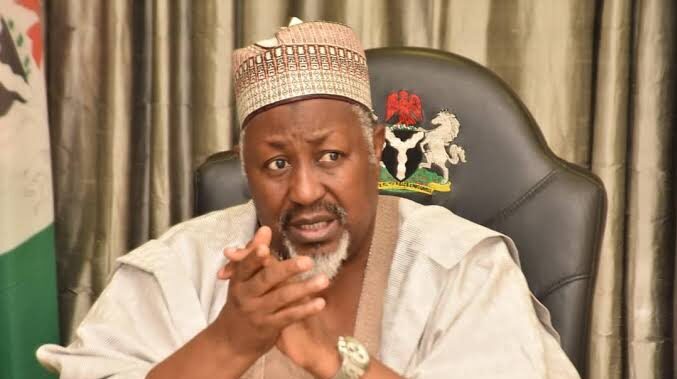
Nigeria’s government was rocked on Monday when Defence Minister Mohammed Badaru Abubakar submitted his resignation - a move the presidency said was for health reasons - at a time when the country is grappling with a wave of mass kidnappings, communal violence and attacks that have exposed deep strains in its security apparatus. President Bola Tinubu accepted the resignation and promptly nominated retired General Christopher Musa, the immediate past Chief of Defence Staff, as the incoming minister. (Reuters)
The timing of the resignation, coming less than a week after President Tinubu declared a nationwide security emergency and ordered large-scale recruitment and redeployments within the police and armed forces, underlines the intensity of public and political pressure on the government to show results. Security officials say the scale of kidnappings and attacks - including several recent mass abductions of schoolchildren - has raised alarm both at home and among international partners.
Minister’s departure and official rationale
In a resignation letter dated December 1, 2025, Badaru - a former two-term governor of Jigawa state who was appointed defence minister in 2023, said he was stepping down for health reasons. The presidency released a statement acknowledging his resignation and thanking him for his service. Nigerian media reported that President Tinubu will inform the Senate of the president’s nominee for confirmation. (Punch Newspapers)
While the official reason for his exit was medical, analysts say the resignation follows mounting criticism of government performance on security and comes amid rumoured unrest within segments of the security services. In recent weeks, critics and some community leaders have accused the federal government of being too slow to stem the bloody raids, banditry and abductions that have devastated parts of the north and central regions. (TRT Afrika)
Swift nomination of a former military chief
President Tinubu moved swiftly to nominate General Christopher Gwabin Musa - who led the armed forces until his retirement in October - as defence minister. The nomination of a recently retired military chief signals the president’s preference for hands-on security management and may reflect a desire to bring an experienced military voice into the civilian cabinet at a fraught moment. The nomination must still be confirmed by the Senate.
General Musa’s return to high office would be politically significant. He commands recognition within military ranks and among some security analysts as an operationally experienced commander. But his nomination also raises questions about civil-military balance and whether bringing a career soldier into a top political role will translate into faster, more effective action or risk politicizing the armed forces further.
The security backdrop: kidnappings, raids and a national emergency
Nigeria’s recent security trajectory provides the context for the shake-up. Last week President Tinubu declared a nationwide security emergency and ordered the mass recruitment of police and military personnel, redeployment of elite units into conflict zones, and a broader reorganization aimed at countering bandit gangs and insurgents who have exploited forested and remote terrain. The government says hundreds have been abducted in a wave of coordinated attacks, with dozens of schoolchildren still missing from some incidents.
The crisis has prompted public outrage and heavy media scrutiny. Humanitarian groups and civil society organizations have warned that the security vacuum is producing long-term social and economic damage in affected states: markets disrupted, schools closed, and communities displaced. International partners have urged Nigeria to intensify both security operations and community-based prevention measures. (Arab News)
Political and institutional fallout
Badaru’s resignation is likely to sharpen debates in Abuja over the government’s strategy. Some politicians will frame the departure as necessary accountability; others will see it as politically expedient - a way for the administration to deflect criticism without addressing deeper institutional failings in intelligence, coordination and policing. Opposition figures have already questioned whether personnel changes alone can address the root causes of the violence. (The Nation Newspaper)
Security specialists point to a range of underlying challenges: weak local policing capacity, insufficient intelligence fusion between civil and military agencies, porous borders, and economic drivers that feed criminal networks. They emphasize that any new minister - even one with strong military credentials - will need a coherent, resourced plan that combines kinetic operations with social-economic and judicial responses.
What to watch next
Key immediate developments to follow include Senate confirmation hearings for General Musa, the new minister’s public security strategy and whether the Tinubu administration will back the nominee with fresh resources and legal tools. Observers will also watch for any reorganization at the National Security Adviser’s office and whether the administration proceeds with proposed mass recruitments and redeployments in the coming weeks.
Longer term, Nigeria’s response will be judged on measurable improvements: fewer mass abductions, restored access to education in rural areas, and the re-establishment of safe market and travel corridors. Absent those outcomes, personnel changes may be viewed as cosmetic, and public frustration could deepen.
Conclusion
Mohammed Badaru Abubakar’s resignation as defence minister is a dramatic signal of the pressure bearing down on President Tinubu’s government as Nigeria wrestles with a deteriorating security landscape. The nomination of Gen. Christopher Musa underscores the administration’s pivot toward experienced military leadership - but whether that will translate into real improvements on the ground depends on swift, coherent policy action and the political will to back it. For millions of Nigerians living in fear of raids and kidnappings, the stakes could not be higher.