Nigeria Needs Continuity, Not Reset, APC Fires Back at Peter Obi Over Criticism of Tinubu's Reforms
The APC has defended President Bola Tinubu's economic reforms, insisting Nigeria needs policy continuity rather than a "reset" after Peter Obi criticised the administration and urged a change in leadership ahead of the 2027 elections.
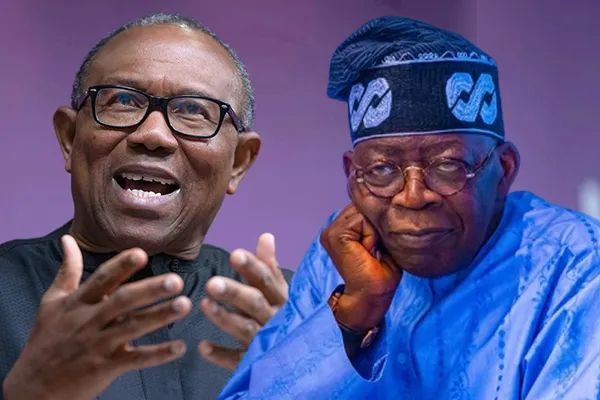
The All-Progressives Congress (APC) has strongly defended President Bola Tinubu's economic reform agenda, insisting that Nigeria requires policy continuity rather than a complete reset, following fresh criticism from former Labour Party presidential candidate Peter Obi.
The ruling party's reaction came after Obi, during a televised interview, faulted the Tinubu administration's handling of the economy and governance, arguing that the country was heading in the wrong direction and suggesting that a change in leadership was necessary.
Responding to the remarks, the APC maintained that the reforms introduced by the current administration require time to deliver lasting benefits and warned against abandoning policies midway through implementation. (Punch Newspapers)
APC Defends Tinubu's Economic Agenda
The APC's National Vice Chairman (South-East), Dr Ijeomah Arodiogbu, said Nigeria could not afford to reverse course at a time when key economic reforms were beginning to take root.
According to him, the administration's decisions, including the removal of fuel subsidies, foreign exchange reforms, and fiscal restructuring, were designed to correct long-standing structural weaknesses in the Nigerian economy.
He argued that while the reforms had imposed short-term hardship on citizens, they were necessary to lay the foundation for sustainable economic growth.
Arodiogbu stressed that what Nigeria needed was consistency in policy implementation rather than frequent shifts in direction whenever political leadership changes.
Obi Calls for Change
Peter Obi questioned the direction of the Tinubu administration during an interview on Channels Television, expressing concern over rising inflation, the high cost of living, unemployment, insecurity and the depreciation of the naira.
The former Anambra State governor argued that Nigerians were experiencing unprecedented economic hardship and that government policies had failed to improve living conditions.
Obi said the country needed competent leadership capable of restoring confidence, boosting production and addressing the nation's socio-economic challenges.
He maintained that the government should prioritise policies that directly improve the welfare of ordinary Nigerians.
'Reset' Versus Continuity
The exchange between Obi and the APC reflects the increasingly sharp political debate ahead of the 2027 general elections.
While opposition figures have continued to advocate sweeping changes in economic management, the ruling APC argues that abandoning ongoing reforms would undermine investor confidence and reverse progress already achieved.
According to Arodiogbu, countries that experience sustainable economic transformation often do so by maintaining policy consistency across multiple administrations rather than introducing entirely new economic frameworks every electoral cycle.
He insisted that continuity remains essential for attracting both domestic and foreign investment.
APC Says Reforms Need Time
The ruling party acknowledged that many Nigerians continue to face economic difficulties but argued that reforms of such magnitude rarely produce immediate results.
Since assuming office, the Tinubu administration has implemented several major policy changes, including the removal of fuel subsidies, exchange-rate liberalisation and tax reforms aimed at broadening government revenue.
Government officials have repeatedly argued that these measures are intended to stabilise public finances, reduce market distortions and create a more competitive economy over the long term.
The APC said reversing those policies now would create uncertainty and discourage investment.
Political Temperature Rising Ahead of 2027
The latest exchange highlights the intensifying political contest as parties begin positioning themselves for the next presidential election.
Obi remains one of Nigeria's most prominent opposition voices, while the APC continues defending the Tinubu administration's record despite widespread public concern over inflation, food prices and purchasing power.
Political analysts believe economic performance will remain the dominant issue shaping the 2027 campaign, with both the ruling party and opposition expected to present contrasting visions for Nigeria's future.
The APC's latest response suggests it intends to campaign on the argument that difficult reforms require patience before their benefits become fully evident.
Mixed Reactions
The debate has generated mixed reactions across Nigeria's political landscape.
Supporters of the government argue that structural reforms inevitably involve temporary sacrifices and that abandoning them would prolong economic instability.
Critics, however, contend that many Nigerians have yet to experience tangible improvements despite months of painful adjustment measures.
Economists remain divided, with some praising the administration's willingness to tackle long-standing fiscal distortions, while others argue that stronger social safety nets and measures to stimulate production are needed to cushion the impact on vulnerable households.
Looking Ahead
With less than two years before the next general election campaign gathers full momentum, political rhetoric is expected to intensify.
For the APC, the central message remains that Nigeria must stay the course by allowing ongoing reforms to mature.
For Peter Obi and other opposition figures, the challenge will be persuading voters that a different economic strategy would produce faster and more inclusive growth.
As Nigerians continue to grapple with inflation, unemployment and rising living costs, the debate over whether the country needs continuity or a complete reset is likely to remain one of the defining political conversations leading into the 2027 elections.