Nick Kyrgios Suspended After Positive Cocaine Test at Mallorca ATP Tournament
Australian tennis star Nick Kyrgios has been provisionally suspended after testing positive for cocaine at an ATP tournament in Mallorca, admitting he made a “huge mistake.”
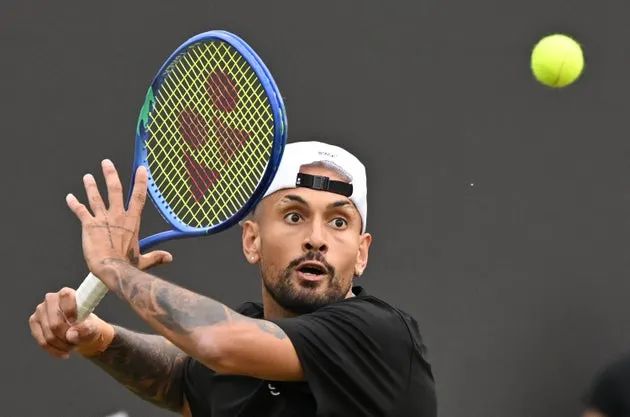
Australian tennis star Nick Kyrgios has been provisionally suspended from professional tennis after testing positive for cocaine during an ATP 250 tournament in Mallorca, Spain, in June.
The International Tennis Integrity Agency (ITIA) confirmed the suspension on Wednesday, August 19, 2026, after a World Anti-Doping Agency (WADA)-accredited laboratory detected benzoylecgonine, a metabolite of cocaine, in a sample provided by the 31-year-old player.
Kyrgios subsequently acknowledged the failed test publicly, describing the incident as a “huge mistake” and saying he accepted full responsibility for his actions. The development represents another major setback for a player whose career has already been severely affected by injuries and prolonged periods away from competitive tennis.
Kyrgios tested positive in Mallorca
According to the ITIA, Kyrgios provided an anti-doping sample on June 22, 2026, while competing at an ATP 250 event in Mallorca.
The sample was analysed at a WADA-accredited laboratory, which confirmed on July 17 the presence of benzoylecgonine.
Cocaine is classified by WADA as a stimulant and substance of abuse. It is prohibited in competition under the Tennis Anti-Doping Programme. (ITIA)
Because the positive test involved a substance prohibited in competition, the ITIA said a provisional suspension was mandatory. Kyrgios' suspension officially took effect on August 4, although the news became public after the Australian made his own statement on social media.
The suspension prevents him from competing in or attending professional tennis events while the case is being considered.
Kyrgios accepts responsibility
Kyrgios addressed the situation directly with fans in an Instagram statement, apologising to his family, supporters, sponsors and young people who look up to him.
The former Wimbledon finalist admitted that he had made a serious mistake and said he would not attempt to make excuses for the positive test.
He also described the episode as a wake-up call.
The Australian explained that the physical and mental consequences of his prolonged injury problems had taken a significant toll on him. He said dealing with the possibility that his tennis career could be nearing its end had been particularly difficult. (The Guardian)
His comments provide an insight into the difficulties surrounding his attempted return to sport after several years of serious physical problems.
Long battle with injuries
Kyrgios' suspension comes at a particularly difficult stage of his career.
The Australian was once regarded as one of the most naturally gifted and entertaining players of his generation. He reached a career-high singles ranking of world No. 13 in October 2016 and became a major attraction on the ATP Tour because of his powerful serve, spectacular shot-making and unpredictable style.
His biggest Grand Slam achievement came at Wimbledon in 2022, when he reached the men's singles final.
Kyrgios lost that final to Novak Djokovic but established himself as a genuine contender at the highest level.
However, injuries subsequently severely disrupted his career.
Wrist and knee problems kept him away from the court for extended periods, while multiple surgeries made it difficult for him to regain consistency.
Reuters reported that he had played only a small number of ATP singles matches since his 2022 breakthrough, highlighting the extent to which injuries have limited his ability to compete regularly.
A comeback already under pressure
Kyrgios' return to tennis in 2026 was already challenging before the doping case emerged.
His limited appearances meant that his world ranking had fallen dramatically, and he increasingly relied on wildcards to enter tournaments.
At 31, he was attempting to determine whether his body could still withstand the demands of professional tennis.
His positive cocaine test has now added another major obstacle.
The timing is particularly damaging because Kyrgios had been attempting to rebuild his career after years of physical setbacks.
Instead of focusing solely on rehabilitation and competitive results, he now faces an anti-doping case that could determine whether and when he can return to professional competition.
What the suspension means
The current measure is a provisional suspension, rather than a final determination of the length of Kyrgios' punishment.
The ITIA said the player has the right to appeal the provisional suspension. As of Wednesday, however, Kyrgios had not appealed the decision.
A tribunal will ultimately determine the consequences of the anti-doping violation.
The eventual sanction could depend on factors including the circumstances surrounding the cocaine use and whether it is established that the substance was taken in or out of competition.
Under anti-doping regulations, substances of abuse such as cocaine can attract reduced sanctions where their use occurred outside competition and is not connected to sporting performance.
However, Kyrgios' sample was collected while he was participating in an ATP event, making the case particularly serious.
Cocaine and anti-doping rules
Cocaine occupies a distinctive position within the global anti-doping framework.
WADA classifies it as a stimulant and substance of abuse, meaning it is prohibited during competition but treated differently from some substances that are always banned.
The purpose of the rules is not simply to punish recreational drug use. Anti-doping authorities also seek to protect the integrity of competition and ensure that athletes do not use prohibited substances in ways that could affect sporting performance.
Because the test occurred during an ATP tournament, Kyrgios' case falls under the Tennis Anti-Doping Programme.
The ITIA said its rules require a provisional suspension following a positive test for cocaine.
Potential career consequences
The latest development could have serious consequences for Kyrgios' already uncertain future.
Apart from being unable to compete while suspended, the case could affect his ability to obtain tournament wildcards, attract sponsorships and rebuild his ranking.
His ranking had already fallen significantly because of his long absences from competition.
A prolonged suspension could make it even harder for him to return to the level that once saw him compete against the world's best players.
The psychological impact could also be significant.
Kyrgios has been open about the mental challenges he has experienced during his injury-plagued period, and his latest statement suggested that he has struggled with the prospect of his playing career coming to an end.
A difficult moment for a controversial star
The positive test is also notable because Kyrgios has previously been outspoken about doping controversies involving other tennis players.
His public criticism of doping cases involving top players had made his own positive test particularly controversial among tennis fans and commentators.
Nevertheless, the ITIA process will determine the facts and eventual punishment rather than public reaction.
Kyrgios has so far chosen to acknowledge the violation and accept responsibility rather than publicly challenge the initial findings.
Kyrgios steps away from public life
Following the positive test, Kyrgios said he planned to step away from public life for 28 days to concentrate on his physical and mental recovery.
He described the period as an opportunity to reflect on his situation and attempt to address the problems that contributed to his current circumstances. (Межа. Новини України.)
The decision comes as he faces an uncertain future both on and off the court.
For a player who once appeared capable of becoming one of the biggest stars in tennis, his career has taken a remarkably difficult turn.
What happens next?
The immediate priority is the anti-doping process.
Kyrgios remains provisionally suspended while his case progresses, and a final decision will determine whether he receives a longer ban or another sanction.
His future in professional tennis will therefore depend partly on the outcome of the case and partly on whether his body can withstand another comeback.
At his best, Kyrgios possesses the talent to compete against elite players. His Wimbledon final appearance in 2022 demonstrated that.
But injuries, inconsistent participation and now a cocaine-related anti-doping violation have created perhaps the biggest challenge of his career.
For the moment, the Australian has accepted responsibility for what he calls a major mistake.
Whether the episode becomes the final chapter of his turbulent career or another setback from which he can recover remains to be seen.
What is clear is that Nick Kyrgios' provisional suspension after testing positive for cocaine has placed his already uncertain tennis future under even greater scrutiny.