New Zealand Declares State of Emergency in Wellington as Record Floods Trigger Evacuations
Wellington, New Zealand has declared a state of emergency after record rainfall caused flash floods, landslides, and evacuations.
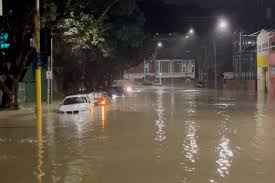
New Zealand has declared a state of emergency in its capital city, Wellington, after severe rainfall triggered widespread flooding, landslides, transport disruptions, and emergency evacuations across multiple suburbs.
The declaration was made as the city experienced one of its most intense rainfall events in recent years, with authorities warning residents in flood-prone areas to move to higher ground as conditions remain dangerous.
The crisis, unfolding around April 19 - 20, 2026, has placed emergency services on high alert and disrupted daily life in the nation’s political and economic centre.
Record Rainfall Triggers Flash Flooding Across Wellington
The flooding was caused by an extreme weather system that dumped record-breaking rainfall over the capital. Some areas recorded as much as 77 millimeters of rain in less than an hour, overwhelming drainage systems and causing rapid surface flooding.
Streets quickly turned into rivers as water inundated homes, businesses, and key infrastructure. Emergency services reported responding to more than 150 flood-related incidents overnight, including rescue operations and road closures. (1News)
Residents in suburbs such as Island Bay, Newtown, Berhampore, and Brooklyn were among the worst affected, with several homes partially submerged or damaged by floodwater and debris. (Wellington City Council)
State of Emergency Declared in Wellington Region
Authorities officially declared a state of emergency across the Wellington region, activating civil defence protocols to manage the crisis and coordinate emergency response operations. (SWDC)
Emergency officials warned that the situation could worsen, with additional heavy rainfall expected to continue over the next 24 - 36 hours. Residents in low-lying and flood-prone areas were urged to self-evacuate immediately if necessary. (Anadolu Agency)
An emergency assistance centre was also opened to support displaced residents and those unable to return to their homes.
Evacuations, Road Closures, and Transport Chaos
The flooding caused widespread disruption to transportation networks across Wellington.
Major roads were closed due to surface flooding, slips, and debris, while public transport services faced cancellations and delays. Key routes such as State Highways 1, 2, and 58 were impacted in several areas. (Reddit)
Commuters faced significant disruption as tunnels, bridges, and bus routes were temporarily shut down. Authorities also warned that travel should be avoided unless necessary.
Rail services and local bus networks experienced delays and cancellations, further compounding the city’s transport challenges.
Landslides and Infrastructure Damage Reported
In addition to flooding, the heavy rainfall triggered multiple landslides and slips across Wellington’s hilly terrain.
Some residential areas experienced partial property damage as slopes gave way under saturated ground conditions. Emergency crews were deployed to assess unstable hillsides and prevent further risk to residents.
Local councils also reported infrastructure strain, including blocked stormwater drains, damaged roads, and overwhelmed drainage systems.
Emergency Services Respond to Hundreds of Calls
Fire and Emergency New Zealand (FENZ) and other agencies were stretched as they responded to over 150 emergency callouts within hours, including flooded homes, stranded vehicles, and rescue operations.
Rescue teams worked through the night assisting residents trapped by rising water levels, particularly in low-lying suburbs.
Authorities confirmed that while no mass evacuations were ordered initially, conditions were being closely monitored for potential escalation.
Weather Authorities Warn of Continued Heavy Rain
The national weather service, MetService, issued warnings that additional thunderstorms and heavy rainfall could continue to affect Wellington and surrounding regions.
Meteorologists said the weather system responsible for the flooding was still active, with the potential for further rainfall hitting the area in the coming days.
Officials warned that already saturated ground conditions increased the risk of additional flooding and landslides even if rainfall was reduced temporarily.
Public Safety Advisory and Government Response
Civil defence authorities issued strong warnings urging residents to avoid unnecessary travel, stay away from rivers, streams, and flood zones, move to higher ground if water levels rise, and follow official emergency updates.
Emergency management officials emphasized that the situation should be treated as serious and potentially life-threatening, particularly for those living in flood-prone suburbs.
A temporary emergency coordination centre was activated to manage rescue operations and resource distribution across the affected region.
Wider Context: New Zealand’s Increasing Weather Extremes
The Wellington flooding is part of a broader pattern of increasing extreme weather events in New Zealand, including storms, cyclones, and heavy rainfall systems affecting both the North and South Islands.
In recent years, the country has experienced repeated flooding events that have strained infrastructure and emergency response systems, particularly in urban coastal areas like Wellington.
Experts say climate variability and changing weather patterns are contributing to more intense rainfall events, increasing the risk of flash flooding in cities built on steep terrain.
Conclusion
The declaration of a state of emergency in Wellington marks another major weather crisis for New Zealand, as record rainfall triggers flooding, landslides, and widespread disruption in the capital.
While emergency services continue to respond and conditions show intermittent improvement, authorities warn that the danger is not over yet.
With more rain forecasts and the ground already heavily saturated, Wellington remains on high alert as residents brace for further impacts.
The unfolding situation highlights the growing challenges posed by extreme weather events and the critical importance of emergency preparedness in urban centres.