New Era at Apple: John Ternus Named CEO as Tim Cook Steps Down After 15 Years
Apple announces a historic leadership change as Tim Cook steps down after 15 years, with John Ternus set to become CEO. Here’s what it means for Apple’s future.
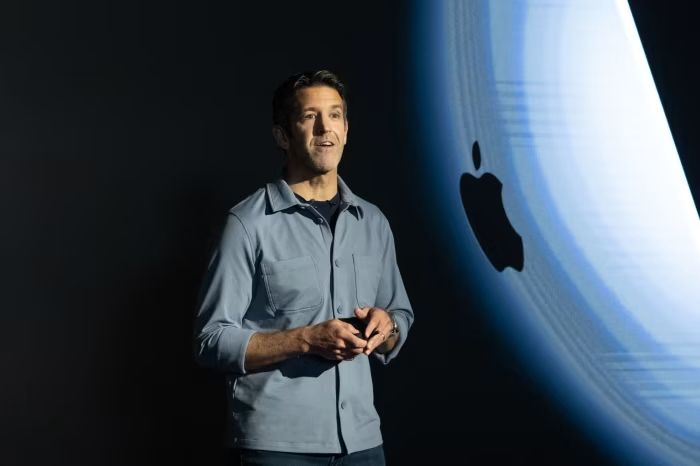
In a landmark moment for the global technology industry, Apple Inc. has announced a major leadership transition, with Tim Cook stepping down as Chief Executive Officer after nearly 15 years at the helm.
The company confirmed that John Ternus, its current Senior Vice President of Hardware Engineering, will take over as CEO effective September 1, 2026, ushering in what many analysts describe as a “new era” for the tech giant. (Apple)
End of the Tim Cook Era
Cook’s departure marks the end of one of the most transformative leadership tenures in corporate history. Having taken over from Steve Jobs in 2011, Cook led Apple through a period of unprecedented growth and global dominance.
During his tenure, Apple’s market value surged from around $350 billion to over $4 trillion, making it one of the most valuable companies in the world.
Under Cook, Apple expanded far beyond its flagship iPhone business, launching and scaling major products and services such as Apple Watch, AirPods, Apple Music, and Apple TV+. (The Guardian)
Despite criticism that he lacked Jobs’ visionary flair, Cook was widely praised for his operational excellence, supply chain mastery, and ability to deliver consistent profitability.
Cook’s New Role: Executive Chairman
Although stepping down as CEO, Cook is not leaving Apple entirely. He will transition into the role of Executive Chairman of the Board, where he is expected to focus on strategic oversight and global policy engagement.
This move ensures continuity at the highest level of leadership while allowing a new generation to take operational control of the company.
Industry analysts say this arrangement could provide stability during the transition, especially as Apple navigates emerging challenges in artificial intelligence and next-generation hardware.
Who Is John Ternus?
The incoming CEO, John Ternus, is a seasoned Apple insider with more than two decades of experience at the company. He joined Apple in 2001 and has played a key role in the development of several flagship products, including the iPhone, iPad, and Mac lineup. (Wikipedia)
Widely regarded as one of the youngest members of Apple’s executive team, Ternus has built a reputation as a hands-on engineer and collaborative leader.
He has been a familiar face at Apple’s major product launches, often presenting new hardware innovations to global audiences. His leadership style is seen as a blend of technical expertise and operational discipline - qualities that mirror Cook’s approach while also reflecting a more product-focused mindset.
Why Ternus Was Chosen
Apple’s decision to appoint Ternus was not sudden. Reports indicate that his elevation is the result of a long-term succession planning process approved unanimously by the company’s board.
Insiders say Ternus was widely viewed as Cook’s most likely successor due to his deep involvement in Apple’s core hardware business and his ability to work across teams.
His appointment also signals a potential strategic shift. By placing a hardware-focused executive at the helm, Apple may be doubling down on innovation in devices particularly as competition intensifies in areas like artificial intelligence, wearable technology, and mixed reality.
Challenges Awaiting the New CEO
Ternus takes over at a critical time for Apple. While the company remains financially strong, it faces several pressing challenges:
1. Artificial Intelligence Race: Apple has been perceived as lagging behind rivals like Google and Microsoft in AI development. Analysts expect Ternus to accelerate the company’s AI strategy, particularly in enhancing products like Siri and integrating AI into future devices. (New York Post)
2. Product Innovation Pressure: Recent products, including the Vision Pro headset, have received mixed reviews. The new CEO will need to reignite excitement around Apple’s product pipeline. (Business Insider)
3. Market Expectations: With Apple already at a multi-trillion-dollar valuation, sustaining growth will be increasingly difficult. Investors will be watching closely to see how Ternus navigates this challenge.
Broader Leadership Reshuffle
The CEO transition is part of a wider leadership shake-up within Apple. Alongside Ternus’ appointment, senior executive Johny Srouji has been elevated to oversee hardware technologies in an expanded role. (The Times of India)
This restructuring reflects Apple’s effort to align its leadership with future priorities, particularly in hardware and chip development.
Industry and Market Reactions
The announcement has sparked mixed reactions from investors and analysts. While many see Ternus as a safe and capable choice, others view the transition as a risky moment for the company.
Some analysts have described the move as “surprising but logical,” noting that Ternus combines deep institutional knowledge with a fresh perspective. (New York Post)
Markets initially reacted with slight uncertainty, reflecting concerns about how the leadership change might affect Apple’s long-term strategy.
What This Means for Apple’s Future
The transition from Tim Cook to John Ternus represents more than just a change in leadership, it marks a generational shift within Apple.
Cook’s era was defined by scale, efficiency, and profitability. Ternus’ tenure is likely to be judged by innovation, adaptability, and technological leadership, especially in emerging fields like AI.
For Apple, the challenge will be to maintain its financial strength while rediscovering the kind of groundbreaking innovation that once defined the company under Steve Jobs.
A Historic Turning Point
As September 2026 approaches, the world will be watching closely. Apple’s leadership transition is one of the most significant in the tech industry in over a decade.
For Tim Cook, it marks the end of an extraordinary chapter. For John Ternus, it is the beginning of a high-stakes journey at the helm of one of the world’s most influential companies.
Conclusion
Apple’s decision to appoint John Ternus as CEO signals both continuity and change. While the company remains rooted in the legacy built by Steve Jobs and expanded by Tim Cook, it now faces a future defined by new technological frontiers and intensifying competition.
Whether Ternus can successfully lead Apple into this next phase will determine not just the company’s trajectory, but also its place in the evolving global tech landscape.