Nearly 49,000 Migrants Enter Spain's Ceuta Enclave in 24 Hours, Triggering Humanitarian and Security Crisis
Spain says nearly 49,000 migrants crossed from Morocco into the North African enclave of Ceuta within 24 hours, prompting military deployment, emergency border measures and renewed debate over Europe's migration policies.
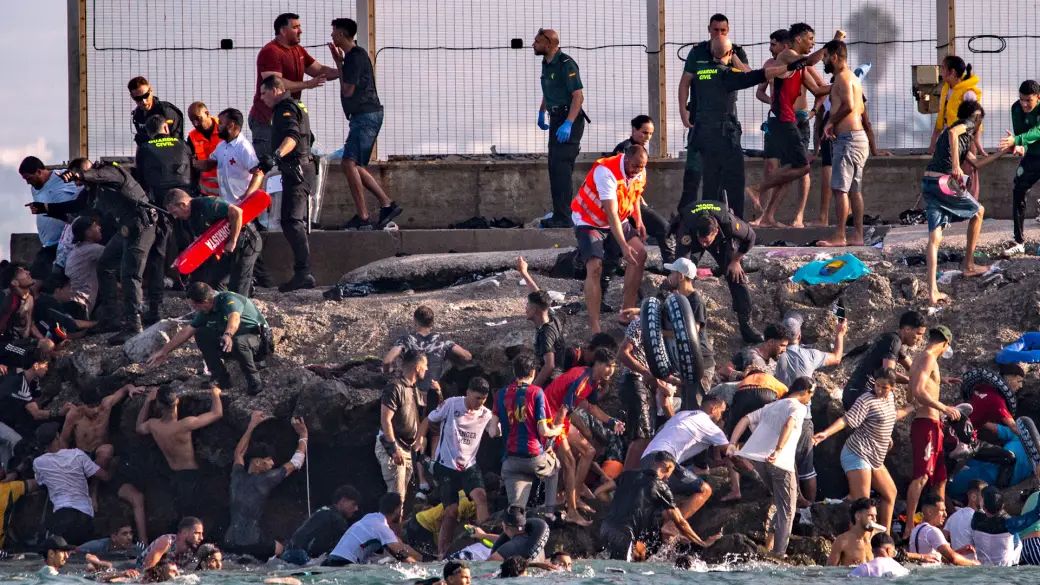
Spain is grappling with one of the largest sudden migration surges in its modern history after authorities reported that approximately 49,000 migrants crossed from Morocco into the Spanish enclave of Ceuta within 24 hours, overwhelming local resources and triggering an emergency security response.
The unprecedented influx saw thousands of people enter the tiny North African territory by swimming around coastal barriers, walking across beaches during low tide, and crossing through sections of the border fence. Spanish officials described the situation as an extraordinary humanitarian and security challenge for both Spain and the European Union. (reuters.com)
Military Deployed to Restore Order
In response to the mass crossings, the Spanish government deployed additional soldiers, police officers, naval units and emergency personnel to Ceuta to reinforce border security and assist local authorities.
Spain's Interior Ministry said the rapid deployment was necessary after the enclave's infrastructure became overwhelmed by the sheer number of arrivals. Reception centres quickly exceeded capacity as emergency workers struggled to provide food, water, medical care and temporary shelter for thousands of migrants.
Authorities later announced that cooperation with Morocco had helped slow the crossings, with thousands of migrants voluntarily returning or being repatriated after bilateral discussions between the two countries.
Humanitarian Tragedy at the Border
The dramatic migration surge was accompanied by a deadly humanitarian crisis.
Officials reported that at least 34 people died during attempts to reach Ceuta, with many drownings while trying to swim around border barriers or becoming caught in overcrowded conditions near crossing points.
Emergency rescue teams worked continuously along the coastline, using helicopters, patrol boats and divers to search for survivors and recover victims.
Humanitarian organisations described the scenes as chaotic, warning that additional casualties could occur if dangerous crossings continue. (The Guardian)
Why Ceuta Matters
Ceuta is one of Spain's two autonomous cities located on the northern coast of Africa, alongside Melilla.
Although geographically surrounded by Morocco, Ceuta is Spanish territory and therefore part of the European Union. It represents one of the EU's only land borders with Africa, making it a major gateway for migrants seeking entry into Europe.
The enclave has long been a focal point for migration pressures because individuals who successfully reach Ceuta may apply for asylum or seek onward travel into mainland Spain.
Its strategic location has also made it a recurring source of diplomatic tension between Spain and Morocco, which continues to claim sovereignty over both Ceuta and Melilla. (AP News)
What Triggered the Mass Crossing?
Spanish authorities have not identified a single definitive cause for the sudden surge.
However, analysts point to a combination of economic hardship, unemployment, migration networks and broader regional pressures as likely contributing factors.
The incident also recalls the 2021 Ceuta migration crisis, when thousands of migrants crossed into the enclave during a diplomatic dispute between Spain and Morocco.
This time, officials from both countries have emphasised continued cooperation to restore border controls and prevent further loss of life.
Political Fallout
The unprecedented influx has intensified political debate within Spain and across Europe.
Opposition politicians accused Prime Minister Pedro Sánchez's government of failing to secure the country's external borders, with some regional leaders calling for a national emergency declaration.
Ceuta's regional government warned that the territory's public services were under enormous strain and urged Madrid and the European Union to provide additional financial and logistical support.
Migration has become one of the most contentious political issues across Europe, and the latest developments are expected to influence debates on asylum, border protection and cooperation with North African countries. (The Times of India)
Morocco and Spain Coordinate Response
Following urgent diplomatic contacts, Spanish and Moroccan authorities announced measures aimed at restoring order along the border.
Spanish officials said cooperation with Moroccan security forces significantly reduced the flow of new arrivals by Friday, while arrangements were made for the return of many migrants who had entered irregularly.
Officials from both governments stressed that close bilateral coordination remains essential to managing migration flows and combating human trafficking networks operating in the region.
European Union Watching Closely
The developments have drawn close attention from European Union institutions.
Because Ceuta forms part of the EU's external border, the migration surge has implications beyond Spain.
European officials have reiterated support for Spain while emphasising the importance of balancing effective border management with respect for international humanitarian obligations and asylum rights.
Migration experts say the crisis underscores the continuing challenges facing Europe in addressing irregular migration through a combination of border security, legal migration pathways and cooperation with neighbouring countries.
Humanitarian Agencies Call for Protection
Aid organisations have urged authorities to prioritise the safety of vulnerable migrants, including children and families who may have been separated during the crossings.
Several humanitarian groups have also called for independent investigations into the reported deaths and for improved search-and-rescue operations along the Morocco - Spain border.
Medical teams continue treating people suffering from exhaustion, dehydration and injuries sustained while attempting to enter the enclave.
Looking Ahead
The arrival of nearly 49,000 migrants in Ceuta within a single day represents one of the most significant migration events in recent European history.
While Spanish authorities say the immediate crisis has begun to stabilise following enhanced cooperation with Morocco, the incident has exposed the fragility of border management systems and the complex humanitarian challenges associated with large-scale migration.
As investigations continue into the causes of the mass movement, European leaders are expected to revisit migration policy, border security and international cooperation to prevent similar crises in the future.