NDC Ends Sale of Presidential Forms Ahead of 2027 Elections, Extends Deadline for Other Aspirants
The Nigeria Democratic Congress (NDC) has officially ended the sale of presidential expression of interest forms ahead of the 2027 elections while extending deadlines for governorship and legislative aspirants. Here is what the development means for Nigeria’s political landscape.
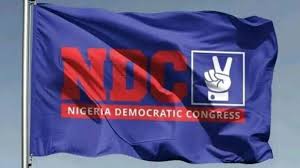
The Nigeria Democratic Congress has officially closed the sale of its presidential expression of interest and nomination forms ahead of Nigeria’s 2027 general elections, signaling a major step in the party’s preparation for what is shaping up to become one of the country’s most closely watched political contests.
The announcement, made on May 18, 2026, comes amid growing national attention surrounding the party’s emergence as a new political force attracting major political figures and opposition realignments across the country.
According to a statement issued in Abuja by the party’s National Secretary, Ikenna Morgan Enekweizu, the NDC confirmed that while the sale and collection of forms for the office of president had officially ended, deadlines for governorship, Senate, House of Representatives, and State Assembly aspirants had been extended by one week.
The extension moves the new deadline for those offices from May 17 to May 24, 2026.
The development sparked fresh political discussions, especially as analysts continue to speculate about who may eventually emerge as the party’s presidential flagbearer ahead of the 2027 elections.
A Defining Moment for the NDC
The closure of presidential form sales represents one of the earliest major milestones in the NDC’s internal electoral process.
The relatively young political platform has gained national prominence in recent weeks following the influx of influential politicians and growing public attention surrounding possible presidential aspirants.
The party had earlier fixed the cost of the presidential expression of interest and nomination forms at between ₦40 million and ₦60 million depending on the category and structure outlined in its electoral guidelines. The fees immediately generated public debate over the high cost of political participation in Nigeria. (Nigeria News Today)
According to the party timetable previously released by the leadership, screening exercises for aspirants who successfully obtained and completed the forms are scheduled to begin on May 19 and conclude on May 26, 2026. Only aspirants cleared during the screening exercise will be eligible to proceed further in the nomination process. (Vanguard News)
Party officials also confirmed that the collection and submission of nomination forms for screened candidates would commence immediately after the screening phase.
Rising Political Expectations
The NDC’s growing visibility in Nigerian politics has largely been driven by recent alignments involving several influential opposition politicians.
In recent weeks, there has been heightened speculation surrounding the political future of prominent figures, including Peter Obi and Rabiu Kwankwaso, both of whom have been linked with the party’s expanding coalition efforts ahead of 2027.
The party has also reportedly zoned its presidential ticket to Southern Nigeria, a move widely interpreted as an attempt to balance Nigeria’s sensitive regional political dynamics. (Channels Television)
Although the NDC leadership has remained cautious about officially endorsing any candidate, observers believe the conclusion of presidential form sales could soon reveal the real contenders preparing to challenge the ruling establishment in 2027.
Extension for Other Aspirants
While the presidential process has now closed, the NDC granted additional time for aspirants contesting other elective offices.
The extension affects governorship aspirants, senatorial hopefuls, House of Representatives candidates, and those seeking State House of Assembly tickets.
Party officials explained that the extension was designed to accommodate logistical concerns and allow wider participation in the process.
According to the party’s statement, aspirants are expected to appear for screening and pre-qualification interviews with all relevant credentials and supporting documents.
The party also stressed that no further extension would be granted after the revised deadline expires on May 24.
Screening Guidelines and Internal Reforms
The NDC stated that its screening process would focus on competence, character, public acceptability, and electoral viability.
The party added that special consideration would also be given to women, youths, and persons living with disabilities in line with its affirmative action principles.
Party leaders said the primaries would operate under an “open secret ballot” voting system aimed at promoting transparency while maintaining order during delegate voting. (The Sun Nigeria)
Political analysts say the process may become a critical test of the NDC’s ability to present itself as a credible alternative to Nigeria’s dominant political parties.
Why This Matters for 2027
The end of presidential form sales may appear procedural, but politically it carries deeper significance.
Firstly, it confirms that the NDC is moving aggressively to establish a structured national presence barely months after gaining broader national recognition.
Secondly, it reflects the intensifying preparations already underway for the 2027 general elections despite the polls being nearly two years away.
The development also highlights the increasing fragmentation and reconfiguration within Nigeria’s opposition politics. Several politicians dissatisfied with traditional party structures appear to be exploring new alliances capable of challenging the ruling political establishment.
For many younger voters and politically active citizens, the NDC’s rise represents another attempt to reshape Nigeria’s electoral landscape following years of dissatisfaction with governance, economic hardship, insecurity, and unemployment.
However, critics remain skeptical about whether the party can sustain internal unity, particularly given the number of influential political figures reportedly seeking control of its presidential ticket.
Uncertainty Ahead
Despite the excitement surrounding the NDC, major questions remain unanswered.
The identities of all presidential aspirants who successfully obtained forms have not yet been publicly disclosed. Political observers are also watching closely to see whether consensus arrangements or internal rivalries may emerge during the screening and primary stages.
There are also concerns about how the party intends to build nationwide grassroots structures quickly enough to compete effectively against established political giants before 2027.
Still, the closure of presidential form sales marks another major moment in Nigeria’s evolving political story.
With screenings beginning immediately and primaries approaching, the coming weeks may provide clearer indications about the direction of the NDC and the shape of Nigeria’s opposition politics ahead of the next presidential race