NAF Plane Crash in Ondo Kills 25 Military Personnel and Passengers
Twenty-five people, including Nigerian Air Force personnel, have died after NAF aircraft 931 crashed in Igbokoda, Ondo State. President Tinubu orders a probe.
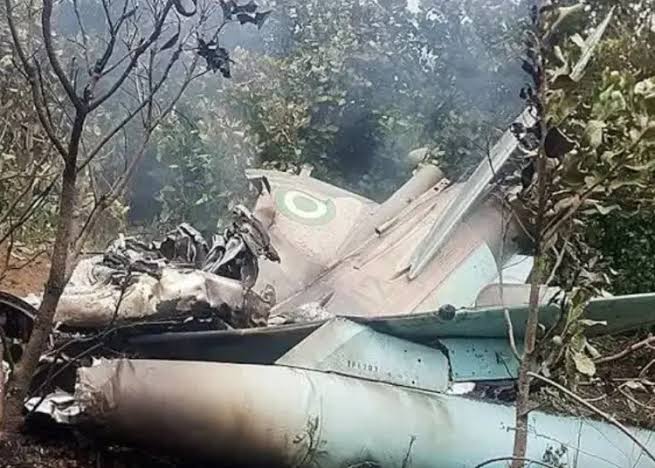
Twenty-five people have died after a Nigerian Air Force (NAF) ATR-42 aircraft crashed in the Igbokoda area of Ilaje Local Government Area of Ondo State, in one of the country's deadliest recent military aviation accidents.
The aircraft, identified as NAF 931, was on a routine operational mission from Benin City in Edo State to Lagos when it disappeared from radar on Monday morning, October 5, 2026. The Nigerian Air Force later confirmed that there were no survivors among the five crew members and 20 passengers on board.
The crash plunged the Nigerian military and the victims' families into mourning, with President Bola Tinubu declaring three days of national mourning and ordering flags across the country to be flown at half-mast.
Aircraft disappeared from radar
The aircraft reportedly lost contact with air traffic controllers at approximately 9:13 a.m. while travelling from Benin City towards Lagos.
Initial information from aviation authorities indicated that the aircraft was carrying 32 people, comprising 25 passengers and seven crew members. However, the Nigerian Air Force subsequently reviewed the manifest and confirmed that 25 people - five crew members and 20 passengers - were aboard the aircraft.
The wreckage was eventually located in a swampy area close to a naval base in Igbokoda.
Emergency and security agencies immediately mobilised search-and-rescue teams after the aircraft disappeared from radar. The difficult terrain around the crash site complicated recovery operations.
The ATR-42 is a twin-engine turboprop aircraft used by the Nigerian military for transport and surveillance-related operations.
All 25 people confirmed dead
The Nigerian Air Force confirmed on Tuesday that all 25 people aboard the aircraft had died.
The five crew members were identified as Squadron Leader M.I. Aburime, the flight captain; Squadron Leader A.P. Man-Ugwueje, the co-pilot; Flight Lieutenant I.S. Bako, another co-pilot; Warrant Officer Abubakar A., an aircraft technician; and Corporal Uguru H.C., also an aircraft technician.
The passengers included military personnel from different ranks as well as civilians and family members.
The presence of family members aboard the aircraft has added another dimension to the tragedy. Reports indicate that civilians were among those travelling on the routine military flight.
The NAF said the identities of the victims were released after their families had been contacted.
President Tinubu declares national mourning
President Bola Tinubu responded to the tragedy by declaring three days of national mourning in honour of the victims.
The President also directed that national flags be flown at half-mast throughout Nigeria.
Tinubu described the crash as a painful moment for the Armed Forces and the country and expressed condolences to the families of the deceased and the Nigerian Air Force.
He also directed the military to conduct a thorough investigation into the circumstances surrounding the accident.
The President's order means that determining what caused the aircraft to crash has become an immediate priority for military authorities.
No official cause of the accident had been established at the time of reporting.
Investigation ordered
The Nigerian Air Force is expected to lead the investigation because the aircraft was a military asset.
The Nigerian Safety Investigation Bureau (NSIB) said it would not independently investigate the accident unless formally invited by the military. The bureau explained that military aviation accidents fall outside its statutory mandate under the NSIB Establishment Act, 2022.
However, the NSIB said it remained available to provide technical assistance if requested by the Nigerian Air Force. Such assistance could include the recovery and analysis of flight-data and cockpit-voice recordings.
The investigation is expected to examine the aircraft's maintenance history, flight data, weather conditions, communications with air traffic controllers, the actions of the crew and other technical or operational factors.
Until the investigation is completed, officials have not attributed the crash to mechanical failure, weather or human error.
Military community mourns
The deaths have triggered widespread mourning across Nigeria's military establishment.
The Minister of State for Defence, Bello Muhammad Matawalle, described the crash as a deeply tragic loss to the Armed Forces, stressing the risks faced by military personnel in the course of their duties.
He extended condolences to the Nigerian Air Force, the families of the victims and colleagues of those who died.
The Nigeria Governors' Forum also expressed grief over the deaths, while political figures and organisations have continued to send condolences to the families.
Former Vice President Atiku Abubakar described the incident as heartbreaking, noting that airmen, soldiers and members of their families were among those who lost their lives.
Pilot died two weeks after wedding
The tragedy has also brought attention to the personal stories of the military personnel who died.
One of the pilots, Squadron Leader Ahamefule Aham Man-Ugwueje, had reportedly married Flight Lieutenant Damilola Adekunle only two weeks before the crash.
The couple's wedding took place in Abuja on September 19, 2026. Man-Ugwueje was subsequently identified by the NAF as the co-pilot of the ill-fated aircraft.
His death has added a particularly poignant dimension to the tragedy, coming only days after he began a new chapter of his life.
Questions over military aviation safety
The Ondo crash is likely to renew questions about the safety of military aviation in Nigeria.
Military aircraft frequently operate under demanding conditions, including surveillance missions, troop movements, logistics and other operational assignments. Maintaining ageing aircraft, ensuring adequate crew training and guaranteeing rigorous safety checks are therefore crucial to reducing the risk of accidents.
The investigation into NAF 931 will be closely watched because its findings could identify weaknesses that need to be addressed across the military aviation system.
For the families of the victims, however, the immediate concern is mourning their loved ones and receiving answers about what happened.
The crash has left the Nigerian Air Force grieving the loss of personnel who were carrying out an official mission and has also affected families whose relatives were travelling aboard the aircraft.
As the three-day national mourning period begins, attention will turn to the investigation and the recovery process.
For now, the tragedy in Igbokoda stands as a painful reminder of the risks associated with military service and aviation operations. The 25 people who died - including five crew members and 20 passengers - have left behind families, colleagues and communities confronting an unexpected and devastating loss.