Massive Bombing Hits Iran as US Sustains Ninth Straight Day of Military Attacks
Iran has come under another wave of heavy bombardment as the United States continues its ninth consecutive day of military strikes, escalating tensions across the Middle East and raising fears of a wider regional conflict.
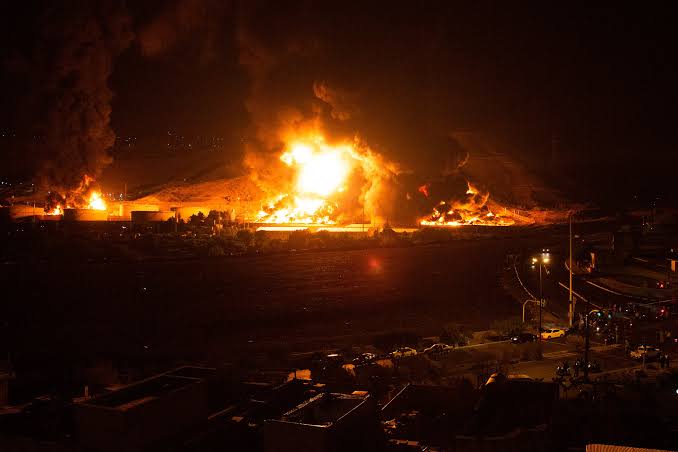
Iran has faced another wave of intense bombardment as the United States continued its ninth consecutive day of military attacks, deepening fears that the escalating confrontation could spiral into a broader conflict across the Middle East.
The latest strikes reportedly targeted multiple locations in Iran, with explosions reported in strategic areas as American forces maintained pressure through sustained air operations. Iranian authorities said the attacks caused significant damage, while officials vowed to respond to what they described as acts of aggression against the country.
The escalation marks one of the most serious military confrontations involving Washington and Tehran in recent years, with global leaders warning that continued attacks could destabilise an already fragile region.
Iran Under Heavy Attack
Iranian state media reported that several areas came under heavy bombardment as U.S. forces intensified their military campaign.
Residents in affected areas reported hearing powerful explosions, while emergency teams were deployed to assess casualties and damage.
Iran’s government condemned the attacks, describing them as a violation of its sovereignty and a dangerous escalation that threatens regional peace.
Officials in Tehran said the country’s armed forces remain prepared to defend national territory and respond to any further military action.
The Iranian leadership has repeatedly warned that continued strikes could trigger retaliation against U.S. interests and allied targets throughout the region.
Ninth Consecutive Day of US Strikes
The latest bombing campaign represents the ninth straight day of U.S. military operations against Iran.
American officials have defended the strikes, saying they are aimed at weakening Iran’s military capabilities and preventing threats against U.S. forces and regional allies.
Washington has maintained that its operations are focused on strategic targets linked to Iran’s military infrastructure, missile capabilities and security networks.
U.S. officials said the attacks are part of a broader effort to protect American personnel and deter further hostile actions.
However, critics have warned that sustained military action without diplomatic engagement could worsen instability and draw more countries into the conflict.
International Community Calls for Restraint
The continuing hostilities have triggered growing concern among governments and international organisations.
The United Nations has urged both sides to exercise maximum restraint and seek diplomatic solutions to prevent further loss of life.
European leaders and regional powers have expressed concern that the conflict could expand beyond Iran and the United States, potentially affecting neighbouring countries and global energy markets.
Diplomatic efforts are reportedly underway behind the scenes as countries attempt to reduce tensions and prevent a prolonged military confrontation.
Analysts warn that any escalation involving Iran could have consequences far beyond the immediate battlefield because of the country’s strategic location and influence across the Middle East.
Impact on Global Energy Markets
The intensifying conflict has raised concerns about global oil supplies, particularly because Iran plays a significant role in the energy-rich Gulf region.
Markets have reacted cautiously to developments, with investors monitoring the possibility of disruptions to shipping routes and energy infrastructure.
The Strait of Hormuz, a critical waterway through which a significant portion of the world's oil supply passes, remains a major focus for security analysts.
Any attempt to disrupt traffic through the waterway could have serious implications for global fuel prices and economic stability.
Energy experts have warned that prolonged conflict could increase uncertainty in international markets.
Iran Vows Response
Iranian officials have repeatedly stated that the country will not remain passive in the face of attacks.
Military commanders have warned that Iran possesses the capability to respond through missile strikes and other forms of retaliation.
Iran’s allies and regional partners have also criticised the U.S. campaign, accusing Washington of worsening instability.
Tehran has insisted that its military programmes are designed for national defence, rejecting claims that it poses a threat to international security.
The Iranian government has called on the international community to condemn the attacks and support efforts to end the hostilities.
Humanitarian Concerns Rise
Beyond military and political consequences, humanitarian concerns are increasing as the conflict continues.
Civilian populations in affected areas face growing risks from airstrikes, damaged infrastructure and disruptions to essential services.
Aid organisations have warned that prolonged fighting could create additional challenges for hospitals, emergency responders and vulnerable communities.
Human rights groups have called on all parties to comply with international humanitarian law and protect civilians from the effects of military operations.
A Dangerous New Chapter in US-Iran Relations
The latest escalation represents a significant deterioration in relations between Washington and Tehran, which have remained tense for decades.
Previous disputes over Iran’s nuclear programme, regional influence and military activities have repeatedly brought the two countries close to confrontation.
Despite occasional diplomatic engagements, deep disagreements continue to shape their relationship.
The current military confrontation has renewed fears of a wider Middle East crisis involving multiple actors and threatening international security.
What Happens Next?
As U.S. strikes enter their ninth day, attention is now focused on whether diplomatic efforts can prevent further escalation.
Military analysts say the coming days could prove critical in determining whether the conflict expands or moves toward negotiations.
The possibility of retaliation from Iran remains a major concern, while Washington has indicated that it will continue operations until its stated objectives are achieved.
For millions across the region, the immediate priority remains avoiding a wider war that could bring devastating consequences.
With both sides refusing to back down, the international community faces increasing pressure to find a diplomatic path before the crisis escalates into a larger, potentially uncontrollable conflict. (Reuters)