Marketers Reject FG’s Plan to Cap Petrol Price at ₦1,350 Per Litre
Nigeria’s petroleum marketers have rejected the Federal Government’s proposed ₦1,350-per-litre petrol cost ceiling, warning that price caps could distort the deregulated market. MEMAN wants transparent pricing, stronger competition and lower distribution costs.
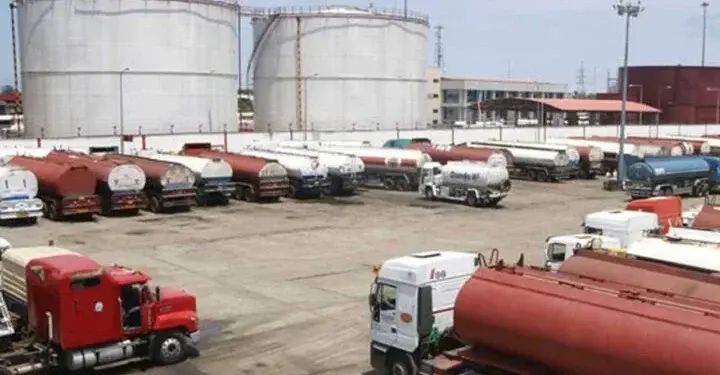
Nigeria’s petroleum marketers have rejected the Federal Government’s proposed ₦1,350-per-litre ceiling on petrol supply costs, arguing that government-imposed limits will not resolve the structural problems driving fuel prices upward.
The opposition, led by the Major Energies Marketers Association of Nigeria (MEMAN), comes as the administration of President Bola Tinubu seeks to cushion households and businesses against rising petrol costs linked to international oil-market disruptions.
In a statement summarising its third-quarter media engagement held virtually on Thursday, October 15, in partnership with S&P Global Energy, MEMAN said the government should prioritise market-driven pricing, efficient distribution and measures to reduce operating costs instead of imposing arbitrary price limits.
“Government arbitrary price caps are not the solution to petroleum market challenges,” the association said, according to Punch Newspapers.
The disagreement highlights a difficult policy challenge for Nigeria: how to protect consumers from rising energy costs without undermining the deregulation of the downstream petroleum sector.
While the government says its proposed mechanism is designed to moderate price fluctuations rather than restore the fuel subsidy abolished in May 2023, marketers are concerned about how the arrangement would work commercially and how refiners and importers would recover losses when their costs exceed the proposed ceiling.
What the Federal Government’s petrol price cap means
Finance Minister and Coordinating Minister of the Economy, Taiwo Oyedele, announced the proposed price-modulation arrangement on October 8, 2026, explaining that the government was negotiating a ceiling of ₦1,350 per litre on petrol’s ex-gantry or landing cost.
The proposal is intended to prevent sudden increases in international crude oil prices and foreign exchange costs from immediately translating into higher domestic petrol prices.
Under the proposed mechanism, refiners and importers would initially absorb costs exceeding the ceiling and recover the shortfall later when market conditions improve. The arrangement would be reviewed monthly, with the government promising to publish the relevant figures.
Oyedele has maintained that the initiative is neither a return to fuel subsidy nor conventional price control. Rather, the government describes it as a way to smooth out price fluctuations and provide greater predictability for consumers and businesses.
Importantly, the ₦1,350 benchmark is not a proposed retail pump price. It applies to the cost of petrol at the supply stage, meaning the final price paid by motorists could remain higher after distribution expenses, transportation and retail margins are added.
According to Channels Television’s report on the proposal, the government is also considering forward crude sales to domestic refiners and other measures intended to reduce supply disruptions and transportation costs.
Why petroleum marketers oppose the proposal
MEMAN argues that restricting supply costs without addressing the factors driving them could distort market pricing and create additional uncertainty for businesses.
The association wants the government to concentrate on transparent pricing mechanisms, efficient product distribution, improved storage and inventory management, and measures to remove bottlenecks throughout the petroleum supply chain.
It has also called for clearer bulk supply arrangements covering product availability, delivery schedules, pricing and contractual obligations.
According to the association, these measures would enable marketers to plan purchases more effectively, improve supply security and compete on a more sustainable basis.
MEMAN also supports non-discriminatory access to petroleum products, stronger competition and more efficient regulatory processes. It believes the market should allow domestic refiners to increase production while imports continue to bridge supply gaps when necessary.
The concern is that if refiners and importers are required to sell below their actual costs for extended periods, they could face cash-flow pressures, incur financing expenses or reduce supplies if they cannot recover their losses.
Such an outcome could undermine the government's objective of keeping petrol readily available and affordable.
The association's position is therefore that reducing the underlying cost of supplying fuel would provide a more sustainable solution than limiting prices at a particular stage of the distribution chain.
Refiners also question how excess costs will be recovered
The disagreement is not limited to petroleum marketers. The Crude Oil Refiners Association of Nigeria (CORAN) has also raised concerns about the proposed price ceiling.
CORAN has supported the government's plan to sell crude oil to domestic refineries through forward contracts, which could help refiners secure feedstock and manage exposure to volatile international prices.
However, the association has warned that the government must explain how refiners would recover costs exceeding the proposed ceiling.
In a report published on October 12, Punch quoted the association as emphasising the need for transparency, commercial sustainability and equal access for domestic refiners.
The concerns are particularly relevant as petrol prices in Abuja reportedly climbed to approximately ₦1,410 per litre, above the government's proposed supply-cost ceiling. The comparison does not mean retail prices have violated a ₦1,350 pump-price limit, because the proposed benchmark applies at an earlier stage of the supply chain.
For refiners, the central question is whether the arrangement would allow them to continue operating profitably while meeting their obligations to crude suppliers, lenders, workers and distributors.
Without a clear recovery mechanism, the policy could create disagreements between the government and industry operators over who ultimately bears the financial burden.
Government introduces temporary petrol discount
The proposed ceiling is part of a wider package of measures designed to reduce the pressure of high fuel prices on Nigerians.
The government has also announced a 30-day petrol discount at Nigerian National Petroleum Company Limited filling stations, with priority given to public transport operators.
Under this arrangement, NNPC is expected to forgo its retail profit margin temporarily and sell petrol at cost. The government says the measure is intended to provide short-term relief without reinstating the nationwide fuel subsidy that ended in 2023.
However, the discount has attracted criticism from opposition political groups and other observers, who question whether a temporary intervention can deliver lasting relief.
Some analysts have also warned that the financial arrangements must be transparent to prevent the initiative from creating hidden liabilities for the government or NNPC.
In its October 9 report, including calls for disclosure of the programme's cost, funding and expected benefits (Punch Newspapers)
The broader policy challenge is ensuring that immediate assistance to households does not undermine the commercial conditions needed to maintain reliable fuel supplies.
What the disagreement means for Nigerian consumers
For motorists, transport operators and businesses, the most important question is whether the government's interventions will translate into lower and more predictable fuel prices.
Petrol costs influence transportation, food distribution, manufacturing and the operation of small businesses that depend on generators. Sudden price increases can therefore affect household budgets well beyond the direct cost of filling a vehicle.
A well-designed price-modulation mechanism could reduce abrupt changes if the arrangement is commercially viable, transparent and supported by a reliable recovery process.
Conversely, if suppliers face persistent losses or uncertainty over payment, the policy could discourage investment, complicate procurement and potentially weaken supply security.
MEMAN's proposed alternatives focus on increasing competition, improving distribution efficiency, ensuring reliable product access and reducing unnecessary operating costs. These measures could help bring prices down if they lead to lower supply costs and more effective competition among refiners, importers and retailers.
The government must also balance consumer protection with the need to preserve the gains of downstream deregulation, which was intended to allow prices to reflect market conditions rather than rely on a nationwide fixed-price subsidy.
Conclusion: Price stability versus market realities
The rejection of the Federal Government's proposed ₦1,350-per-litre petrol supply-cost ceiling highlights the continuing tension between consumer relief and commercial sustainability in Nigeria's deregulated petroleum market.
MEMAN wants the government to address the underlying causes of high prices through transparent pricing, stronger competition and more efficient distribution. CORAN, meanwhile, wants clear assurances that refiners will be able to recover costs incurred under the proposed arrangement.
The government believes price modulation can reduce volatility without restoring the former subsidy regime. Whether it succeeds will depend on how the mechanism is structured, financed, monitored and reviewed.
Ultimately, Nigerians need more than temporary relief. They need a petroleum market capable of delivering reliable supplies at prices that reflect lower operating costs, efficient distribution and genuine competition.