Mark Carney Secures Liberal Majority After By-Election Wins, Reshaping Canada’s Political Landscape
Canadian Prime Minister Mark Carney secures a Liberal majority after key by-election victories, strengthening his mandate and reshaping Canada’s political future.
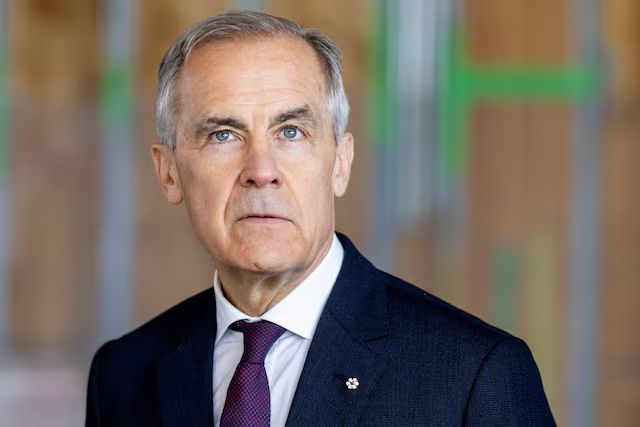
Canadian Prime Minister Mark Carney has achieved a major political milestone, securing a parliamentary majority for the Liberal Party of Canada following decisive victories in three crucial by-elections.
The outcome marks a turning point in Canadian politics, transforming Carney’s government from a minority administration into a dominant majority, granting him the power to govern without reliance on opposition parties.
From Minority to Majority Power
The breakthrough came after the by-elections held on April 13, 2026, in key ridings across Ontario and Quebec. The Liberals won all three contested seats, pushing their total to about 174 out of 343 seats in the House of Commons, comfortably above the threshold required for a majority. (The Washington Post)
This shift is historically significant. It is the first time in recent Canadian history that a governing party has moved from a minority to a majority position between general elections.
With this result, Carney can now pass legislation without negotiating with rival parties - a major advantage in a politically divided environment.
Key By-Election Victories
The Liberal wins came in strategically important districts:
- University–Rosedale (Toronto)
- Scarborough Southwest (Toronto)
- Terrebonne (Quebec)
These ridings had varying political dynamics, with some considered traditional Liberal strongholds and others more competitive. (Reuters)
The victories were delivered by candidates including Danielle Martin and Doly Begum, reinforcing the party’s strength in urban and suburban regions. (AP News)
The success in Terrebonne, a closely contested Quebec seat, was particularly symbolic, demonstrating the Liberals’ ability to expand beyond their core base.
How Carney Built Momentum
Carney’s path to a majority did not rely solely on by-election victories. His rise has been fueled by a combination of political strategy, public support, and shifting alliances.
In the months leading up to the by-elections, several opposition lawmakers defected to the Liberal Party, boosting its seat count and positioning it on the brink of majority status.
Analysts say Carney’s leadership style, often described as pragmatic and centrist, has attracted support from across the political spectrum. His background as a former central banker has also reinforced his image as a steady hand during uncertain global economic conditions.
The Trump Factor and Rising Nationalism
One of the more surprising drivers of Carney’s political surge has been external: tensions with the United States.
Political analysts suggest that rhetoric and policies associated with U.S. President Donald Trump, particularly on trade and sovereignty, have contributed to a wave of Canadian nationalism.
This, in turn, has consolidated support around Carney’s leadership. (The Times of India)
Carney has positioned himself as a defender of Canadian economic independence, pledging to reduce reliance on U.S. trade and strengthen domestic industries.
What a Majority Means for Canada
With a majority government, Carney now has significantly greater political freedom.
Previously, his minority government had to rely on support from opposition parties to pass key legislation, often leading to compromises and delays. (The Guardian)
Now, the Liberals can:
- Pass budgets and economic policies without opposition votes
- Advance long-term reforms in trade, energy, and infrastructure
- Maintain power potentially until the next general election cycle in 2029
This stability is expected to allow Carney to pursue a more ambitious policy agenda, particularly in response to global economic uncertainty and geopolitical tensions.
Criticism and Concerns
Despite the victory, the development has not been without controversy.
Opposition leaders, including Conservative leader Pierre Poilievre, have criticized the Liberal majority as the result of political maneuvering, particularly the wave of defections from rival parties.
Critics argue that such defections undermine the will of voters who elected representatives under different party banners.
Others have raised concerns about the ideological direction of the Liberal Party, noting that the influx of politicians from different backgrounds could blur its traditional policy positions.
A Shift in Liberal Identity
Under Carney, the Liberal Party appears to be undergoing a transformation.
Unlike his predecessor Justin Trudeau, who emphasized progressive policies, Carney has steered the party toward a more centrist or even center-right approach.
This shift has broadened the party’s appeal but also sparked debate about its long-term identity.
Supporters argue that this pragmatism is necessary in a complex global environment. Critics, however, warn that it could dilute the party’s core values.
Global Implications
Carney’s strengthened mandate also has implications beyond Canada.
As a former governor of both the Bank of Canada and the Bank of England, he is widely respected on the international stage. His leadership is expected to play a key role in:
- Navigating global economic instability
- Managing trade disputes, particularly with the U.S.
- Strengthening alliances with other middle-power nations
His recent international engagements, including high-profile speeches on economic cooperation, have already elevated Canada’s global profile.
Conclusion: A Defining Political Moment
Mark Carney’s transition from minority leader to majority prime minister marks a defining moment in modern Canadian politics.
The by-election victories have not only strengthened his grip on power but also reshaped the country’s political trajectory. With a clear mandate and fewer parliamentary constraints, Carney now faces the challenge of delivering on his promises.
Whether this new era brings stability and progress or fuels further political tension will depend on how effectively his government uses its newfound power.
For now, one thing is certain: Canada has entered a new phase of leadership, with Carney firmly at the helm.