Macron Condemns US-Israel Strikes on Iran, Calls for Diplomacy Amid Escalating Middle East War
French President Emmanuel Macron has criticized the US-Israeli military offensive against Iran as outside international law while urging diplomacy and warning of global security risks. Here is a detailed analysis of France’s position and its implications for world peace.
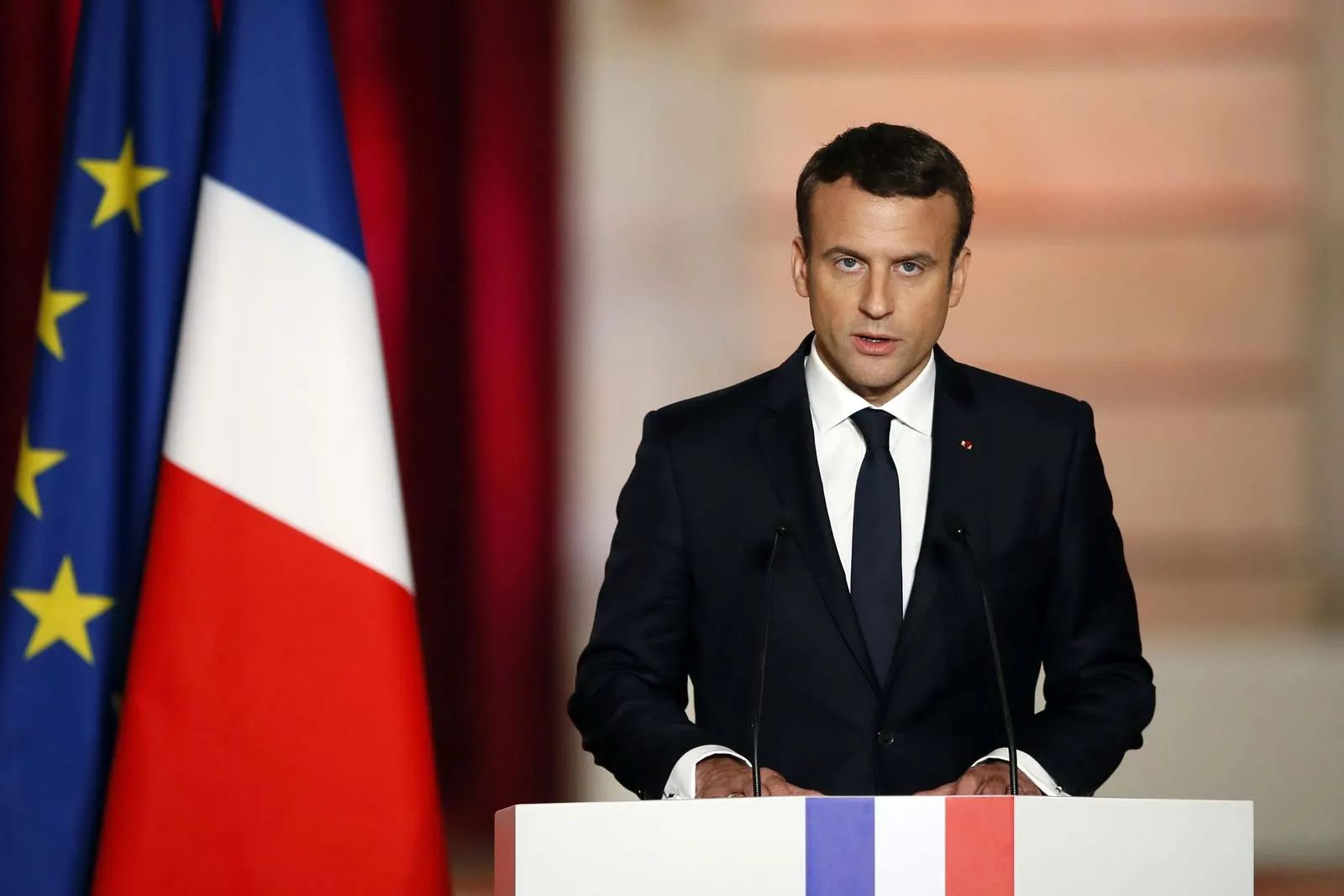
French President Emmanuel Macron has taken a cautious but critical stance on the ongoing war involving the United States, Israel, and Iran, warning that the conflict threatens global stability and calling for urgent diplomatic engagement to prevent a wider regional war.
The conflict erupted after coordinated US and Israeli strikes targeted Iranian nuclear facilities and key military infrastructure, dramatically escalating tensions across the Middle East. The attacks triggered Iranian retaliatory strikes across several countries in the region, raising fears of a broader war that could draw in multiple global powers. (Reuters)
Reacting to the crisis, Macron emphasized that France did not participate in the military operation and had not been informed in advance. Instead, Paris has positioned itself as a mediator advocating de-escalation and renewed negotiations.
Macron: Strikes Outside International Law
In one of his strongest comments on the crisis, Macron declared that the US-Israeli attacks on Iran were conducted “outside the framework of international law,” signaling France’s disapproval of the operation. (Anadolu Ajansı)
According to the French leader, the immediate priority should be halting the airstrikes and preventing further escalation. He stressed that diplomacy remains the only viable path toward long-term stability in the Middle East.
Macron also called for an emergency meeting of the United Nations Security Council, warning that the conflict represents a serious threat to global peace and security.
While criticizing the strikes, Macron also acknowledged concerns about Iran’s nuclear ambitions and missile program, arguing that Tehran must return to negotiations aimed at limiting its military capabilities and reducing regional tensions.
France’s Balanced Position
France’s position has been widely described as a “balancing act.” On one hand, Paris has avoided endorsing the US-Israeli attacks. On the other hand, it has also criticized Iran’s retaliatory strikes and destabilizing actions across the region. (Le Monde.fr)
Together with the United Kingdom and Germany, France issued a joint statement urging Iran to engage in negotiations to resolve the crisis and avoid further military escalation. The three European powers stressed that they were not involved in the attacks but remained deeply concerned about the region’s stability. (The Guardian)
Macron also reiterated that the Iranian people should be able to determine their own political future without violence or repression from the ruling regime. (Wikipedia)
This dual approach reflects France’s long-standing foreign policy goal of maintaining strategic autonomy while remaining aligned with Western allies.
Military Precautions by France
Despite advocating diplomacy, France has taken precautionary military measures to protect its interests and allies in the region.
Macron announced that the French aircraft carrier Charles de Gaulle would be deployed to the Mediterranean Sea along with fighter jets and air-defense systems to safeguard French bases and partners in the Middle East. (The Washington Post)
The deployment is intended primarily as a defensive move, aimed at protecting maritime routes and preventing further attacks on French or allied facilities.
France has also increased security at embassies and military installations in the region and strengthened its domestic security posture in response to potential threats linked to the conflict.
Warning Against Regional Escalation
Macron has repeatedly warned that the war could spread across the Middle East if not quickly contained. The conflict has already involved multiple actors, including Iranian-backed groups in Lebanon and Iraq.
He cautioned that any expansion of the war - particularly a potential Israeli ground offensive in Lebanon - could lead to a dangerous spiral of violence with unpredictable consequences for the entire region. (ynetglobal)
The French president also proposed forming an international coalition to secure vital shipping routes, particularly the Strait of Hormuz, through which a significant portion of the world’s oil supply passes.
Implications for Global Peace
Macron’s warnings reflect broader international concerns that the US-Israel-Iran confrontation could become one of the most destabilizing conflicts of the decade.
1. Risk of Regional War
If Iran expands its retaliation or if Israeli operations intensify, neighboring countries could become directly involved, turning the conflict into a full-scale regional war.
2. Threat to Global Energy Markets
The Middle East remains central to global oil supply. Any disruption to the Strait of Hormuz could trigger severe energy price shocks and economic instability worldwide.
3. Strain on Western Alliances
Macron’s criticism highlights emerging divisions within Western alliances over how to deal with Iran, with some European states favoring diplomacy over military confrontation.
4. Weakening of International Law
France’s insistence that the strikes occurred outside international legal frameworks underscores concerns that unilateral military actions may undermine the authority of global institutions such as the United Nations.
France’s Diplomatic Strategy
France appears determined to position itself as a diplomatic bridge between the warring parties. Macron has reportedly engaged in discussions with leaders across the Middle East -including Gulf states - in an attempt to prevent the conflict from spiraling further.
Paris has also emphasized that the ultimate solution to the crisis must involve renewed negotiations over Iran’s nuclear program and regional security arrangements.
Conclusion
President Emmanuel Macron’s response to the US-Israel war against Iran reflects France’s effort to balance alliance commitments with its commitment to international law and diplomacy. By criticizing the legality of the strikes while also condemning Iranian retaliation, Macron has attempted to position France as a stabilizing voice amid rising global tensions.
As the war continues to unfold, Macron’s calls for negotiation and restraint highlight the growing fear among world leaders that the conflict could reshape the geopolitical landscape of the Middle East and threaten global peace if left unchecked.