London Protesters Block INEC Chairman Joash Amupitan’s Vehicle, Demand Resignation Over 2027 Election Register Scandal
Nigerian protesters in London blocked INEC Chairman Joash Amupitan's vehicle outside Chatham House, demanding his resignation over alleged voter registration irregularities ahead of the 2027 general elections.
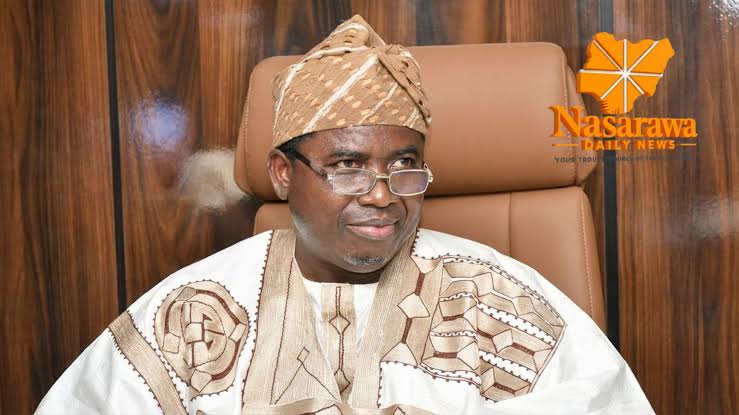
Nigerian protesters in London have confronted the Chairman of the Independent National Electoral Commission (INEC), Professor Joash Amupitan, blocking the vehicle conveying him outside Chatham House and demanding his resignation over alleged irregularities in the preliminary voters' register ahead of Nigeria's 2027 general elections.
The confrontation occurred on Thursday, November 12, as Amupitan arrived at Chatham House to participate in a panel discussion on Nigeria's electoral preparations and democratic future.
Videos circulating on social media showed demonstrators surrounding the vehicle, shouting accusations and expressing anger over what they described as a lack of transparency and impartiality within the electoral commission.
The protesters, believed to be Nigerians living in the United Kingdom, accused INEC of compromising its independence and allegedly favouring President Bola Tinubu and the ruling All Progressives Congress (APC).
They also demanded Amupitan's immediate resignation, with some demonstrators describing the electoral commission as a criminal organisation.
Their grievances centred on alleged duplicate voter registrations, suspicious photographs suspected to have been generated using artificial intelligence (AI), questionable polling units and other discrepancies reportedly identified in the preliminary voters' register.
The demonstration represents another significant challenge to INEC's credibility as Nigeria moves closer to the 2027 general elections, with growing public scrutiny over the commission's handling of voter registration and its commitment to conducting credible polls.
Protest Follows Controversy Over Voters' Register
The London demonstration comes amid mounting criticism of INEC following the circulation of images and records purportedly showing suspicious entries in the preliminary voters' register.
The controversy intensified after questions emerged over the authenticity of some registration photographs, alleged multiple registrations and the presence of questionable polling unit information.
Critics raised concerns that irregularities within the registration database could undermine the credibility of the 2027 elections if not properly addressed.
The development placed additional pressure on Amupitan, who assumed leadership of the electoral commission with expectations that his administration would strengthen institutional independence and restore public confidence.
On November 9, the INEC chairman disclosed that the commission had removed 1,608,660 invalid voter registrations following a comprehensive review of the 2025/2026 Continuous Voter Registration exercise.
The commission also removed 873 records belonging to verified deceased persons, bringing the total number of deleted records to 1,609,553.
Amupitan further disclosed that 54 individuals across 10 states had been identified as allegedly involved in registration irregularities.
The individuals were reportedly facing disciplinary procedures and possible prosecution, depending on the outcome of investigations.
Among the suspected violations were multiple registrations, substituted photographs and breaches of established voter registration procedures.
However, INEC maintained that some questionable records circulating on social media originated from previous registration exercises dating back to 2011 and were not necessarily products of the latest registration exercise.
The commission's acknowledgment of irregularities has nevertheless intensified demands for greater transparency, particularly from opposition political groups and civil society organisations.
Amupitan Defends INEC's Independence
Despite the confrontation outside Chatham House, Amupitan used his engagement at the London institution to defend his leadership and appeal to Nigerians to trust the electoral commission.
He acknowledged that INEC was yet to fully recover from the credibility challenges associated with the technical problems experienced during the 2023 general elections.
The chairman, however, insisted that his administration was determined to deliver free, fair, credible and inclusive elections in 2027.
He cited improvements recorded during recent off-cycle elections as evidence that the commission was making progress.
According to Amupitan, the Anambra and Osun governorship elections conducted under his leadership demonstrated improvements in the speed of result collation and declaration.
He recalled that the 2021 Anambra governorship election took approximately five days to conclude, whereas results from subsequent elections in Anambra and Osun were declared the day after voting.
He also referenced the Ekiti governorship election, Federal Capital Territory Area Council polls and 16 legislative by-elections as part of the commission's recent electoral activities.
Amupitan maintained that the commission was introducing additional technical safeguards to prevent inaccurate polling unit results from appearing on its INEC Result Viewing Portal (IReV) during the 2027 elections.
He specifically assured Nigerians that measures were being developed to strengthen the transmission and publication of election results.
The chairman's assurances come at a time when electronic transmission of results remains one of the most contentious issues surrounding Nigeria's electoral reforms.
Amupitan Rules Out Political Appointment After Tenure
Another issue that featured prominently in the controversy surrounding INEC's independence was the possibility of its chairman accepting a political or diplomatic appointment after leaving office.
The concern was partly influenced by the career trajectory of Amupitan's predecessor, Professor Mahmood Yakubu.
Yakubu, who served as INEC chairman before Amupitan, was among 32 ambassadorial nominees forwarded to the Senate by President Tinubu in November 2025.
He was subsequently designated as Nigeria's non-career ambassador to Qatar.
The development generated debate about the potential implications of post-tenure government appointments for public confidence in the independence of electoral institutions.
Responding to concerns about whether he might accept a similar appointment after completing his tenure, Amupitan categorically ruled out the possibility.
He told participants at Chatham House that he would not accept an appointment from anyone after leaving the commission.
"I'm not going to accept any appointment from anybody because coming to serve here is based on trust," he said.
The INEC chairman explained that his responsibility was to demonstrate impartiality and ensure that Nigerians could trust the institution responsible for conducting elections.
His declaration was an attempt to distinguish his leadership from concerns surrounding political influence and the perceived relationship between electoral officials and the government.
2027 Elections Put INEC Under Increasing Pressure
The confrontation in London highlights the growing international attention surrounding Nigeria's preparations for the 2027 general elections.
With political parties already intensifying their preparations, the accuracy of the voters' register, transparency in result transmission and the neutrality of INEC are becoming increasingly important issues.
For opposition parties, civil society organisations and electoral observers, the credibility of the election will depend largely on whether the commission can demonstrate independence and provide verifiable evidence that its processes are free from manipulation.
The removal of more than 1.6 million questionable voter records represents a significant step towards cleaning up the database, but it has also raised questions about how such a large number of irregularities entered the registration system in the first place.
INEC must therefore go beyond announcing deleted records and investigations. It will need to demonstrate that the problems have been addressed, those responsible are held accountable and safeguards are in place to prevent similar occurrences.
The allegations made by the London protesters have not independently established that Amupitan or INEC deliberately manipulated the voters' register in favour of any political party. Nevertheless, the demonstration reflects the depth of public suspicion surrounding the electoral process.
Public Confidence Remains the Biggest Challenge
For Amupitan, the London confrontation represents a reminder that restoring confidence in INEC will require more than public assurances.
The commission faces the responsibility of convincing Nigerians that every eligible voter can register without discrimination, that duplicate and fraudulent entries will be eliminated, and that election results will accurately reflect the choices made at polling units.
As preparations for the 2027 general elections continue, the chairman's ability to address these concerns will be a major test of his leadership.
Although the protesters' demand for his resignation has not resulted in any announced change in his position, the incident has intensified scrutiny of the electoral commission.
Ultimately, the success of Nigeria's next general elections will depend not only on the credibility of the results but also on whether citizens, political parties and observers believe the process that produced them was transparent, impartial and trustworthy.