Legality and Implications of Iran’s Attacks on Gulf States: International Law & Geopolitical Fallout
A special report analyzing the legality of Iran’s missile and drone strikes on Gulf states - including the UAE - under international law and the wider strategic, diplomatic and security implications for the region and global order.
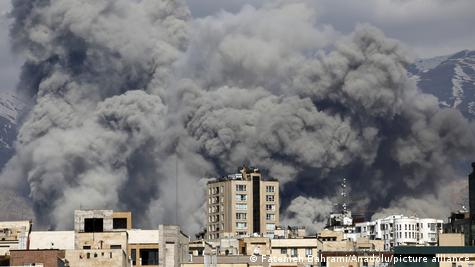
In late February–early March 2026, a dramatic escalation in Middle East hostilities - triggered by U.S. and Israeli airstrikes on Iranian territory - saw the Islamic Republic of Iran launch waves of ballistic missiles, cruise missiles, and armed drones at targets across the Gulf region. Countries including the United Arab Emirates (UAE), Kuwait, Bahrain, Qatar, and Saudi Arabia reported air defence interceptions and damage from debris, civilian casualties, and threats to critical infrastructure, including major airports. The unprecedented attacks rekindled debate over international legal norms, sovereignty, self-defence rights, and the rules governing the use of force. (Wikipedia)
This special report outlines the legal context of the attacks under international law and highlights the broader geopolitical and security implications for the Gulf region and beyond.
Iran’s Retaliatory Strikes: What Happened?
Following strikes by U.S. and Israeli forces on Iranian military and strategic sites - including the compound of Supreme Leader Ayatollah Ali Khamenei - Iran declared a policy of “no leniency” in retaliation, launching battalions of missiles and drones at targets across the Gulf. (The Guardian)
In the UAE, air defences intercepted hundreds of ballistic missiles and drones, though interception debris caused damage and led to civilian deaths and injuries in Abu Dhabi and Dubai. The UAE responded by closing its airspace and condemning the attacks as violations of national sovereignty and international law. (The National)
The strikes have been broadly condemned by Gulf Cooperation Council (GCC) states and the U.S. as acts of aggression, while Iran frames them as a legitimate act of self-defense in response to what it labels unlawful foreign military intervention. (The Times of India)
International Law and the Use of Force
The UN Charter Framework
Under the United Nations Charter, the use of force by one state against another is generally prohibited except in two narrow circumstances: (1) self-defense against an armed attack (Article 51); or (2) Security Council authorization for collective action. Intentional attacks on sovereign territory without these conditions are considered breaches of international law. (AP News)
Iran’s government asserts its retaliatory strikes were justified within its right of self-defense after the U.S. and Israeli air operations. However, this claim is highly contested:
- Critics argue that Article 51’s self-defense provision applies only if there was a clear, imminent armed attack, and defensive responses must be necessary and proportional to the threat. Many legal analysts question whether the strikes met that threshold, particularly when directed at Gulf states that were not directly engaged in the initial operation against Iran.
- The United Nations Security Council has not endorsed any military action in this conflict, meaning there is no collective authorization for offensive operations - complicating the legal justification for Iran’s cross-border offensive actions.
Turkey’s President Recep Tayyip Erdoğan described the strikes on Iran as a violation of international law, stressing the need for diplomatic solutions and warning that further escalation would deeply destabilize the region. (Reuters)
Sovereignty, Civilian Harm, and Proportionality
Even when self-defense is invoked, international law requires that responses be proportional and discriminate - avoiding undue harm to civilians and civilian objects. The launch of hundreds of missiles and unmanned attack drones toward urban areas, airports, and other infrastructure raises legal and ethical concerns:
- Several civilians were killed or injured as debris from intercepted projectiles fell in populated areas of the UAE. (Gulf News)
- Air defense responses and airspace closures highlighted critical risks to civilian aviation and region-wide transport infrastructure.
Under the Law of Armed Conflict (LOAC), attacks that fail to distinguish between legitimate military targets and civilian infrastructure - or that cause disproportionate civilian damage - could constitute violations of humanitarian law. Whether missile and drone barrages launched toward or over civilian zones can be legally justified will remain a major legal question.
Diplomatic Fallout and Regional Realignment
Arab States’ Response
In formal statements, numerous GCC states - including the UAE, Saudi Arabia, Kuwait, Qatar, and Bahrain - strongly condemned Iran’s actions, framing the attacks as belligerent violations of sovereignty and threats to regional stability.
The UAE went further by closing its embassy in Tehran and withdrawing its ambassador, signaling a deep diplomatic rift and reducing avenues for direct negotiation. (mint)
Saudi Arabia, while condemning attacks, also offered its full capabilities in defense against further threats, indicating a willingness to strengthen defensive cooperation within the Gulf. (New York Post)
Strategic and Security Implications
1. Erosion of Gulf Stability: The explicit targeting of multiple Gulf states’ territory - and their subsequent airspace closures - represents a sharp departure from past conflicts where peripheral or proxy engagements were more common. The direct nature of the attacks undermines long-standing regional stability and increases the risk of broader military escalation.
2. Threats to Civil Aviation and Economic Vitality: Major aviation hubs like Dubai International Airport and other transit corridors were forced to suspend operations, with more than 3,400 flights disrupted across the region due to airspace closures. Such disruptions have cascading effects on global tourism, shipping, commerce, and supply chains.
3. Security Realignments: Gulf states’ renewed condemnation and defensive positioning may accelerate military alliances and reliance on external partners, particularly the United States, to deter future threats. This may introduce new strategic dependencies, reshaping the Gulf security architecture.
4. International Law and Accountability
The conflict raises questions about the enforceability of international law in high-intensity modern warfare. Without clear UN Security Council resolutions or comprehensive legal adjudication, disputes over self-defense interpretations and proportionality will continue to color diplomatic narratives.
Conclusion: Law, Security and the Future
Iran’s missile and drone strikes on Gulf states present complex challenges at the intersection of international law, national sovereignty, and geopolitical strategy. While Tehran frames its retaliatory actions as justified self-defense, legal norms - particularly the UN Charter’s rules on use of force and the principles of distinction and proportionality - place significant constraints on such claims.
The growing diplomatic rifts, airspace disruptions, civilian harm, and economic fallout underscore a new era of regional risk - one in which legal imperatives, strategic deterrence, and multilateral diplomacy must all be recalibrated to prevent further escalation.