Labour Gives FG Until Tuesday to Resolve Wage Dispute, High Petrol Prices
Nigeria’s NLC and TUC have given the Federal Government until October 27 to address minimum wage renegotiation, petrol prices, tax relief and outstanding workers’ agreements, warning of possible nationwide action.
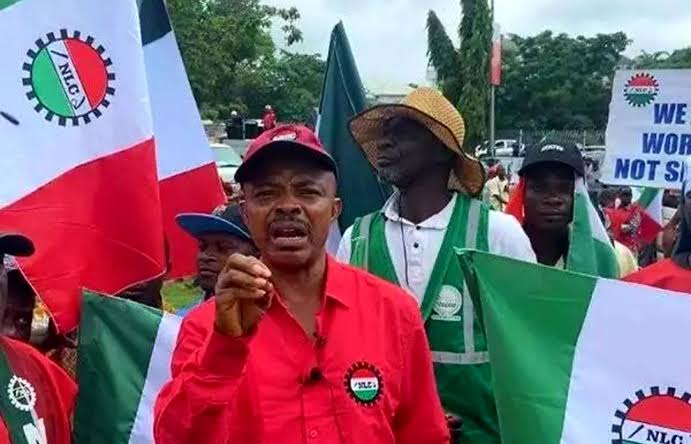
Nigeria’s organised labour movement has given the Federal Government until Tuesday, October 27, to make meaningful progress on workers’ demands over petrol prices, minimum wage renegotiation, tax relief and unresolved public-sector agreements, warning that failure to reach an agreement could trigger nationwide industrial action.
The ultimatum followed a meeting between representatives of the Nigeria Labour Congress (NLC), the Trade Union Congress (TUC) and the Federal Government in Abuja on Thursday, October 22, which ended without concrete commitments.
In a joint statement, the unions expressed disappointment that the government delegation arrived without the necessary authority to negotiate substantively on the outstanding issues.
The meeting, held at the Federal Ministry of Labour, was adjourned at the request of the Minister of Labour to allow the government to assemble relevant ministers and heads of departments and agencies for further discussions.
The unions said their next move would depend on the outcome of the rescheduled meeting, while directing their affiliates, state councils and civil society allies to prepare for possible nationwide action.
The development raises the prospect of renewed confrontation between organised labour and the government over the rising cost of living and the purchasing power of Nigerian workers.
NLC Demands Reduction in Petrol Prices to 2024 Levels
A major demand by organised labour is an immediate reduction in petrol prices nationwide to the levels prevailing when the current national minimum wage was signed into law in 2024.
The NLC argues that rising petrol costs have significantly increased the financial burden on workers and households, pushing up transportation fares, food prices and the cost of essential services.
In its earlier ultimatum issued on October 8, the congress called on the Federal Government to work with relevant agencies to bring down petrol prices and provide relief to workers struggling with rising living expenses.
The union's position comes amid persistent concerns about the cost of energy following the removal of Nigeria's petrol subsidy in 2023 and the adoption of market-based pricing.
Petrol prices have remained a major source of public concern, particularly for workers who depend on public transportation to commute to work and households that rely on petrol-powered generators because of unreliable electricity supply.
The government recently extended a N66-per-litre discount at Nigerian National Petroleum Company (NNPC) retail stations through October 31. However, the measure has not resolved the wider dispute over fuel affordability. The government has maintained that the arrangement is a temporary price reduction rather than a reinstatement of the former subsidy regime.
Labour wants more substantial action to ease the burden on workers and the wider population.
Workers Demand Renegotiation of N70,000 Minimum Wage
The renegotiation of the national minimum wage is another central issue in the dispute.
Nigeria's minimum wage was increased from N30,000 to N70,000 in 2024 following negotiations between the Federal Government, organised labour and other stakeholders.
However, the NLC maintains that rising living costs and the declining purchasing power of the naira have significantly reduced the value of workers' earnings.
The congress is demanding that negotiations for a new minimum wage begin before the end of October, arguing that the existing amount is insufficient to cover basic necessities such as food, housing, transportation, healthcare and education.
Labour's demand extends beyond a review of the statutory minimum wage. It also wants the government to implement agreed tax relief measures and provide outstanding wage awards intended to cushion the effects of rising living expenses.
The union has warned that further delays could deepen workers' dissatisfaction and undermine confidence in agreements reached between the government and organised labour.
In its October 8 communiqué, the NLC described the current wage as inadequate under prevailing economic conditions and called for a living wage that reflects the actual cost of maintaining a household.
Health Workers and Public Servants Also Affected
The dispute covers several outstanding agreements affecting workers across the public service, including health-sector employees.
Organised labour wants the Federal Government to implement the terms of settlement reached with the Joint Health Sector Unions and the Assembly of Healthcare Professionals on February 5, 2026.
The NLC is also demanding action on issues raised by the Joint Public Service Negotiating Council, including peculiar allowances, wage awards and hazard allowances.
These demands reflect broader concerns that agreements reached during previous negotiations have not been fully implemented.
For health workers, unresolved employment and remuneration issues could further strain relations between unions and government institutions already facing pressure to maintain effective public services.
The unions are therefore seeking a comprehensive response rather than a settlement limited to petrol prices or the minimum wage.
The inclusion of these issues in the latest negotiations means that the October 27 meeting will need to address several separate disputes involving different groups of public-sector employees.
Labour Accuses Government Delegation of Arriving Unprepared
The NLC criticised the Federal Government delegation for attending Thursday's meeting without sufficient authority to negotiate and make commitments on the issues presented.
Acting NLC General Secretary Benson Upah said the discussions failed to produce concrete outcomes, leaving the outstanding demands unresolved.
The unions said the Minister of Labour requested an adjournment to give the government time to prepare for a more substantive meeting involving the relevant ministers and agency heads.
Organised labour has indicated that it remains open to dialogue but will not accept what it described as indefinite delays.
The unions have also urged their affiliates, state councils and civil society partners to remain on alert and begin mobilisation for possible action across the country.
However, labour has not announced a definite nationwide strike date. Its statement indicates that the relevant organs of the unions will determine the next course of action if Tuesday's discussions fail to produce meaningful progress.
The distinction is important because the October 27 deadline represents an opportunity for further negotiations before any potential industrial action is formally decided.
What Happens If Tuesday's Meeting Fails?
The outcome of the October 27 meeting could determine whether the government and organised labour move towards a negotiated settlement or enter another period of industrial tension.
A successful meeting would require more than assurances, with labour seeking concrete commitments on petrol prices, minimum wage renegotiation, tax relief and the implementation of existing agreements.
For the government, the challenge is to address workers' concerns while managing the economic and fiscal implications of potential interventions in fuel pricing and public-sector remuneration.
Failure to reach an understanding could prompt the NLC and TUC to consider coordinated industrial action, although the nature and timing of any such action would depend on decisions by their respective leadership structures.
A nationwide labour action could affect public services, government offices and other sectors, depending on the unions involved and the scope of any eventual directive.
For millions of Nigerian workers and households, the dispute reflects a wider struggle over purchasing power, affordable transportation and the cost of meeting everyday needs.
As the Tuesday deadline approaches, attention will focus on whether the Federal Government presents a stronger negotiating team with the authority to make commitments and whether both sides can agree on practical measures.
The immediate priority for organised labour is to secure tangible relief and progress on outstanding agreements. For the government, the meeting presents an opportunity to prevent the disagreement from escalating into a broader confrontation with the country's labour movement.