Kwankwaso Declares Readiness to Work with Obi or Any NDC Presidential Candidate Ahead of 2027
Former Kano Governor Rabiu Kwankwaso says he is open to working with Peter Obi or any candidate that emerges as the NDC presidential flagbearer ahead of Nigeria’s 2027 elections, signaling possible opposition realignment.
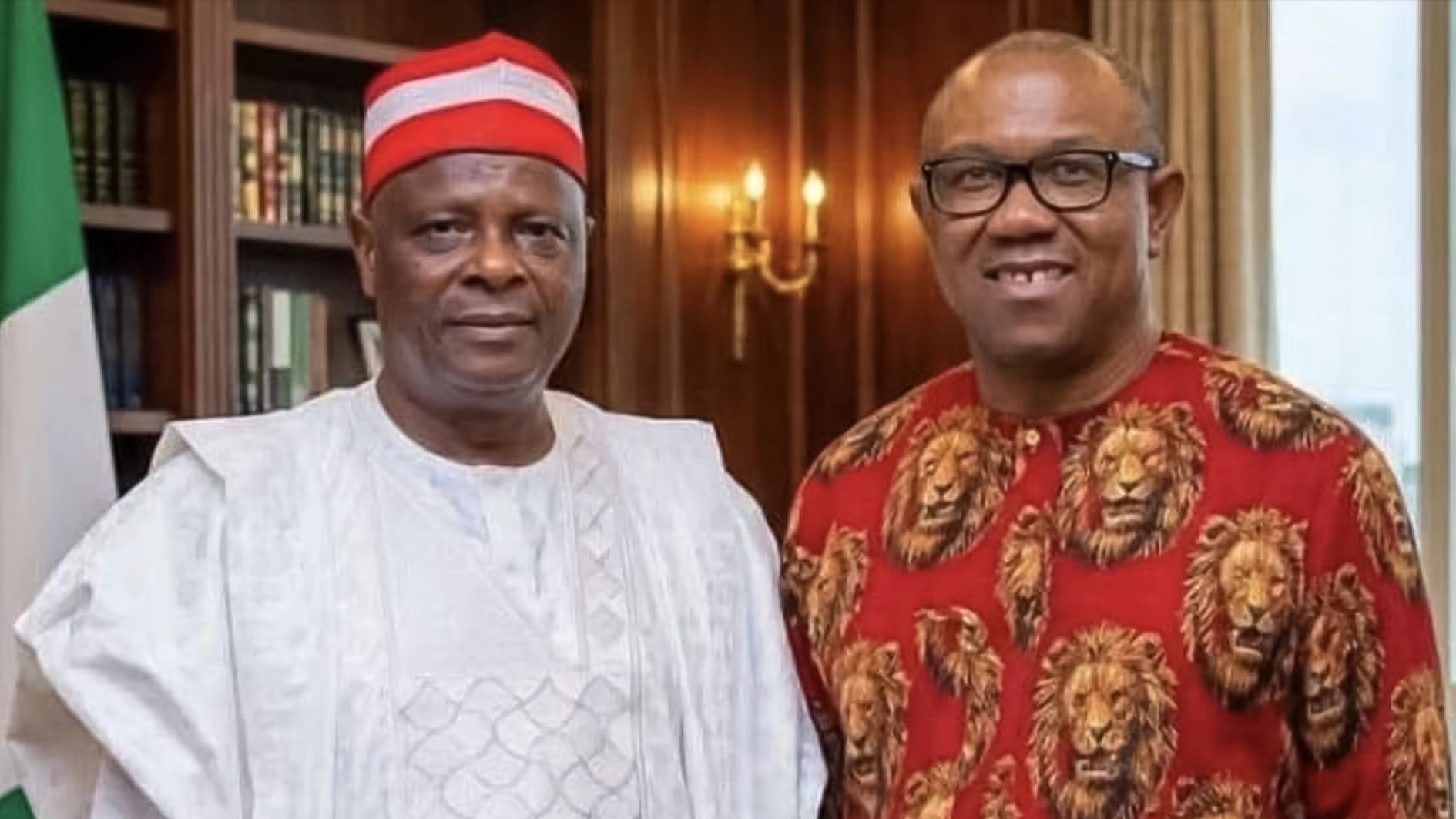
Former Kano State Governor and 2023 presidential candidate, Senator Rabiu Musa Kwankwaso, has declared that he is willing to work with Peter Obi or any candidate that emerges as the presidential flagbearer of the National Democratic Coalition (NDC) ahead of Nigeria’s 2027 general elections.
Kwankwaso’s statement has reignited political discussions across the country, coming at a time when opposition parties are increasingly exploring coalition strategies aimed at challenging the ruling All Progressives Congress (APC) in 2027.
Speaking during a recent political engagement, the leader of the New Nigeria People’s Party (NNPP) and founder of the Kwankwasiyya Movement emphasized that his priority is not personal ambition but the emergence of a leadership that can “rescue Nigeria” from its current economic and security challenges.
According to him, ideological alignment and national interest will guide any decision he makes regarding alliances ahead of the next general election.
Kwankwaso said he is open to collaboration with any credible political force, including Peter Obi of the Labour Party, or whoever emerges as the presidential candidate of the emerging opposition coalition reportedly being discussed under the umbrella of the NDC. (vanguardngr.com)
Rising Momentum for Opposition Coalition
His remarks come amid growing speculation about a major opposition realignment ahead of 2027. Political observers believe that discussions are ongoing among opposition leaders to form a broad coalition capable of mounting a strong challenge against President Bola Tinubu’s expected re-election bid.
Names frequently mentioned in these discussions include Peter Obi, Atiku Abubakar, Nasir El-Rufai, and other influential political figures seeking to consolidate support across Nigeria’s fragmented opposition landscape.
Kwankwaso, who finished fourth in the 2023 presidential election, remains a significant political figure, particularly in Northern Nigeria, where his Kwankwasiyya Movement maintains strong grassroots influence.
Analysts say his potential alignment with a broader coalition could significantly reshape the political equation ahead of 2027.
Kwankwaso’s Political Positioning
Kwankwaso has consistently positioned himself as a political actor focused on national unity and reform. Over the years, he has built a reputation for grassroots mobilization, especially among youths and students.
His NNPP performed strongly in Kano State during the 2023 elections, winning the governorship seat and securing a significant number of legislative positions, largely due to his influence.
Political observers note that Kwankwaso’s openness to collaboration signals a pragmatic approach as opposition leaders reassess their chances of defeating the ruling party without a united front.
He has repeatedly stressed that Nigeria’s challenges, ranging from inflation and unemployment to insecurity, require collective political solutions rather than fragmented opposition efforts.
Possible Obi - Kwankwaso Alignment
Peter Obi, who ran under the Labour Party in 2023 and gained massive youth support across urban centers, remains one of the most prominent opposition figures in Nigeria today.
Although neither Obi nor Kwankwaso has formally announced any alliance, political analysts believe a partnership between the two could create a strong north-south electoral balance capable of reshaping Nigeria’s political landscape.
Kwankwaso’s influence in the North, combined with Obi’s popularity in the South-East and urban South-West, is often described by analysts as a potentially powerful political combination.
However, internal party dynamics, ideological differences, and leadership negotiations remain major hurdles to any formal alliance.
The Role of the NDC in Emerging Talks
Kwankwaso’s reference to the National Democratic Coalition (NDC) has further fueled speculation about a structured opposition merger ahead of 2027.
While details about the coalition remain fluid, political insiders suggest that discussions are ongoing among various opposition blocs seeking to unify under a common platform.
If successful, such a coalition could mirror past political alliances in Nigeria’s history, where fragmented opposition groups merged to successfully challenge dominant ruling parties.
Political Reactions Across Nigeria
Kwankwaso’s comments have sparked widespread reactions among political supporters, analysts, and social media users.
Supporters of the Kwankwasiyya Movement described his openness as a “statesmanlike approach” aimed at prioritizing national interest over personal ambition.
Others, however, argue that ideological differences between opposition leaders may complicate any meaningful alliance.
On social media platforms, Nigerians debated whether such a coalition could realistically defeat the APC in 2027, given the party’s current political structure and control of federal institutions.
Some users praised the idea of unity among opposition figures, while others expressed skepticism, citing past failed attempts at political mergers.
Analysts Weigh In
Political analysts say Kwankwaso’s statement should be seen as part of early political positioning ahead of a long and uncertain election cycle.
According to observers, Nigerian politics often sees strategic alliances forming and dissolving in the years leading up to elections, with final arrangements typically emerging closer to election season.
They also note that Kwankwaso’s influence in Kano, Nigeria’s most populous northern state, makes him a valuable political asset for any coalition.
However, analysts caution that personal ambitions, party structures, and regional interests could still hinder the formation of a unified opposition front.
What It Means for 2027
As Nigeria moves closer to the 2027 general elections, political activity is expected to intensify significantly. Early signals suggest that coalition-building will play a major role in shaping the contest.
Kwankwaso’s willingness to align with Obi or any opposition candidate under the NDC umbrella reflects a broader trend of political repositioning among Nigeria’s major political actors.
Whether this translates into a formal alliance remains uncertain, but the statement has already added momentum to discussions about a potentially historic realignment in Nigerian politics.
For now, Nigerians are watching closely as political leaders begin to lay the groundwork for what could become one of the most competitive elections in the country’s recent history.