Keir Starmer Under Pressure as Party Revolt Leaves UK Prime Minister Hanging by a Thread
Keir Starmer is facing mounting political danger as growing unrest within his party threatens his authority. Internal rebellion, policy disputes, and declining public confidence have intensified pressure on the UK Prime Minister amid fears of a deeper political crisis.
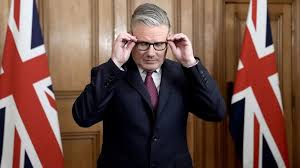
Keir Starmer is facing one of the most difficult moments of his political leadership as growing rebellion within his own party threatens to weaken his authority and destabilize the British government.
What began as quiet dissatisfaction among party members has reportedly evolved into a broader internal revolt involving disagreements over economic policies, immigration, public spending, party direction, and electoral strategy.
Political analysts now warn that the Prime Minister appears to be “hanging by a thread” as tensions deepen between party loyalists and increasingly vocal critics within the ruling political establishment.
The growing unrest comes at a sensitive time for the United Kingdom, which continues grappling with economic pressures, inflation concerns, public service challenges, and voter frustration following years of political instability.
With opinion polls fluctuating and opposition parties seeking to capitalize on internal divisions, the crisis has intensified questions about Starmer’s long-term political survival and the future direction of British politics.
Growing Signs of Internal Rebellion
Reports from Westminster suggest that frustrations within the governing party have been building for months.
Several lawmakers are believed to be unhappy with the Prime Minister’s handling of economic reforms, tax policies, welfare decisions, and public sector negotiations.
Some members reportedly fear the government is losing touch with core supporters, while others believe the leadership has failed to communicate a clear long-term national vision.
The rebellion appears to involve both ideological disagreements and growing anxiety over electoral prospects.
Moderate voices within the party are reportedly urging unity and caution, warning that open divisions could weaken the government significantly ahead of future elections.
However, critics argue that remaining silent would only deepen public dissatisfaction and accelerate political decline.
The atmosphere inside the party has therefore become increasingly tense and unpredictable.
Economic Pressures Fuel Political Tensions
One of the biggest drivers behind the unrest remains the United Kingdom’s ongoing economic difficulties.
Although inflation has shown signs of moderation compared to previous peaks, millions of Britons continue facing rising living costs, housing pressures, energy bills, and economic uncertainty.
Public frustration over healthcare waiting times, transportation disruptions, and wage disputes have also contributed to political pressure on the government.
Critics inside the party reportedly believe stronger intervention and clearer economic messaging are needed to rebuild voter confidence.
Others argue that the government’s cautious fiscal approach risks alienating working-class supporters struggling with economic hardship.
Political observers note that economic dissatisfaction has historically played a major role in weakening British prime ministers, particularly when internal party confidence begins eroding simultaneously.
Immigration and Social Policy Divisions
Immigration policy has also emerged as a major source of disagreement within the ruling party.
Different factions reportedly hold conflicting views regarding border control, asylum policies, and broader immigration reform.
Some lawmakers favor stricter enforcement measures aimed at addressing public concerns about migration levels and border security.
Others argue that harsh immigration rhetoric risks damaging the party’s progressive image and alienating younger or urban voters.
The disagreements reflect broader tensions within British politics, where immigration remains one of the most emotionally charged and politically divisive issues.
Social policy debates involving public spending, healthcare, climate commitments, and welfare programmes have also contributed to internal friction.
Analysts say such ideological divisions can become especially dangerous when governments begin appearing politically vulnerable.
Opposition Parties Watching Closely
Britain’s opposition parties are closely monitoring the growing turmoil.
Political rivals have already begun portraying the government as divided, distracted, and increasingly incapable of providing stable leadership during a difficult economic period.
Opposition figures argue that internal chaos within the ruling party is undermining effective governance and damaging public confidence in national leadership.
Some analysts believe the unrest could significantly affect future local elections and parliamentary contests if the government fails to quickly restore unity.
Political instability may also encourage rival parties to intensify campaigns targeting undecided voters frustrated with mainstream politics.
Public confidence often weakens rapidly when governing parties appear consumed by internal battles rather than national priorities.
Leadership Speculation Intensifies
As pressure grows, speculation regarding potential leadership challenges has intensified across British political circles.
Although no formal leadership contest may currently exist, reports suggest that some lawmakers are quietly discussing alternative leadership scenarios should the crisis deepen.
Political commentators note that British politics has a long history of sudden leadership changes triggered by internal party revolts.
Several recent prime ministers faced rapid political collapse after losing confidence among lawmakers and party members.
While Starmer continues publicly projecting confidence and stability, analysts warn that political authority can weaken quickly once perceptions of vulnerability take hold inside governing parties.
The Prime Minister’s immediate challenge will likely involve preventing dissatisfaction from evolving into an organized rebellion capable of threatening his leadership directly.
International Implications
The crisis also carries broader international implications.
The United Kingdom remains one of Europe’s most influential political and economic powers, meaning domestic instability can affect diplomacy, trade negotiations, defense cooperation, and international markets.
Allies across Europe and North America are likely monitoring developments carefully, particularly amid ongoing global geopolitical tensions involving Ukraine, NATO, energy security, and international trade.
Political uncertainty in London could complicate decision-making on major foreign policy issues if the government becomes increasingly focused on internal survival.
Financial markets also tend to react cautiously when political instability threatens policy continuity in major economies.
Public Confidence Becoming Critical
Perhaps the greatest challenge facing the Prime Minister is maintaining public confidence while internal tensions continue escalating.
Voters often tolerate difficult economic conditions more easily when governments appear united and competent.
However, visible internal conflict can create impressions of weakness and uncertainty, potentially accelerating political decline.
Recent polling trends suggest public frustration with mainstream political institutions remains significant across the United Kingdom.
The government therefore faces pressure not only from internal critics but also from an increasingly skeptical electorate demanding practical solutions to everyday challenges.
Political strategists warn that prolonged infighting could further damage the party’s credibility with undecided voters.
What Happens Next?
The coming weeks may prove decisive for both Starmer’s leadership and the future stability of the government.
If party leaders successfully restore discipline and refocus attention on economic recovery and public services, the crisis could gradually ease.
However, continued rebellion or policy confusion may intensify speculation about leadership changes and political instability.
Much may depend on whether the Prime Minister can rebuild confidence among lawmakers while also convincing voters that his government remains capable of delivering effective leadership.
For now, Britain’s political landscape appears increasingly fragile as one of the country’s most powerful political figures faces mounting pressure from both inside and outside his party.
The revolt may not yet have reached a breaking point, but the warning signs are becoming harder for Westminster to ignore.