Keir Starmer Announces Resignation as UK Prime Minister, Andy Burnham Launches Bid to Succeed Him
UK Prime Minister Keir Starmer has announced his resignation after losing Labour Party support, while Andy Burnham has formally declared his candidacy to succeed him, setting the stage for a major political transition.
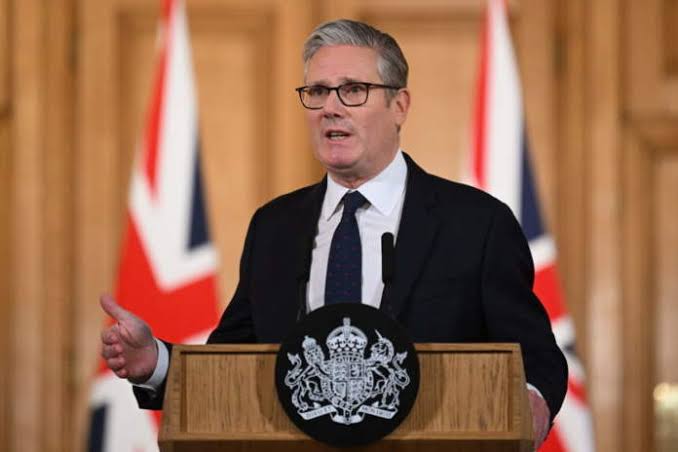
Britain is preparing for another dramatic change in leadership after Prime Minister Keir Starmer announced he will step down as leader of the Labour Party and resign as prime minister, ending a turbulent two-year tenure that began with a landslide election victory but concluded amid mounting political pressure and declining public support.
In an emotional statement delivered outside 10 Downing Street on Monday morning, Starmer confirmed that he would remain as caretaker prime minister until Labour members elect his successor, saying he had accepted that he no longer commanded sufficient confidence within his party to lead it into the next general election.
"I have listened to colleagues, I have listened to the country, and I believe the right course is to step aside so that Labour can renew itself," Starmer said, thanking his Cabinet, party members and the British public for their support during his time in office. He added that serving as Britain's prime minister had been "the greatest privilege" of his political career. (Reuters)
The announcement marks a remarkable political reversal for Starmer, who led Labour to a historic parliamentary majority in the 2024 general election after 14 years of Conservative rule. At the time, he was widely credited with restoring Labour's credibility and steering the party back to the political centre.
However, that goodwill gradually evaporated as his government struggled to convince voters that it had answers to Britain's deep-rooted economic and social challenges.
Persistent inflation, sluggish economic growth, pressure on public services, rising government borrowing and growing voter frustration over the cost of living steadily eroded Labour's popularity. The party's disappointing performance in recent local elections further intensified calls for new leadership.
Adding to the pressure was the rapid rise of Reform UK, which capitalised on public dissatisfaction and increasingly threatened Labour's electoral prospects ahead of the next national vote.
Within hours of Starmer's announcement, Andy Burnham formally declared that he would seek Labour leadership, becoming the first and, so far, only candidate to enter the race.
Burnham, who recently returned to Parliament after winning a by-election in Makerfield, said the country required "a fresh beginning" and promised to reconnect Labour with working-class communities while delivering practical solutions to Britain's economic challenges.
Speaking after arriving in London from Manchester, Burnham urged party members to focus on unity rather than internal divisions.
"It is too early to talk about future elections," he said when asked whether he would call an early general election if he became prime minister. "Right now, our responsibility is to provide stable government and restore confidence in Labour."
Burnham's campaign received a significant boost after former Health Secretary Wes Streeting announced he was withdrawing from any potential leadership contest and endorsing the Greater Manchester politician.
Streeting said discussions between the two men had convinced him that Burnham possessed the vision needed to rebuild Labour and deliver what he described as "progressive capitalism."
His endorsement is expected to discourage other potential candidates from entering the race, raising the possibility that Burnham could become Labour leader without a contested ballot.
Under Labour's timetable, nominations for the leadership contest will open on July 9.
If Burnham remains unopposed, he could become Labour leader and therefore Britain's next prime minister within weeks. Should multiple candidates emerge, the contest would continue until September, with Starmer remaining in office in a caretaker capacity throughout the transition.
Political analysts say Burnham inherits a formidable list of challenges.
Britain continues to grapple with weak economic growth, strained public finances, pressure on the National Health Service, housing shortages and rising demands for increased defence spending amid continued geopolitical uncertainty.
Markets responded cautiously but positively to the clarity provided by Starmer's resignation timetable, with investors appearing reassured that Labour intends to conduct an orderly transition rather than descend into a prolonged internal leadership battle.
Despite the disappointment surrounding his departure, Starmer defended his government's record, highlighting achievements in stabilizing the economy after years of turbulence, improving relations with European allies, reducing NHS waiting lists and strengthening Britain's support for Ukraine.
He also pointed to reforms aimed at restoring trust in government and modernizing public services, arguing that his administration had laid important foundations even if political circumstances prevented him from completing the work.
Supporters praised his willingness to step aside to preserve party unity, while critics argued that his resignation reflected broader dissatisfaction with Labour's direction and inability to deliver the transformative change many voters had expected after the 2024 election.
Burnham, a former Cabinet minister who has built a strong political profile during his years as Mayor of Greater Manchester, is widely viewed as representing a more populist and grassroots style of leadership than Starmer.
His supporters believe he can reconnect Labour with traditional working-class voters while broadening the party's appeal to younger and centrist supporters.
Whether that strategy succeeds remains uncertain.
For now, Labour faces the delicate task of managing another leadership transition while governing a country confronting significant economic and political headwinds.
Starmer's resignation closes a brief but consequential chapter in British politics. His successor will inherit not only one of the largest parliamentary majorities in recent history but also the responsibility of restoring public confidence in a government facing increasing pressure from both the opposition and dissatisfied voters.
With Andy Burnham emerging as the overwhelming favourite, Britain appears poised for yet another change at the top of government continuing a remarkable period of political upheaval that has seen multiple prime ministers come and go since the Brexit era.