Jigawa Governor Takes Custody of Walida Abdulhadi: DSS Handover Sparks National Debate on Justice, Human Rights, and Religious Tensions
Governor Umar Namadi takes custody of Walida Abdulhadi after DSS handover in Abuja. The controversial case involving alleged abduction, conversion claims, and legal battles raises national questions on justice, interfaith tensions, and human rights in Nigeria.
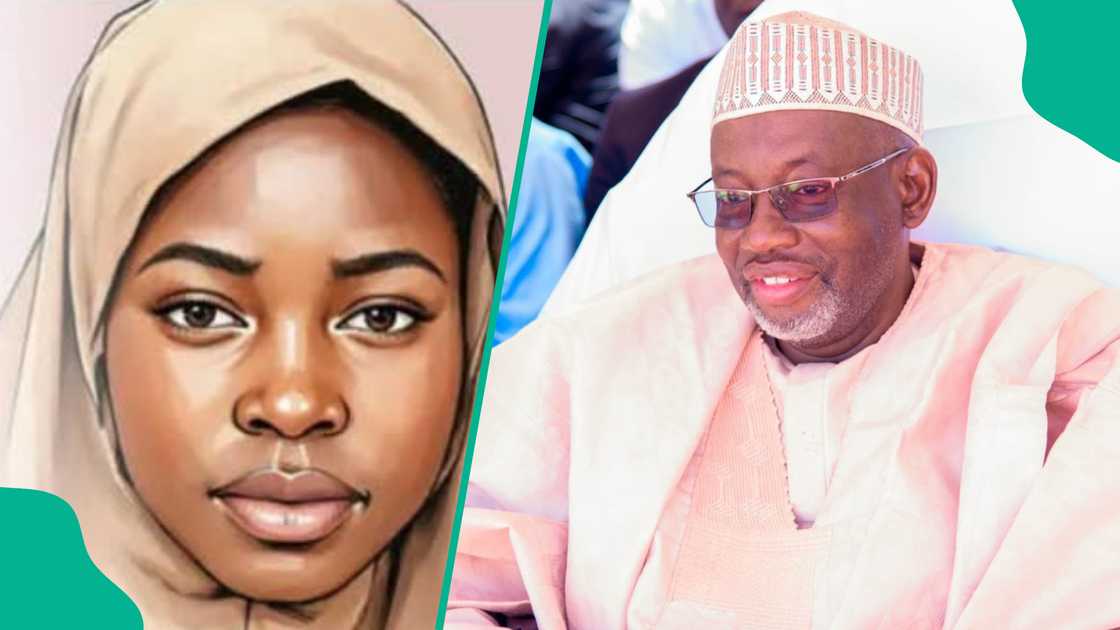
Umar Namadi, Governor of Jigawa State, has formally taken custody of Walida Abdulhadi Ibrahim, the young woman whose alleged abduction and prolonged stay in the custody of the Department of State Services (DSS) ignited nationwide controversy.
The handover occurred late at the DSS headquarters in Abuja, concluding around 10:40 pm, in the presence of senior government officials, civil society organizations, and religious representatives. Walida’s parents, however, were notably absent.
Governor Namadi assured the public that all contentious issues surrounding her disappearance and alleged exploitation would be resolved through the courts. “Walida is the daughter of Jigawa State. Her safety and full recovery are our priority. The matter is a state issue and will be treated as such,” the governor said.
The Timeline: From Disappearance to Recovery
Walida reportedly went missing in 2023 from Hadejia Local Government Area of Jigawa State. According to family accounts, she was allegedly abducted by a woman identified as Mariam and later subjected to sexual exploitation.
Her case took a complex turn when she resurfaced in Abuja and moved in with a DSS operative, Ifeanyi Onyewuenyi, and gave birth to a baby girl in November 2025.
The story gained national traction after Weekend Trust published an exclusive interview with Walida on February 21, 2026, detailing her ordeal
In December 2025, Walida’s father reportedly received a call from the DSS operative informing him that his daughter was with him. After unsuccessful attempts to retrieve her, her uncle filed a petition at the DSS headquarters. The family also approached a court in Jigawa, which directed that she be released to her parents. However, the DSS filed a counter-motion, insisting that investigations were ongoing.
Legal Battle and Custody Dispute
Following mounting pressure from civil society groups, religious organizations, and human rights advocates, questions grew about why Walida remained in DSS custody after being recovered in January 2026.
The Director General of the DSS, Adeola Oluwatosin Ajayi, defended the agency’s actions. “Our intervention is about law and order. Our concern is the safety and future of Walida. She has the right to live, and we have the responsibility to ensure her safety while investigations continue.”
Ajayi disclosed that multiple agencies - including the police, Civil Defence, the Federal Ministry of Women Affairs, and the International Federation of Women Lawyers, were involved in an inter-agency investigation. The Nigerian Medical Association was also invited to assess Walida’s mental status.
He confirmed that Ifeanyi remains in DSS custody and “will face the music if found wanting.”
Religious Tensions and National Implications
The controversy deepened amid allegations that Walida had been converted to Christianity during her disappearance - an issue that heightened interfaith sensitivities in a country already grappling with religious divisions.
The Nigerian Supreme Council of Islamic Affairs (NSCIA) participated in the handover process, represented by its Deputy National Legal Adviser, Barrister Haroun Muhammad. “This matter is capable of throwing the country into chaos. It can deepen the unfortunate division between Muslims and Christians,” Muhammad warned.
Earlier in the week, a coalition including the Muslim Rights Concern (MURIC), the Federation of Muslim Women’s Associations in Nigeria (FOMWAN), the Muslim Students’ Organization of Nigeria (MSO), and Women in Da’awa addressed a press conference in Abuja. The coalition insisted that the issue transcended religion and centered on constitutional order, justice, and human rights.
Governor’s Position: State Custody, Not Parental Transfer
In a move that surprised some observers, Governor Namadi clarified that taking Walida into state custody does not automatically mean she would be returned to Jigawa or directly to her parents. “She will remain in Abuja for now under state protection,” he said, adding that both Walida and her baby would remain under the care of the Jigawa State government pending court resolution.
The governor also indicated that the dispute over her age - a critical factor in determining the legality of alleged actions, would be resolved judicially.
Echoes of the Ese Oruru Case
In defending the DSS position, Ajayi referenced the high-profile Ese Oruru case, which similarly involved allegations of abduction, religious conversion, and interstate custody disputes. The case sparked nationwide protests and political tensions.
By invoking history, the DSS DG suggested the agency was attempting to prevent a repeat of events that once inflamed public sentiment and interfaith mistrust.
Human Rights and Institutional Accountability
Beyond religious dimensions, Walida’s case underscores larger questions about state power, institutional accountability, and victims’ rights. Legal experts note that prolonged custody by a security agency - even under the guise of protection - can raise constitutional concerns if not transparently justified.
Nigeria’s Constitution guarantees freedom of movement and protection of fundamental rights. The judiciary’s eventual ruling will likely clarify whether the DSS acted within its mandate.
Civil society organizations, including the International Federation of Women Lawyers (FIDA), have called for due process and psychological rehabilitation for Walida.
A Nation Watching
The presence of lawmakers, commissioners, religious leaders, and women’s advocacy groups at the DSS headquarters reflects how the case has evolved from a family tragedy into a national issue.
At its core are multiple unresolved questions: Was Walida abducted? Was she a minor at the time? Were her rights violated, and did state institutions overstep their bounds? As Governor Namadi assumes custody, the spotlight shifts to the courts, where legal clarity is expected to emerge.
Conclusion: Justice, Healing, and National Unity
The Walida Abdulhadi case sits at the intersection of law, religion, gender rights, and national cohesion. Governor Namadi’s assurance that “justice will be served” now rests on the judiciary’s capacity to fairly adjudicate complex facts amid intense public scrutiny.
For Nigeria, the case represents more than one young woman’s ordeal. It tests the country’s institutions, its interfaith tolerance, and its commitment to protecting vulnerable citizens while upholding constitutional order.
The coming weeks may determine not only Walida’s future but also whether Nigeria can navigate sensitive crises without descending into sectarian division.