Israeli Strikes in Southern Lebanon Kill At least Nine as Kfar Rumman Attack Escalates Regional Tensions
Israeli airstrikes on Kfar Rumman in southern Lebanon killed at least nine people, with the toll later rising to 12, amid renewed fighting with Hezbollah despite a US-backed ceasefire.
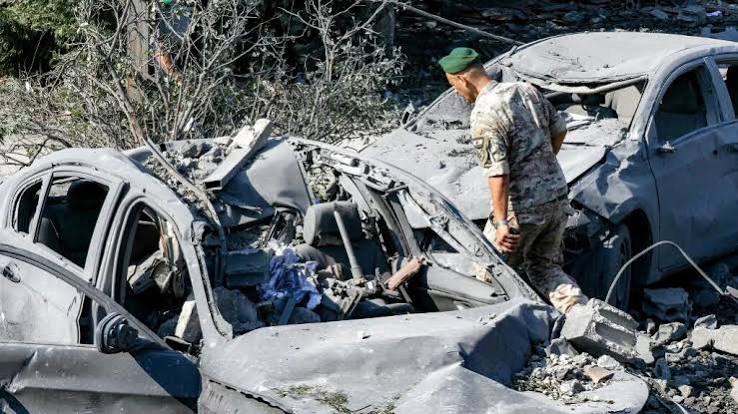
Israeli airstrikes on the southern Lebanese village of Kfar Rumman have killed at least nine people, including women and children, in a fresh escalation between Israel and Hezbollah despite a ceasefire intended to halt the fighting.
The attacks occurred early Monday, September 7, 2026, in Lebanon's Nabatieh region. Lebanon's Health Ministry initially reported that nine people had been killed in two Israeli strikes, while several others were wounded. Later reports said the death toll had risen to at least 12, including two children and four women. (wplg)
The latest violence has intensified concerns that the fragile truce between Israel and Hezbollah is rapidly deteriorating, with southern Lebanon again becoming a major flashpoint.
Residential Building Hit in Kfar Rumman
According to Lebanon's Health Ministry and the country's National News Agency, one of the Israeli strikes hit a residential building in Kfar Rumman shortly after midnight.
Initial reports said eight people were killed in the building, including a child and two women, while 11 others were wounded. The Health Ministry later revised the overall death toll from the attacks upward.
Rescue teams worked through the rubble using heavy machinery as they searched for survivors and additional victims. The destruction left families and residents searching for relatives while emergency workers attempted to determine the full extent of the casualties.
The attack struck a populated part of the village rather than an isolated military position, according to residents quoted by the Associated Press. One resident, Fouad Chakaron, described living under constant anxiety because of shelling around the town before the latest strike hit its centre.
Paramedic Also Killed in Separate Strike
A second Israeli strike targeted a vehicle in the village, according to Lebanese authorities.
The Health Ministry said the attack killed a paramedic affiliated with the Lebanese Islamic Risala Scout Association and wounded two other people. The incident added to concerns about the dangers facing emergency workers operating in southern Lebanon.
The latest deaths came only a day after Israeli strikes elsewhere in southern Lebanon reportedly killed at least seven people and destroyed an unused hospital in Nabatieh al-Fawqa.
Lebanese officials have condemned the continuing Israeli operations, warning that attacks on civilian areas and public infrastructure could further destabilise the country.
Israel Says It Is Targeting Hezbollah
Israel has defended its military operations in southern Lebanon as actions against Hezbollah.
The Israeli military said its forces had targeted Hezbollah militants and infrastructure, including individuals allegedly involved in transferring weapons in the Kfar Rumman area. Israel also said it had struck a weapons storage facility belonging to the group.
According to the Israeli military, the latest operations were carried out in response to Hezbollah drone attacks against Israeli troops operating in the area. Israel has also accused Hezbollah of maintaining military infrastructure in southern Lebanon despite the ceasefire. (Reuters)
The Israeli military said it was reviewing reports concerning civilian casualties from the Kfar Rumman strike.
Hezbollah, meanwhile, remains a central force in southern Lebanon and has continued to confront Israeli military activity in areas where Israel says it maintains security interests.
Ceasefire Under Increasing Pressure
The latest strikes are particularly significant because they occurred despite a US-mediated ceasefire agreement reached in June between Israel and Hezbollah.
The truce was intended to reduce hostilities and create conditions for a broader security arrangement, including the withdrawal of Israeli forces from southern Lebanon and the disarmament of Hezbollah.
Instead, violence has continued to flare.
Israel has maintained military positions and operations in parts of southern Lebanon, while Hezbollah has continued launching attacks in response to Israeli activity. The cycle has created increasing uncertainty over whether the ceasefire framework can survive.
Reuters reported that Israeli forces have intensified their bombardment of southern Lebanon in recent days, with Sunday's attacks preceding the deadly Kfar Rumman strikes.
Strategic Ali al-Taher Ridge Adds to Tensions
The violence has also coincided with Israel's reported establishment of operational control over the strategic Ali al-Taher ridge, which overlooks several southern Lebanese communities and important roads leading toward Nabatieh.
The elevated position has considerable military significance because of its ability to provide surveillance and strategic access across surrounding areas.
Israel has said its military presence in the region is necessary to prevent Hezbollah from rebuilding military infrastructure and threatening communities in northern Israel.
Lebanese officials, however, argue that continued Israeli military operations and occupation of territory undermine the ceasefire and Lebanon's sovereignty.
Growing Humanitarian Concerns
The renewed fighting is creating serious humanitarian concerns for communities that have already experienced extensive destruction and displacement.
Residents of Kfar Rumman and neighbouring communities now face renewed fears over airstrikes, evacuation warnings and the possibility of wider conflict.
The situation is also putting additional pressure on Lebanon's emergency services. The killing of a paramedic in the latest attacks highlights the risks faced by medical and rescue personnel attempting to assist victims.
Sunday's attacks reportedly damaged or destroyed civilian infrastructure, including a hospital and a Finance Ministry building, prompting Lebanese President Joseph Aoun's office to describe the escalation as dangerous. (The Irish Times)
Fears of a Wider Regional Conflict
The latest violence comes against an already volatile Middle East backdrop, with the Israel-Hezbollah confrontation linked to broader regional tensions involving Iran and its allies.
Each new exchange between Israel and Hezbollah raises concerns that the ceasefire could collapse completely and trigger another major war in Lebanon.
For civilians in southern Lebanon, however, the immediate concern is more personal: survival, shelter and the safety of their families.
The Kfar Rumman attack demonstrates how quickly fragile calm can give way to deadly violence. What began as a series of retaliatory military operations has once again brought civilian communities into the centre of the conflict.
As rescue teams continue assessing the destruction and authorities update casualty figures, international pressure is likely to increase on Israel and Hezbollah to respect the ceasefire framework and prevent further escalation.
For now, the rising death toll in Kfar Rumman is another stark reminder that the June truce has failed to deliver the lasting security that residents on both sides of the Israel-Lebanon border urgently need.