Israeli Soldiers Punished Over Vandalism of Jesus Statue in Lebanon
Two Israeli soldiers have been punished after vandalizing a statue of Jesus in southern Lebanon, sparking global outrage and raising concerns over military conduct and respect for religious sites.
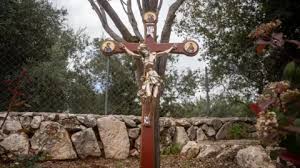
A controversial incident involving Israeli soldiers vandalizing a statue of Jesus Christ in southern Lebanon has sparked international outrage, religious condemnation, and swift disciplinary action by the Israeli military. The episode, which unfolded in a Christian village near the Israel-Lebanon border, has become a flashpoint in an already tense regional conflict, raising broader questions about military conduct, religious sensitivity, and accountability during wartime.
The Incident: A Viral Image Sparks Global Reaction
The controversy began when a photograph circulated widely online showing an Israeli soldier striking a statue of Jesus Christ with a sledgehammer in the village of Debel in southern Lebanon. The statue, part of a small Christian shrine in a residential area, had reportedly been knocked down before being deliberately damaged.
Another soldier was seen documenting the act, capturing images that quickly spread across social media platforms, generating millions of views and triggering immediate backlashes from religious communities and political leaders worldwide.
The Israeli military later confirmed the authenticity of the image and acknowledged that the act had indeed taken place during its operations in the region. (Reuters)
Swift Punishment by the Israeli Military
In response to the global outrage, the Israel Defense Forces (IDF) launched an internal investigation and moved quickly to discipline those involved.
Two soldiers directly linked to the incident were sentenced to 30 days in military detention and removed from combat duty.
Additionally, six other soldiers who were present at the scene but failed to intervene or report the misconduct are facing further disciplinary review. (New York Post)
The IDF described the actions as a violation of its core values and military code of conduct, emphasizing that such behavior does not reflect the standards expected of its personnel.
Official Condemnation from Israeli Leadership
Senior Israeli officials were quick to distance themselves from the incident.
Prime Minister Benjamin Netanyahu condemned the act, describing it as “stunning and saddening,” and pledged that those responsible would face consequences. (The Guardian)
Israel’s foreign ministry also issued an apology, acknowledging the offense caused to Christian communities and reaffirming the country’s commitment to respecting religious sites.
Military leadership echoed similar sentiments, with senior officers labeling the incident a “moral failure” and promising stricter enforcement of conduct rules.
Religious and International Outrage
The destruction of a Christian symbol in a conflict zone quickly drew condemnation from religious leaders and international observers.
Prominent Christian figures, including clergy from the Vatican and the Middle East, described the act as a desecration and a serious affront to religious faith.
Political figures from Europe and the United States also weighed in, calling for accountability and emphasizing the importance of protecting religious heritage during armed conflict.
The incident resonated particularly strongly among Christian communities in Lebanon, where villages like Debel are home to longstanding Maronite Catholic populations with deep historical roots.
Replacement of Statue and Damage Control
To mitigate the fallout, the Israeli military coordinated with residents to replace the destroyed statue.
Officials said the move was part of a broader effort to repair relations with the affected community and demonstrate respect for religious symbols. (Wall Street Journal)
While the replacement has been welcomed by some, others argue that it does not fully address the deeper issues raised by the incident, particularly regarding military accountability and cultural sensitivity.
Context: A Region on Edge
The incident occurred against the backdrop of ongoing hostilities between Israel and Hezbollah in southern Lebanon. The area has seen intense military activity, including airstrikes, ground operations, and the displacement of civilians.
Villages like Debel have been heavily affected, with many residents forced to flee amid the conflict.
This volatile environment has heightened tensions and made incidents involving civilian property and religious sites especially sensitive.
Broader Concerns About Conduct in Conflict Zones
The vandalism of the Jesus statue has reignited debate over the protection of cultural and religious heritage during armed conflict.
International humanitarian law, including the Geneva Conventions, emphasizes the need to safeguard religious sites and cultural property. Violations can carry serious legal and moral consequences.
Human rights organizations have long warned that such incidents, whether isolated or systemic, inflame sectarian tensions and undermine efforts to stabilize conflict zones.
A Rare Case of Swift Accountability?
Some analysts note that the rapid disciplinary action taken by the IDF is relatively uncommon in similar cases.
While the punishment of the soldiers has been widely reported, critics argue that broader accountability mechanisms are needed to prevent recurrence and ensure consistent enforcement of standards.
The case has also prompted calls for improved training within military ranks, particularly regarding cultural and religious sensitivity in diverse environments.
Diplomatic Repercussions
The incident has also had diplomatic implications, with foreign governments and international organizations closely monitoring Israel’s response.
It has sparked discussions about the conduct of military operations in Lebanon and the broader impact of the conflict on civilian populations.
In some cases, the controversy has even led to public disagreements between international officials over how such incidents should be addressed.
Public Reaction and Media Attention
The viral nature of the image played a key role in amplifying the incident.
Social media platforms became a battleground for opinions, with users expressing outrage, calling for justice, and debating the broader implications of the act.
Traditional media outlets also provided extensive coverage, ensuring that the story reached a global audience and added pressure on authorities to act decisively.
Conclusion
The punishment of Israeli soldiers over the vandalism of a Jesus statue in Lebanon represents a significant moment in the intersection of conflict, religion, and accountability.
While the swift disciplinary action by the Israeli military has been seen as a step toward justice, the incident has exposed deeper concerns about conduct in war zones and the protection of religious heritage.
As tensions in the region continue, the episode serves as a reminder of the importance of maintaining ethical standards even in the most challenging circumstances and the far-reaching consequences when those standards are violated.