Israel Says Iran Fired Nearly 30 Missiles Since Sunday as Middle East Tensions Escalate Again
The Israeli military says Iran launched nearly 30 ballistic missiles since Sunday in a fresh escalation of hostilities, triggering air raid alerts, retaliatory strikes, and renewed fears of regional war.
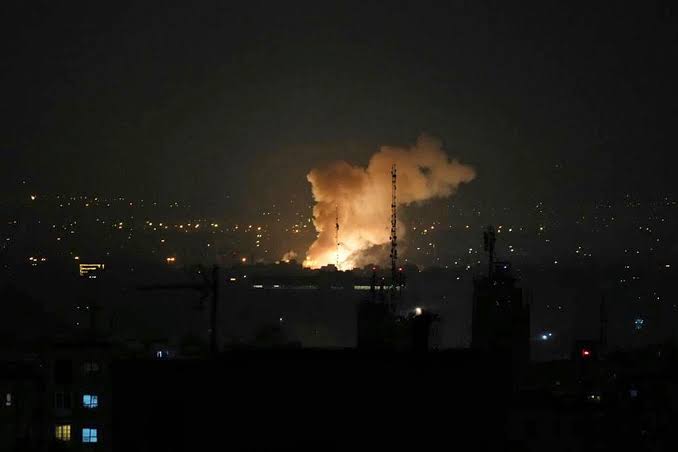
The Israeli military has reported that Iran fired nearly 30 ballistic missiles toward Israel since Sunday, marking a sharp escalation in hostilities and further straining an already fragile ceasefire arrangement in the Middle East.
According to Israeli defense officials, the missile barrage triggered widespread air raid sirens across central and northern Israel, forcing civilians into shelters as the country’s multi-layered air defense systems moved to intercept incoming threats.
The renewed exchange of fire has raised fears of a broader regional conflict, coming just weeks after diplomatic efforts attempted to stabilize tensions between Israel, Iran, and allied militant groups operating across Lebanon, Gaza, and Yemen.
Missile Barrage and Air Defense Response
Israeli military spokespersons stated that the Iranian regime launched multiple waves of ballistic missiles beginning Sunday night, with the total number of projectiles reaching close to 30. The Israel Defense Forces (IDF) confirmed that most of the missiles were intercepted by its Arrow and Iron Dome defense systems, though some caused alarm and minor disruptions.
Air raid sirens were activated in major cities including Tel Aviv, Haifa, and Jerusalem, as residents reported hearing loud explosions in the sky believed to be missile interceptions.
Military officials also noted that Yemen’s Houthi movement separately launched additional projectiles toward Israel during the same period, suggesting a coordinated escalation among Iran-aligned groups in the region.
Israeli Retaliation Strikes Targets in Iran
In response to the missile attacks, Israel carried out retaliatory airstrikes on strategic sites inside Iran. According to defense sources, the targets included a petrochemical complex in Mahshahr, which Israeli officials claim is linked to the production of materials used in ballistic missile development.
The Israeli military stated that the strikes were intended to disrupt Iran’s ability to manufacture and deploy further missile systems. Additional attacks reportedly targeted Iranian air defense installations in western and central regions of the country.
Explosions were reported in multiple Iranian cities, including Tehran, Isfahan, Tabriz, and Kermanshah, though Iranian authorities have not yet released full casualty or damage assessments. (BBC News)
Breaking Fragile Ceasefire Understandings
The latest escalation is the most significant exchange between the two countries since a truce agreement was reached in April. That ceasefire had largely held, despite periodic accusations of violations through proxy conflicts involving Hezbollah in Lebanon and other regional actors.
Analysts say the renewed missile exchange signals the collapse of whatever limited restraint had existed between Tehran and Tel Aviv, with both sides now openly engaging in direct military action.
Security experts warn that continued escalation could quickly draw in additional regional powers, including Hezbollah in Lebanon and U.S.-aligned forces stationed across the Gulf.
Civilian Anxiety and Regional Risk
Inside Israel, civilians have once again been forced into emergency routines as missile warnings continue to sound. Hospitals have reportedly activated mass casualty protocols, while schools and public gatherings in affected areas have been suspended.
In Iran, state media has framed the Israeli strikes as acts of aggression, accusing Israel of targeting industrial infrastructure essential to national defense. Officials in Tehran have vowed to respond to any further attacks, raising fears of a cycle of retaliation that could spiral further.
International observers, including diplomatic representatives from the United States and European Union, have called for immediate de-escalation, warning that the situation could destabilize global energy markets and shipping routes if fighting expands.
Global Reaction and Diplomatic Pressure
World leaders have expressed concern over the rapid deterioration in security conditions. The United Nations urged both sides to exercise restraint, emphasizing the risk to civilian populations and critical infrastructure across the region.
Meanwhile, diplomatic backchannels are reportedly active, with mediators attempting to prevent further escalation. However, analysts note that trust between both governments is at one of its lowest points in recent years.
The United States has also reiterated its call for restraint, though it has not confirmed any direct involvement in defensive operations during the latest exchange. (Reuters)
A Volatile Path Ahead
With nearly 30 missiles reportedly fired within a short window, the situation marks one of the most intense exchanges since the broader regional conflict began escalating over the past year.
Military analysts say both Israel and Iran appear to be expanding their operational targets beyond traditional red lines, increasing the likelihood of sustained confrontation rather than short-term retaliation.
As air defenses remain high alert and diplomatic efforts struggle to gain traction, the Middle East once again finds itself on the edge of a wider and more unpredictable conflict.
For now, both nations continue to prepare for possible further exchanges, while civilians across the region brace for what may come next.