Israel Says Hezbollah Fired Rockets in South Lebanon
Israel says Hezbollah fired rockets at its troops in southern Lebanon, triggering Israeli strikes on launch sites and raising fears of renewed escalation despite a fragile U.S.-brokered ceasefire.
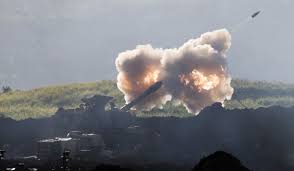
Israeli military officials have accused Hezbollah of firing rockets at Israeli troops operating in southern Lebanon, marking one of the most serious reported violations of a recently brokered ceasefire and heightening fears of renewed conflict along the Israel-Lebanon border.
The incident, which took place in the contested border region of southern Lebanon, prompted immediate Israeli retaliation, including strikes on what the military described as Hezbollah rocket launch sites. The exchange comes amid already fragile diplomatic efforts to stabilize the region following weeks of intense fighting.
What Israel Says Happened in Southern Lebanon
According to the Israeli military, Hezbollah launched several rockets toward Israeli forces stationed in southern Lebanon on Tuesday, targeting troops operating near forward deployment zones along the border.
Israel described the attack as a “blatant violation” of the ceasefire agreement currently in place under U.S. mediation. (Dawn)
The Israeli Defense Forces (IDF) said the rockets were fired at troops operating inside a buffer zone established along the Lebanon border, an area Israel refers to as a “forward defense line” intended to prevent cross-border attacks.
In response, Israel said it struck the launcher used in the attack, along with additional Hezbollah positions believed to be linked to the rocket fire. (Royanews)
Hezbollah Has Not Fully Confirmed the Incident
At the time of reporting, Hezbollah had not issued a detailed public statement confirming or denying responsibility for the specific rocket fire described by Israel.
However, in past incidents, the group has frequently justified cross-border attacks as retaliation for Israeli military operations in Lebanon, arguing that its actions are defensive responses to what it calls Israeli violations of Lebanese sovereignty.
Hezbollah has also repeatedly stated that it retains “the right to resist” Israeli military presence in southern Lebanon, particularly in areas where Israeli forces remain deployed after recent escalations.
A Fragile Ceasefire Under Pressure
The reported rocket fire comes just days after a U.S.-mediated ceasefire between Israel and Hezbollah came into effect, intended to halt weeks of escalating cross-border violence.
The agreement, broken with international involvement, was designed as a temporary pause in hostilities to allow diplomatic negotiations to take place. (Wikipedia)
However, the truce has been repeatedly tested, with both sides accusing each other of violations almost immediately after it began.
Recent reports indicate:
- Israeli forces remain deployed in a buffer zone in southern Lebanon
- Hezbollah continues to maintain armed positions near the border
- Both sides have carried out limited strikes despite the ceasefire
Why Southern Lebanon Remains a Flashpoint
Southern Lebanon has long been one of the most volatile areas in the Middle East due to its proximity to Israel and the presence of Hezbollah, a powerful Iran-backed armed group and political movement.
The region has seen repeated cycles of conflict, including:
- Cross-border rocket fire
- Israeli airstrikes and artillery bombardments
- Ground incursions and military patrols
- Civilian displacement in border villages
In the current phase of tensions, Israel has justified its military presence as necessary for establishing a security buffer to prevent further rocket attacks on its northern communities.
Hezbollah, meanwhile, views Israeli deployment as an occupation and has warned that continued presence will be met with resistance.
Israeli Response: Immediate Retaliation
Following the alleged rocket fire, the Israeli military said it quickly targeted and destroyed the launcher used in the attack.
Israeli officials framed the response as both defensive and preventive, aimed at eliminating immediate threats and deterring further escalation.
The IDF also reiterated that any violations of the ceasefire would be met with forceful responses, signaling that the truce remains conditional and fragile.
Broader Context: Renewed Israel-Hezbollah Conflict
The latest exchange is part of a wider conflict that escalated earlier in 2026, when fighting between Israel and Hezbollah intensified along the Lebanon border.
Since then:
- Thousands of people in Lebanon have been killed or displaced
- Israeli northern border communities have faced repeated rocket alerts
- Both sides have expanded military operations beyond traditional engagement zones
Recent escalations have also drawn in regional actors, complicating efforts to stabilize the situation.
Humanitarian Impact in Southern Lebanon
The ongoing conflict has had severe consequences for civilians in southern Lebanon.
Reports from humanitarian agencies indicate:
- Widespread displacement from border villages
- Damage to homes, schools, and infrastructure
- Limited access to medical care in affected areas
- Growing fear among residents of renewed large-scale fighting
Many families have fled repeatedly as ceasefire violations and military exchanges continue.
International Concerns Over Escalation
The international community has expressed concern that continued violations of the ceasefire could unravel diplomatic efforts entirely.
Key concerns include:
- Risk of full-scale war resuming
- Further destabilization of Lebanon’s already fragile political system
- Disruption to regional trade and energy routes
- Humanitarian crisis escalation in border areas
Diplomatic efforts, including talks facilitated by the United States and other mediators, are ongoing but remain fragile.
The Role of U.S.-Mediated Diplomacy
The ceasefire currently in place was brokered with U.S. involvement, aiming to create space for negotiations between Israel and Lebanon.
Key goals of the talks include:
- Establishing long-term border security arrangements
- Addressing the presence of armed groups in southern Lebanon
- Reducing cross-border military activity
- Preventing spillover into wider regional conflict
However, repeated ceasefire violations have complicated progress and raise doubts about long-term stability.
Why the Situation Remains Unstable
Analysts say the core problem lies in unresolved political and military disputes:
- Israel insists on eliminating threats from Hezbollah
- Hezbollah maintains it will resist Israeli military presence
- Lebanon’s government has limited control over armed groups
- Regional tensions involving Iran continue to influence the conflict
This combination makes even temporary ceasefires highly vulnerable to breakdown.
What Happens Next?
The coming days will be critical in determining whether the ceasefire holds or collapses.
Key developments to watch include:
- Whether Hezbollah responds to Israeli strikes
- Continued Israeli military activity in southern Lebanon
- Diplomatic pressure from international mediators
- Potential expansion or tightening of ceasefire terms
Even minor incidents could quickly escalate into broader confrontation.
Conclusion
Israel’s claim that Hezbollah fired rockets at its troops in southern Lebanon underscores how fragile the current ceasefire remains. While both sides are officially observing a temporary truce, continued accusations, retaliatory strikes, and unresolved military tensions suggest that the risk of renewed escalation remains high.
With diplomacy still underway and the border region heavily militarized, southern Lebanon continues to sit at the center of one of the Middle East’s most volatile flashpoints where a single exchange of fire can threaten wider regional stability.