Israel’s Bombing of South Lebanon Pushes Death Toll Past 850
Israel’s intensified bombing campaign in South Lebanon has pushed the death toll beyond 850, raising fears of a wider regional war. Here are the implications for Middle East stability, humanitarian conditions, and global security.
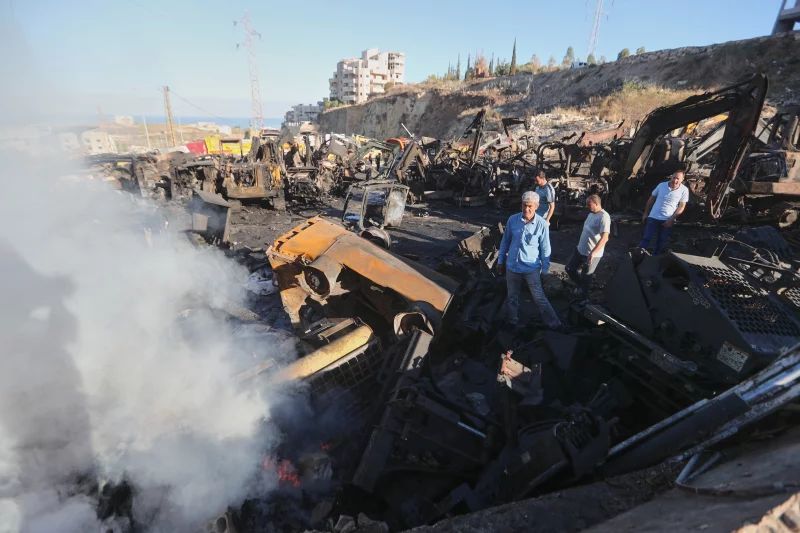
The escalating conflict between Israel and Hezbollah militants in southern Lebanon has entered a dangerous new phase following a wave of Israeli airstrikes that have pushed the reported death toll to more than 850 people. The surge in casualties has intensified fears that the confrontation could expand into a broader regional conflict involving multiple actors across the Middle East.
The renewed hostilities have also triggered international concern about the humanitarian consequences of the conflict and the risk of destabilizing one of the world’s most volatile regions.
As the bombardment continues, analysts warn that the situation could have far-reaching political, military, and humanitarian implications not only for Lebanon and Israel but also for the wider international community.
Intensified Airstrikes in Southern Lebanon
Israel’s latest military campaign has focused heavily on southern Lebanon, an area widely regarded as the stronghold of Hezbollah, the Iran-backed militant group that has been engaged in periodic clashes with Israeli forces for years.
According to reports from regional authorities and humanitarian agencies, the Israeli military has carried out hundreds of airstrikes targeting suspected Hezbollah positions, weapons depots, and command infrastructure across towns and villages in the region.
The strikes have reportedly destroyed residential buildings, roads, and critical infrastructure, worsening the humanitarian situation for civilians caught in the crossfire. (reuters.com)
Health officials in Lebanon say the death toll has now climbed beyond 850, with thousands of others injured and large numbers of residents displaced from their homes. (aljazeera.com)
Israeli authorities have defended the operation, stating that the strikes are necessary to neutralize Hezbollah’s military capabilities and prevent attacks against Israeli communities along the northern border.
Hezbollah’s Response
Hezbollah has responded to the Israeli strikes with rocket and missile attacks targeting northern Israel, escalating tensions along the border.
The group has warned that it will continue its attacks if Israeli forces persist with the bombing campaign.
In recent days, dozens of rockets have reportedly been launched toward Israeli towns near the border, forcing residents to take shelter and prompting Israel to expand its air operations.
The cycle of attack and retaliation has heightened fears that the confrontation could evolve into a full-scale war like the 2006 Israel-Hezbollah conflict, which devastated large parts of Lebanon and caused widespread destruction.
Humanitarian Crisis Deepens
The humanitarian consequences of the ongoing bombardment are becoming increasingly severe.
Hospitals across southern Lebanon are reportedly overwhelmed with casualties, while thousands of families have fled their homes to seek refuge in safer areas.
Humanitarian organizations warn that food, water, and medical supplies are rapidly running out in several affected communities. (bbc.com)
Aid groups have also raised concerns about the destruction of critical infrastructure, including roads and electricity networks, which has made relief efforts more difficult.
International agencies have called for an immediate ceasefire to allow humanitarian assistance to reach civilians trapped in the conflict zones.
Implications for Regional Stability
The growing violence in southern Lebanon could have significant consequences for the broader Middle East.
First, the conflict risks dragging additional regional actors into the crisis. Hezbollah is widely supported by Iran, and any large-scale confrontation between Israel and Hezbollah could potentially trigger Iranian involvement.
Second, the escalation could open a second major front against Israel, which is already facing tensions elsewhere in the region.
Third, continued fighting could destabilize Lebanon’s already fragile political and economic situation. The country has been grappling with a severe economic crisis for years, and renewed warfare could further weaken state institutions.
Regional analysts warn that if the conflict continues to intensify, it could ignite a wider confrontation involving multiple Middle Eastern states.
Global Political Consequences
The crisis is also likely to have broader geopolitical repercussions.
Major global powers, including the United States, European Union members, and regional organizations, have urged restraint and called for diplomatic solutions.
The conflict also comes at a time when global attention is already focused on other geopolitical flashpoints, including the war in Ukraine and tensions involving Iran.
An expanded war in Lebanon could strain international diplomatic resources and complicate efforts to stabilize the wider Middle East.
Lessons From the Escalation
The rising death toll and destruction in southern Lebanon offer several important lessons for policymakers and the international community.
1. The Persistence of Proxy Conflicts
The conflict highlights the enduring role of proxy warfare in the Middle East, where regional powers support non-state actors to advance strategic interests.
Hezbollah’s relationship with Iran has long been a central factor in regional tensions, demonstrating how local conflicts can quickly acquire international dimensions.
2. Civilian Populations Bear the Greatest Burden
As in many modern conflicts, civilians have suffered the most severe consequences of the fighting.
The high casualty numbers and widespread displacement underscore the urgent need for stronger international mechanisms to protect non-combatants in conflict zones.
3. Escalation Risks Are High in Volatile Regions
The Israel-Lebanon border has historically been one of the most sensitive flashpoints in the Middle East.
Even limited military actions can quickly spiral into broader conflicts when multiple actors and alliances are involved.
4. Diplomacy Remains Essential
Ultimately, the crisis demonstrates that military action alone rarely resolves deeply rooted geopolitical disputes.
Diplomatic engagement, regional dialogue, and international mediation remain critical tools for preventing conflicts from escalating beyond control.
Conclusion
Israel’s intensified bombing campaign in southern Lebanon and the rising death toll have brought the region dangerously close to a wider confrontation.
With more than 850 people reportedly killed and thousands displaced, the humanitarian cost of the conflict continues to mount.
The situation serves as a stark reminder of how fragile peace remains in the Middle East and how quickly localized confrontations can escalate into regional crises.
Whether through diplomacy or international pressure, efforts to de-escalate the violence will be crucial in preventing the conflict from spiraling into a full-scale war that could destabilize the entire region.