Israel: returned remains don’t match hostages - Rafah crossing reopening still on
Israel says remains handed over by militants failed to match the two remaining hostages, but will reopen the Rafah crossing for Gazans to exit - a controversial move that could shape the next phase of the Gaza ceasefire and humanitarian access.
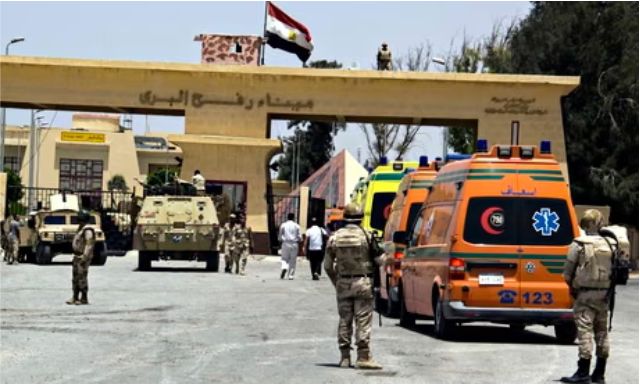
Israel announced on Wednesday that the partial remains handed over by militants did not match the two remaining hostages believed held in Gaza - yet at the same time, it said it will reopen the key Rafah crossing on the Gaza-Egypt border for Palestinians wishing to exit the territory. (Reuters)
The remains - transferred by the armed group Hamas and subsequently tested by Israeli forensic authorities - were found not to correspond to either of the two hostages still believed alive or unaccounted for: Israeli police officer Ran Gvili and Thai national Sudthisak Rinthalak.
Despite the setback, Israel’s coordinating body for civilian affairs in the territories, COGAT, said it would begin preparations for the controlled reopening of the border crossing, coordinating with Egypt and under the supervision of a European Union mission.
Hostage-remains dispute threatens fragile ceasefire agreement
The return of hostages - both living and deceased - was a key element of the U.S.-backed ceasefire deal. The agreement stipulated that all hostages be released or their remains returned, paving the way for further phases, including reconstruction, civilian movement, and an eventual political settlement. (The Associated Press)
Over recent weeks, some 20 living hostages and the remains of 26 others have already been returned under the deal - but the failure to confirm the latest remains raises doubts about the feasibility of completing the process. (AP News)
With only two hostages still unaccounted for, Israeli officials say that unless those remains are returned and verified, further concessions - including major aid deliveries, lifting of crossing closures, or moves toward Gaza reconstruction - could be delayed or derailed.
For Gaza residents, and for humanitarian organizations tracking medical evacuations, the standoff has major consequences: thousands of sick and wounded remain in need of safe exit from Gaza for treatment.
Rafah crossing reopening: what’s at stake, and what it could allow
COGAT said the reopening will only allow exit from Gaza - not entry - and only for Palestinian civilians who receive Israeli security approval. The procedure will be conducted in cooperation with Egypt and under EU observation, to ensure controlled movement.
This limited reopening marks a significant shift: the crossing has been sealed off since May 2024, following Israel’s military operations and takeover of the Gaza side. (Anadolu Ajansı)
The crossing previously saw occasional openings for humanitarian evacuations, but full-scale crossings - especially allowing for mass exits or aid - had remained blocked. (The Guardian)
For many Gazans, especially wounded, sick, or desperate civilians, the reopening offers a rare lifeline: an opportunity to seek medical care, refuge or to reunite with family outside Gaza. Advocates and humanitarian agencies have pressed for Rafah’s reopening for weeks, citing the dire living conditions, lack of medical resources, and urgent need for evacuations.
Ongoing searches in Gaza as militants scramble to find missing remains
Following the forensic failure, the militant group Saraya al-Quds - the military arm of veteran Islamist group Palestinian Islamic Jihad - announced early on Wednesday that its fighters, accompanied by Red Cross personnel, resumed searches in northern Gaza to locate the remains of the two missing hostages.
This difficult and potentially dangerous work underscores the obstacles facing the ceasefire agreement: heavy destruction across Gaza, rubble-filled neighbourhoods, extensive damage to buildings, and the presence of unexploded ordnance all complicate recovery efforts.
Still, Hamas and allied militants argue that without external help - including engineering equipment and coordinated excavation efforts - retrieving all remains will take time. Egypt has been proposed as part of such a search effort, but Israel has resisted requests to allow external troops or heavy machinery into Gaza under the current agreement framework. (www.israelhayom.com)
Why reopening Rafah now matters - and why critics warn of danger
The decision to reopen Rafah reflects what Israeli and Egyptian authorities call a necessary humanitarian step - even as the hostage dispute continues. They frame the move as part of the 20-point plan currently under partial implementation, designed to stabilize Gaza by allowing civilian movement and medical evacuations independent of the hostage exchange process. (ynetglobal)
For residents of Gaza, many of whom are living in dire conditions - lacking electricity, medical care, clean water, or safe housing - even limited exit through Rafah offers hope. International agencies warn that thousands are in urgent need of evacuation for medical and humanitarian reasons.
However, critics caution that the reopening may undercut leverage over the hostage deal. By decoupling the border reopening from the hostages’ return, Israel risks removing an incentive for militant groups to deliver the remaining bodies - possibly leaving the two missing captives and their families in perpetual uncertainty. Observers warn this could delay or derail the next phases of the truce plan, including prisoner exchanges, disarmament of militants, and reconstruction.
Human rights and humanitarian groups also warn that allowing movement out but not aid or return may create unequal outcomes - with Gazans able to exit but fewer resources flowing in, ultimately weakening conditions inside the Strip. (Al Jazeera)
What’s next - fragile peace or new stalemate?
With Rafah projected to reopen “in the coming days,” Israel, Egypt and the EU will need to agree on exact timing, departure quotas, processing procedures, and security vetting. COGAT said those details remain subject to “security approval,” and that only departures, not entries will be allowed initially.
Meanwhile, militants’ renewed search for the missing remains - a time-consuming and hazardous effort - could either succeed, allowing the hostage deal to progress, or fail, which may stall or collapse the ceasefire framework.
For thousands of Gazans awaiting medical evacuation or escape from conflict-torn areas, the reopening offers fresh hope - even as families of missing hostages brace for more uncertainty. For many observers, the unfolding developments highlight a harsh reality: in Gaza, peace, humanitarian relief, and justice remain intertwined and fragile.