Israel Rejects Trump’s 15-Point Gaza Plan as Netanyahu Demands Full Hamas Disarmament
Israeli Prime Minister Benjamin Netanyahu has rejected Donald Trump’s 15-point Gaza peace plan, insisting Israeli forces will not withdraw until Hamas is completely disarmed.
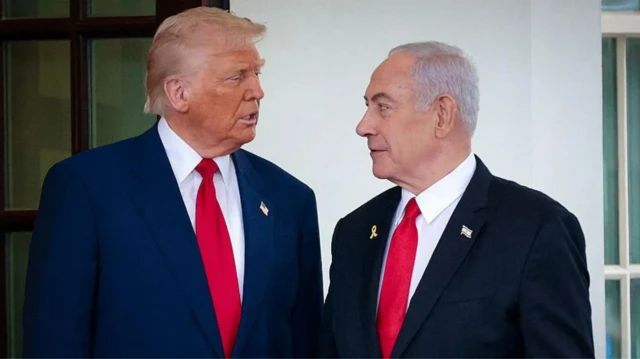
Israeli Prime Minister Benjamin Netanyahu has rejected a US-backed 15-point plan aimed at ending the conflict in Gaza, declaring that Israel will not withdraw its military forces from the territory until Hamas is fully disarmed.
Netanyahu’s statement represents a significant setback for US President Donald Trump’s efforts to broker a political and security arrangement for Gaza and exposes a rare public disagreement between the two close allies.
The Israeli prime minister made his position clear on Sunday, August 9, saying Israel did not accept the 15-point document and that any Israeli withdrawal would depend on what he described as the genuine and complete disarmament of Hamas. (Reuters)
The disagreement has potentially serious implications for efforts to end the fighting, establish a new administration in Gaza and create conditions for long-term reconstruction.
Netanyahu insists on Hamas disarmament
At the heart of the disagreement is the question of when Israeli forces should leave Gaza.
Trump's plan reportedly proposes a phased process under which Hamas would surrender its weapons while Israel gradually withdraws from areas it controls in the Gaza Strip.
Netanyahu, however, has rejected the sequencing of the proposal.
He said Israeli forces would not carry out a withdrawal until Hamas had been completely disarmed, stressing that disarmament must include both heavy and light weapons and must be genuine rather than symbolic. (The Guardian)
The Israeli leader's position reflects his government's long-standing demand that Hamas no longer possess the military capability to threaten Israel.
For Netanyahu, the issue is not simply whether Hamas agrees to surrender some weapons, but whether the group is permanently stripped of its military infrastructure and ability to conduct attacks.
What Trump's 15-point proposal seeks to achieve
The 15-point proposal was developed through Trump's Board of Peace and was presented as a framework for ending the conflict and creating a new political order in Gaza.
The plan envisages Hamas disarming in stages in exchange for a phased Israeli military withdrawal.
It also proposes transferring governance of Gaza to an independent Palestinian National Committee rather than leaving the territory under Hamas control.
The proposed arrangement is intended to separate the future administration of Gaza from Hamas while creating a framework through which reconstruction and governance could proceed.
However, the Israeli government's objection demonstrates that there remains a major gap between Washington's preferred roadmap and Netanyahu's security requirements.
A rare public disagreement between Trump and Netanyahu
The rejection is particularly significant because Trump and Netanyahu have generally maintained a close political relationship.
The Israeli prime minister has repeatedly welcomed Trump's support for Israel, while Trump has sought to position himself as a leader capable of bringing major Middle Eastern conflicts to an end.
The public disagreement therefore represents an unusual moment in their relationship.
The Guardian described Netanyahu's rejection as a rare public break with Trump, particularly because the US president has been seeking progress on Gaza as part of a broader diplomatic agenda.
Netanyahu has also emphasised that Israel must retain the ability to make independent security decisions, even when those decisions differ from the preferences of its closest international ally.
Why Israel is resisting the proposal
Israel's opposition largely centres on concerns over Hamas retaining weapons or rebuilding its military capabilities.
Netanyahu has repeatedly argued that allowing Hamas to remain armed could create the conditions for another major attack against Israel.
His government therefore views complete disarmament as a fundamental requirement for ending the war.
The prime minister's latest comments suggest that Israel does not consider a partial or symbolic surrender of weapons sufficient.
This creates a major obstacle because Hamas's willingness to surrender its weapons is itself one of the most difficult issues in any potential peace agreement.
The proposal therefore faces a fundamental question: Can Hamas be persuaded to disarm while Israel remains unwilling to withdraw its forces until that disarmament has already occurred?
Gaza's political future remains uncertain
Another major component of the proposed framework is the future governance of Gaza.
The 15-point plan reportedly calls for power to be transferred to an independent Palestinian National Committee.
The objective is to create an administration capable of governing Gaza without Hamas controlling the territory's security and political structures.
For the plan to succeed, however, the new administration would need international support, security arrangements and sufficient legitimacy among Palestinians.
The Israeli government would also have to accept the new structure while maintaining confidence that Gaza could not again become a base for attacks.
Pressure on Trump
Netanyahu's rejection puts additional pressure on Trump, who has sought to present his administration as capable of delivering diplomatic breakthroughs in some of the world's most difficult conflicts.
The US president now faces the challenge of reconciling two competing positions: Israel's demand for complete Hamas disarmament before withdrawal and the broader objective of achieving an agreement that ends hostilities and establishes a new political arrangement in Gaza.
The disagreement could also complicate Washington's relationship with Israel if negotiations fail to bridge the differences.
A US official, however, indicated that Washington understood Netanyahu's political circumstances, suggesting that the disagreement may not immediately translate into a major rupture between the allies. (The Jewish Chronicle)
Political pressure on Netanyahu
Domestic Israeli politics are another important factor.
Netanyahu faces pressure from hardline elements within his political coalition, many of whom have strongly opposed any arrangement that could leave Hamas capable of operating in Gaza.
Accepting a plan that requires Israeli forces to withdraw before Hamas is fully disarmed could therefore expose Netanyahu to criticism from his political allies.
His rejection allows him to reinforce his message that Israeli security remains the central condition for any settlement.
At the same time, continued military operations carry their own political and humanitarian consequences, increasing pressure on the government to find a sustainable way out of the conflict.
What happens next?
The rejection does not necessarily mean negotiations are over.
Netanyahu said discussions with American officials were continuing over the issue of Hamas's disarmament.
That leaves room for amendments to the proposal or for the United States and Israel to negotiate a revised framework that addresses Israeli security concerns while preserving the broader objective of an Israeli withdrawal.
The success of such negotiations will depend heavily on whether a compromise can be found over the sequence of disarmament, withdrawal and the establishment of a new Gaza administration.
Conclusion
Israel's rejection of Donald Trump's 15-point Gaza peace plan has exposed a significant disagreement between Washington and Jerusalem over how the conflict should end.
Benjamin Netanyahu insists that Israeli forces will not withdraw until Hamas is genuinely and completely disarmed, while Trump's proposal reportedly envisages a phased process linking Hamas's disarmament to an Israeli military withdrawal.
The disagreement threatens to complicate efforts to end the fighting and establish a new political order in Gaza.
Nevertheless, negotiations between the US and Israel are continuing, leaving open the possibility that the plan could be revised.
For now, however, Netanyahu's message is unequivocal: Israel will not accept an arrangement that allows Hamas to retain its military capabilities after an Israeli withdrawal.