Israel Orders Fresh Strikes on Beirut Suburbs as Hezbollah Conflict Escalates
Israeli Prime Minister Benjamin Netanyahu has ordered fresh strikes on Beirut suburbs amid escalating conflict with Hezbollah, raising fears of a broader Middle East war and worsening regional instability.
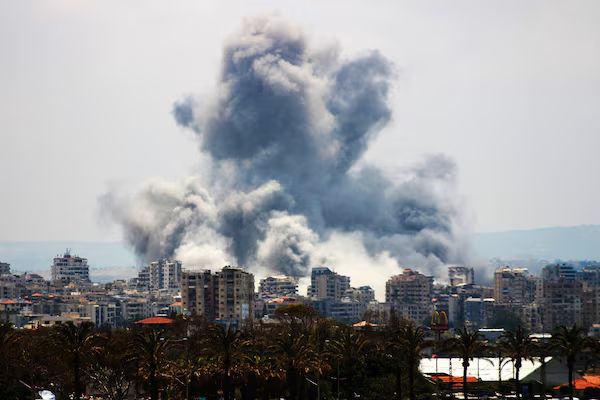
Israeli Prime Minister Benjamin Netanyahu has ordered a new round of airstrikes targeting the suburbs of Beirut as tensions between Israel and Hezbollah continue to escalate dangerously.
The strikes, which reportedly hit locations believed by Israeli authorities to be linked to Hezbollah operations and command infrastructure, mark one of the most significant escalations in recent weeks along the Israel-Lebanon front.
Israeli officials stated that the attacks were launched in response to intensified Hezbollah military activities, including cross-border rocket fire and threats against northern Israeli communities.
The latest violence has triggered widespread international concern over the growing possibility of a broader regional war involving multiple Middle Eastern actors.
Israeli Military Launches Coordinated Operation
According to Israeli defense officials, the operation targeted what the military described as Hezbollah operational centers, weapons storage facilities, and strategic positions located within Beirut’s southern suburbs.
Prime Minister Netanyahu reportedly approved of the strikes after high-level consultations with military commanders and national security advisers.
Israeli authorities defended the attacks as necessary measures aimed at protecting Israeli citizens from what they described as increasing Hezbollah aggression along the northern border.
The Israeli military also warned that additional operations could follow if attacks against Israel continue.
Explosions and Panic in Beirut
Residents across parts of Beirut reported hearing multiple loud explosions overnight as airstrikes struck several districts.
Videos and photographs shared online showed thick smoke rising above buildings while emergency vehicles rushed toward affected areas.
Witnesses described scenes of panic as civilians fled neighborhoods believed to be at risk of further bombardment.
Some residents reportedly spent the night sheltering indoors or attempting to leave crowded districts amid fears of prolonged military escalation.
Lebanese authorities said rescue teams and civil defense workers were deployed immediately following the strikes to search damaged areas and assist affected civilians.
Hezbollah Vows Response
Hezbollah strongly condemned the Israeli attacks and accused Israel of deliberately provoking wider regional conflict.
The group stated that the strikes targeting Beirut suburbs represented a serious escalation and warned that retaliation was inevitable.
Hezbollah supporters gathered in several areas of Beirut following the strikes, chanting anti-Israel slogans and expressing solidarity with the organization.
Analysts say Hezbollah’s response could determine whether the conflict remains limited or develops into a larger military confrontation involving Lebanon and other regional actors.
Rising Border Tensions
Tensions along the Israel-Lebanon border have steadily intensified in recent months amid repeated exchanges of rocket fire, drone attacks, and military threats.
Israeli authorities accuse Hezbollah of expanding military deployments near border communities, while Hezbollah claims its operations are linked to resistance against Israeli military activities in the region.
Security experts warn that both Israel and Hezbollah possess substantial military capabilities, making any escalation particularly dangerous for civilian populations on both sides of the border.
International Community Calls for Restraint
The escalating conflict prompted urgent calls for restraint from the international community.
The United Nations expressed deep concern over the latest violence and appealed for immediate de-escalation to prevent further civilian casualties.
Several governments, including the United States and European allies, urged diplomatic engagement and warned against actions capable of triggering wider regional instability.
International observers fear that continued confrontation between Israel and Hezbollah could further destabilize an already volatile Middle East.
Lebanese Government Condemns Attacks
The Lebanese government condemned the strikes and accused Israel of violating Lebanese sovereignty.
Lebanese officials called on the international community to pressure Israel into halting military operations targeting civilian areas.
The latest escalation comes as Lebanon continues grappling with severe economic collapse, political uncertainty, and social hardship that have weakened state institutions.
Many Lebanese citizens fear that another major war could devastate the country’s already fragile infrastructure and economy.
Fear of Broader Regional War
Regional security analysts say the situation remains extremely volatile due to the involvement of multiple geopolitical actors in the Middle East.
Iran, a major supporter of Hezbollah, has repeatedly condemned Israeli military actions in Lebanon and Gaza.
Observers warn that sustained hostilities could potentially draw additional regional armed groups and governments into a wider conflict.
The growing tensions also coincide with ongoing instability involving Gaza, Syria, and broader Iran-Israel rivalries. (BBC News)
Civilians Bear the Consequences
Humanitarian organizations voiced concern over the impact of the strikes on civilians living in densely populated Beirut suburbs.
Past Israel-Hezbollah confrontations have resulted in extensive civilian displacement, infrastructure destruction, and humanitarian crises.
Residents affected by the latest attacks described fear and uncertainty as explosions disrupted homes and businesses.
Aid groups have urged all parties to respect international humanitarian law and prioritize civilian protection during military operations.
Global Markets React to Middle East Tensions
The renewed escalation also affected global financial markets, particularly energy markets closely tied to Middle East stability.
Analysts warned that any prolonged conflict involving Israel and Hezbollah could influence oil prices, shipping routes, and broader investor confidence.
Airlines and diplomatic missions in the region are reportedly monitoring developments closely amid growing security concerns. (Reuters)
Israeli Forces Remain on High Alert
Israeli military officials confirmed that northern defense systems and troop deployments remain on heightened alert in anticipation of possible retaliatory attacks.
Additional security measures were reportedly implemented in northern Israeli communities near the Lebanese border.
Authorities advised residents in some areas to remain cautious as tensions continue rising.
Diplomatic Efforts Intensify
Behind the scenes, international diplomats are reportedly engaging in urgent discussions aimed at preventing further escalation.
Regional mediators and global powers are seeking channels for de-escalation amid fears that another major Israel-Hezbollah war could destabilize the Middle East for years.
Analysts say diplomatic intervention may become increasingly critical if retaliatory attacks continue.
Conclusion
Prime Minister Benjamin Netanyahu’s decision to order fresh strikes on Beirut suburbs marks another dangerous chapter in the escalating conflict between Israel and Hezbollah.
As military operations intensify and threats of retaliation grow, fears of a wider regional war continue mounting across the Middle East and beyond.
For civilians trapped amid geopolitical tensions and armed confrontation, the latest violence underscores the fragile security realities that continue shaping the region’s future.