Israel Intensifies Airstrikes on Lebanon Despite Trump’s Call for Restraint, Raising Fears of Wider Regional Conflict
Israel has launched a fresh wave of airstrikes across southern Lebanon despite criticism from U.S. President Donald Trump over escalating military operations. The renewed attacks have heightened concerns about regional stability as diplomatic efforts struggle to contain the conflict.
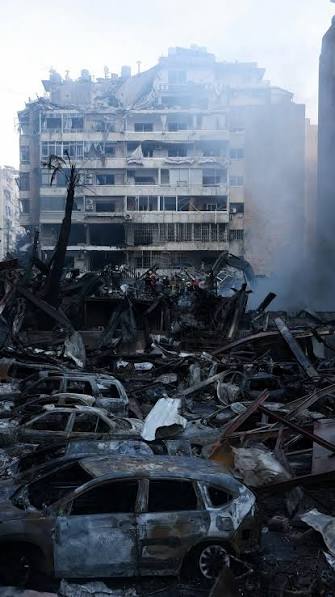
Israel has carried out a fresh series of airstrikes on targets in southern Lebanon, escalating tensions along its northern frontier despite public criticism from U.S. President Donald Trump, who recently urged Israeli leaders to avoid actions that could further destabilize the Middle East.
The latest military operation targeted what the Israeli military described as Hezbollah infrastructure and weapons storage facilities, continuing a campaign that Israeli officials say is aimed at preventing cross-border attacks and weakening the Iran-backed militant group's operational capabilities.
The strikes came only days after President Trump expressed frustration over the continued military escalation in the region, calling on Israel to exercise greater restraint as international diplomatic efforts seek to prevent a broader conflict involving multiple countries.
Trump's remarks marked one of his strongest public criticisms of Israel's military strategy since returning to office, reflecting growing concern in Washington over the potential consequences of sustained hostilities across the region.
Despite the criticism, Israeli defense officials insisted that military operations would continue whenever intelligence indicated imminent threats to Israeli security.
In a statement following the attacks, the Israel Defense Forces (IDF) said the operation was conducted in response to ongoing security threats originating from southern Lebanon and was intended to neutralize facilities allegedly used by Hezbollah to coordinate military activities.
Israeli authorities maintained that protecting communities along the northern border remains a national security priority and stressed that the military would continue taking preventive action where necessary.
Lebanese officials condemned the latest airstrikes, describing them as violations of the country's sovereignty and international law.
According to Lebanon's Ministry of Health, the attacks caused casualties and damage to residential buildings in several communities near the border, although authorities were still assessing the full extent of the destruction.
Emergency response teams were deployed to affected areas as residents sought shelter amid fears of additional strikes.
Hezbollah also accused Israel of escalating tensions and warned that continued attacks could provoke further retaliation.
Although the group did not immediately announce a direct military response, analysts say the renewed strikes increase the risk of additional exchanges of fire that could threaten the fragile security situation along the Israel-Lebanon frontier.
The border has remained highly volatile since hostilities intensified following the outbreak of the Israel-Hamas war in Gaza.
Frequent exchanges of artillery fire, missile launches and drone attacks have repeatedly tested diplomatic efforts to prevent the conflict from expanding into a wider regional confrontation.
International observers have warned that any significant escalation involving Hezbollah could draw additional regional actors into the conflict, complicating ongoing peace initiatives.
President Trump's criticism has added a new dimension to the diplomatic landscape.
While reaffirming the United States' commitment to Israel's security, Trump suggested that continued military escalation could undermine broader efforts to restore stability in the Middle East and increase the likelihood of unintended regional consequences.
His comments have been interpreted by political analysts as an attempt to balance support for Israel with growing international calls for de-escalation.
Israeli government officials have not publicly responded directly to Trump's remarks but continue to emphasize that national security decisions will be based on operational intelligence rather than international political pressure.
Prime Minister Benjamin Netanyahu has repeatedly stated that Israel reserves the right to defend itself against any threats posed by Hezbollah or other armed groups operating near its borders.
Diplomatic efforts led by the United States, France and the United Nations have intensified in recent months as negotiators seek to establish security arrangements capable of reducing tensions along the Lebanon-Israel border.
However, repeated military exchanges have complicated those discussions, with each new incident reinforcing mutual distrust between the parties.
The United Nations Interim Force in Lebanon (UNIFIL) expressed concern over the latest escalation and renewed its appeal for maximum restraint.
Peacekeeping officials warned that continued hostilities increase the danger to civilians on both sides of the border and risk undermining the relative stability maintained by international peacekeeping efforts.
Humanitarian organisations have also voiced alarms over the worsening security environment.
Aid agencies report that thousands of residents remain displaced from communities near the border, while repeated military operations continue to disrupt access to healthcare, education and essential services.
Relief groups are urging all parties to respect international humanitarian law and take measures to protect civilian populations.
Regional analysts say the latest Israeli strikes underscore the increasingly complex security dynamics facing the Middle East.
In addition to the conflict in Gaza, tensions involving Lebanon, Syria, Iran and various armed groups continue to shape the region's geopolitical landscape, raising concerns that isolated incidents could rapidly evolve into broader military confrontations.
Financial markets have also reacted cautiously to renewed instability, with investors closely monitoring developments amid concerns that prolonged regional conflict could affect global energy markets and international trade routes.
Energy analysts note that sustained tensions in the Middle East often contribute to increased volatility in global oil prices due to uncertainty surrounding supply chains and maritime security.
Meanwhile, diplomatic pressure continues to mount on all parties to pursue dialogue rather than military escalation.
Several European governments have reiterated calls for restraint, emphasizing that durable regional security can only be achieved through political negotiations and respect for international law.
For residents living near the Israel-Lebanon border, however, diplomatic statements provide limited reassurance as the threat of further military action remains ever-present.
Many families continue to endure repeated displacement, economic hardship and uncertainty over when lasting peace might finally return.
As international leaders intensify efforts to prevent further escalation, the latest Israeli airstrikes illustrate the persistent challenges confronting regional diplomacy.
With military operations continuing despite public criticism from one of Israel's closest allies, the prospect of a broader confrontation remains a significant concern for policymakers seeking to preserve stability across an increasingly fragile Middle East. (Reuters)