Iraq Seeks World Cup Playoff Delay as Regional Conflict Disrupts Travel
Iraq has requested FIFA postpone its 2026 World Cup playoff match due to travel chaos and airspace closures from the ongoing Middle East conflict, potentially affecting its historic qualification bid.
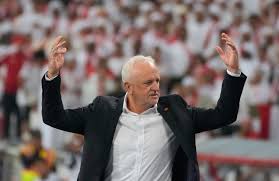
Iraq has formally asked FIFA to postpone its intercontinental World Cup playoff, originally scheduled for March 31 in Monterrey, Mexico, citing severe travel disruptions caused by the escalating Middle East conflict, particularly related to the war involving Iran and the United States.
The Iraqi national team, coached by Graham Arnold, is struggling to assemble its full squad because Iraqi airspace has been closed until April 1, and many players and staff have been unable to secure travel visas due to foreign embassy closures amid heightening geopolitical tensions.
Arnold, who is currently stranded outside Iraq, said that fielding a squad comprised only of overseas‑based players would significantly weaken Iraq’s chances of qualifying for its first World Cup since 1986-a momentous goal for the nation’s football community. (NBC 5 Dallas-Fort Worth)
Logistical Challenges Derailing Preparations
The decision to seek a postponement was triggered by a combination of security and logistical hurdles. Iraqi airspace closures have left key players and the coaching staff unable to travel, and planned training camps-such as a preparatory camp in Houston, Texas-have been canceled.
“The team is struggling to get our players out of the country,” Arnold told the press, stressing that assembling the best possible squad is crucial for Iraq’s most important football match in decades.
The conflict’s impact has extended beyond airspace issues. Embassy closures have slowed visa processing, and land travel routes suggested by FIFA-including a 25‑hour overland journey through conflict‑affected areas-have been rejected by the Iraqi Football Association as unsafe and impractical. (Roya)
Proposed Delay Strategy
Iraq’s proposal involves postponing the playoff tie until closer to the start of the 2026 FIFA World Cup, which will be hosted by the United States, Mexico, and Canada from June 11 to July 19.
Arnold’s plan would allow the preliminary playoff between Suriname and Bolivia to proceed as scheduled, while Iraq’s final qualifying match could be played a week before the World Cup begins-giving the team more time to gather and prepare.
“If FIFA were to delay the game it gives us time to prepare properly,” Arnold said, adding it would also allow the global governing body more time to assess the evolving situation in the region.
Implications for Iraq’s World Cup Hopes
A World Cup appearance would be historic for Iraq, marking its first qualification in 40 years. The team has been competitive in its qualification path, including a memorable win over the United Arab Emirates, which would serve as a backup contender if Iraq were unable to participate. (NBC New York)
However, if travel and security issues remain unresolved, Iraq’s chances of playing or fielding its strongest squad could be jeopardized. The Iraqi Football Federation, led by President Adnan Dirjal, is engaging with FIFA and other stakeholders to find a solution, but time is short.
Official Communications to FIFA
Iraq has officially informed FIFA that its team cannot travel to Mexico due to the ongoing conflict and associated travel bans. Communication from the Iraqi Football Federation emphasizes the complexity of the situation, citing airspace closures and the inability to leave the country for at least the next month. (Mexico Daily Post News)
This official notice puts added pressure on FIFA to act swiftly, as decisions over qualification schedules and potential replacements hinge on the evolving conflict and its effects on international travel.
Wider Disruption to International Sport
The situation facing Iraq is part of a broader pattern in which the Middle East conflict has disrupted sporting events globally. International competitions, from soccer qualifiers to other major events, have been affected by flight cancellations, airspace closures, and security concerns. (Reddit)
Fans and analysts have noted uncertainty not just for Iraq but for other teams whose travel may be impacted, raising questions about how international sporting bodies will adapt tournament logistics in times of geopolitical crisis.
FIFA’s Response and Next Steps
As of now, FIFA has not yet responded to Iraq’s request for a delay. World football governing bodies typically balance competitive integrity with logistical fairness, but accommodating a delay involves complex scheduling challenges, especially with the World Cup draw and tournament preparations already underway.
FIFA, the Asian Football Confederation (AFC), and the Iraqi Football Federation are expected to continue discussions in the coming days, with a ruling anticipated soon given the limited window before the March 31 playoff date.
What Happens If the Match Is Not Delayed?
Without an approved delay, Iraq faces two main possibilities:
- Fielding a weakened squad: If only overseas‑based players can travel, Iraq might compete but with a significantly diminished team.
- Forfeiting or withdrawal: Should travel prove impossible, Iraq could forfeit or be replaced, potentially benefiting either its opponent or the team it previously defeated in qualification.
Either scenario would have profound implications for Iraq’s World Cup ambitions and could reshape the makeup of Group I in the 2026 tournament.
Conclusion
Nigeria’s 2027 elections might dominate headlines at home, but in global sport, Iraq’s football journey has captured attention as a unique case where geopolitics directly intersects with sporting qualification.
The request to delay the World Cup playoff reflects broader challenges facing teams from conflict‑affected regions and sets a significant precedent for how sports organizations manage qualifiers amid global instability. As Iraq awaits FIFA’s decision, fans and officials alike hope for a fair resolution that preserves the team’s historic pursuit of World Cup glory.