Iranian Attacks on Dubai and Airport Closure: Timeline, Impact and Wider Economic Implications
A detailed special report on the recent Iranian missile and drone attacks that hit Dubai, leading to the temporary closure of Dubai International Airport, stranded passengers, major flight cancellations and the wider economic and geopolitical implications for the UAE and global travel.
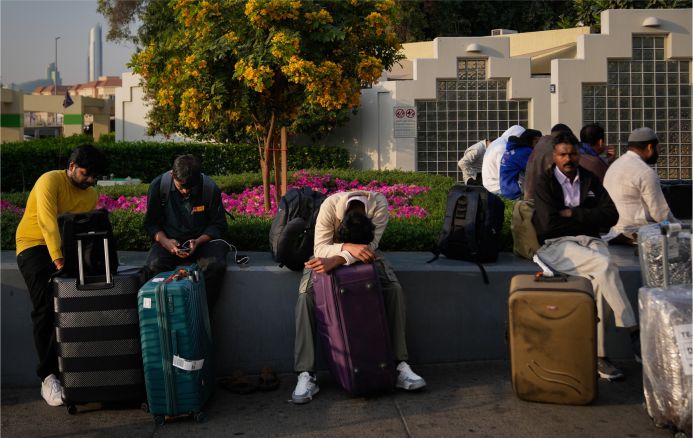
Dubai - one of the world’s busiest hubs for global air travel, tourism, business, and logistics - was thrust into chaos in late February 2026 after a series of Iranian missile and drone attacks targeted key locations across the Gulf region, including parts of the United Arab Emirates (UAE). The ensuing temporary closure of Dubai’s main airports - including Dubai International Airport and Al Maktoum International Airport - has had profound implications for global aviation, local economies, and geopolitical stability.
Below is a comprehensive timeline of events, analysis of the immediate impacts, and an exploration of how this crisis could influence the future of Dubai and the wider region.
Escalation and Airspace Shutdown: What Happened?
On February 28, 2026, as part of a broader escalation in the ongoing Middle East conflict ignited by strikes from U.S. and Israeli forces on Iranian targets, Tehran launched waves of drones and ballistic missiles toward Gulf states. The UAE and other countries swiftly closed their airspace to civilian aircraft as part of emergency safety protocols.
Authorities announced the suspension of all flight operations at both Dubai International and Al Maktoum International Airport “until further notice,” advising travelers not to travel to the airports. (The National)
The closures followed ballistic missile and drone barrages from Iran that saw hundreds of hostile aerial threats detected and intercepted by UAE air defenses, which shot down the majority of ballistic missiles, cruise missiles, and drones headed toward urban areas.
Within hours, tens of thousands of flights were canceled, rerouted, or suspended across the Middle East region, significantly disrupting global air travel corridors between Europe, Asia, and Africa - many of which normally rely on Gulf airspace for the most efficient routes. (Reuters)
Airport Closure and Travel Nightmare
Dubai International Airport - which handled nearly 87 million passengers in 2023 and sees around 260,000 to 270,000 travelers daily - effectively shut down, leaving scheduled services at a standstill.
The impact was immediate:
- Thousands of flights were canceled or diverted, disrupting global travel schedules. (Reuters)
- Passengers were stranded in terminals or forced to return to origin cities due to unsafe airspace conditions. (Business Insider)
- Hotels and facilities across Dubai had to accommodate displaced travelers.
- Some airlines, including Emirates, flydubai, and Etihad Airways, suspended operations indefinitely or until further notice, with only limited repatriation and special flights allowed initially.
While initial closures were total, limited flight operations began resuming after 48 hours with strict safety protocols as the situation evolved, though normal commercial schedules remain suspended. (Condé Nast Traveler)
Human and Social Costs
Beyond the operational paralysis, there was an immediate human impact:
- Several people were injured during the attacks on the airport, and emergency responders were mobilized. (Arab News)
- Local authorities transferred tens of thousands of travelers into emergency accommodations as they awaited flight status updates.
- Airspace closures also left families stranded and urgent travel plans in turmoil, forcing some wealthy travelers to charter private jets at vastly inflated prices to escape the region. (The Guardian)
Dubai’s hotels, public services, and crisis management teams had to adapt quickly to accommodate stranded tourists, business travelers, and other passengers.
Economic Implications: Dubai’s Engine Hit Hard
Dubai’s aviation sector is a core pillar of its economy, feeding tourism, business, hospitality, and logistics. Aviation contributes substantially to employment and GDP, with Emirates alone generating an estimated $100 million dollars in daily revenue under normal operations. (www.ndtv.com)
The shutdown hit hard:
- With hundreds of flights grounded, airlines faced operational losses and increased costs due to rerouting and prolonged scheduling disruption.
- Airport revenue evaporated as passengers, cargo, and concession income ground to a halt.
- Surrounding businesses - including hotels, car rental services, retail, logistics, and tourism operators - are experiencing sharp declines in revenue due to reduced foot traffic and uncertainty over when normal air travel will resume.
Financial markets reacted with unease, with Dubai’s main equity index dipping as investors digested earnings risks for airlines, property developers, banks, and other related sectors.
Global Travel and Cargo Disruptions
Dubai’s aviation network is not just a regional hub - it is a global connector. Routes that normally pass through Dubai link Europe with Asia and Africa, and the closure has compelled airlines to reroute flights via longer trajectories, increasing flight times, fuel costs, and logistical strain. (The Traveler)
Air cargo - critical for the rapid delivery of goods from pharmaceuticals to electronics - has also been disrupted, with shipments delayed or rerouted at higher operating expense, which could feed into supply chain delays and pricing impacts far beyond the UAE.
Geopolitical and Strategic Implications
The escalation underscores how quickly regional military conflicts can spill into civilian infrastructure realms, forcing countries like the UAE - traditionally seen as a neutral economic partner - to respond with emergency measures and recalibrate national security postures.
The UAE has condemned the attacks, activated air defenses, and placed public safety at the forefront of its response, but uncertainty remains as long as regional hostilities persist.
Looking Ahead: Recovery and Resilience
Dubai and its aviation stakeholders face a complex recovery path:
- Airspace reopening and resumption of full commercial services will depend on de-escalation of regional hostilities and robust safety assurances from national aviation authorities.
- Airlines will need to rebuild schedules, rebook passengers, and restore global confidence.
- Economic sectors tied to aviation will require strategic support as they recover from revenue losses and uncertainty.
The situation has highlighted the vulnerability of global travel infrastructures to geopolitical shocks - and the importance of crisis preparedness, diversified transit routes, and international coordination in times of conflict.