Iran Warns U.S. Against Ground Invasion
Iran has issued a strong warning against any U.S. ground invasion amid escalating Middle East tensions. This in-depth analysis explores the strategic risks, military realities, and global implications.
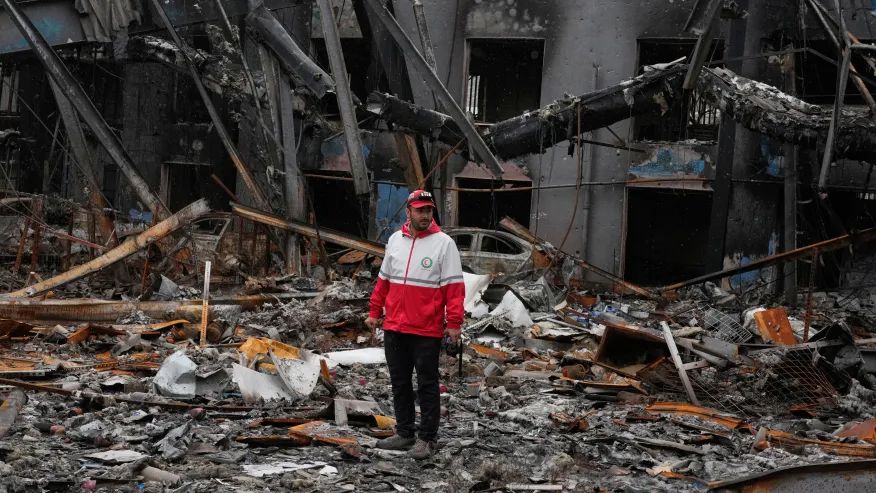
Tensions in the Middle East have entered a volatile new phase following a stark warning from Iran to the United States: any attempt to launch a ground invasion would provoke severe and far-reaching retaliation. The warning, delivered amid intensifying military posturing and growing speculation about American operational plans, has heightened fears of a wider regional war with global consequences.
The crisis reflects not just a clash of military capabilities but a deeper confrontation between deterrence strategies, political signaling, and the limits of modern warfare.
A Warning Rooted in Deterrence
Iran’s message to Washington has been unusually direct and uncompromising. Senior officials and military commanders have emphasized that any deployment of American ground forces onto Iranian soil would be met with overwhelming resistance. According to reports, Iranian leaders warned that U.S. troops would face devastating attacks the moment they cross into the country, framing the scenario as one that would quickly spiral beyond control.
This rhetoric is not merely symbolic. It reflects a longstanding Iranian doctrine designed to deter foreign invasion by raising the perceived cost to unacceptable levels. Tehran’s position is clear: even a limited ground operation would be interpreted as an act of war requiring a full-spectrum response.
Language also signals confidence. Despite years of sanctions and recent military strikes, Iran is projecting readiness, insisting that its forces are prepared for prolonged confrontation.
Why a Ground Invasion Is Even Being Discussed
Although the United States has not formally announced plans for a full-scale invasion, mounting evidence suggests that limited ground operations are under consideration. Military analysts point to scenarios involving special forces missions, including attempts to secure strategic assets or disrupt Iranian military infrastructure.
Among the most discussed targets is Kharg Island, a critical hub for Iran’s oil exports. Seizing or neutralizing such a location could deal a significant blow to Tehran’s economic lifeline. However, even a narrowly defined operation carries enormous risks, particularly given Iran’s stated red lines.
The deployment of additional U.S. troops and naval assets to the region has further fueled speculation. While Washington maintains that these movements are defensive, they are widely interpreted as preparations for escalation.
Iran’s Military Strategy: Avoiding Conventional War
Iran is unlikely to respond to any invasion through traditional battlefield engagement alone. Instead, it has spent decades developing an asymmetric warfare strategy designed to offset the technological superiority of its adversaries.
This approach relies on a combination of missile strikes, drone warfare, cyber operations, and guerrilla tactics. Iran’s ability to strike targets at long range, including U.S. bases and allied infrastructure, ensures that any conflict would extend far beyond its borders.
Equally significant is Iran’s network of regional allies and proxy forces. Groups such as Hezbollah in Lebanon and armed militias in Iraq and Syria provide Tehran with strategic depth. In the event of a U.S. ground incursion, these groups could open multiple fronts, transforming a bilateral conflict into a regional war.
This layered response capability is central to Iran’s deterrence strategy. By demonstrating that any attack would trigger widespread instability, Tehran aims to dissuade Washington from taking that step.
The Risk of Regional and Global Escalation
The implications of a U.S. ground invasion extend far beyond the immediate battlefield. One of the most critical concerns is the potential disruption of global energy supplies. Iran has repeatedly threatened to target key maritime chokepoints, including the Strait of Hormuz, through which a significant portion of the world’s oil passes.
Any disruption in this corridor could send oil prices soaring, destabilize global markets, and trigger economic shocks in both developed and developing economies.
In addition to economic fallout, there is the risk of broader geopolitical involvement. Regional powers such as Saudi Arabia and Turkey could be drawn into the conflict, while global actors like Russia and China may seek to influence outcomes, further complicating the situation.
Contradictions in U.S. Strategy
One of the defining features of the current crisis is the apparent contradiction in American policy. While military preparations continue, Washington has simultaneously signaled openness to diplomatic engagement.
Iran has seized on this dual-track approach, accusing the United States of publicly advocating negotiations while privately preparing for military escalation. This perception has deepened mistrust and reduced the likelihood of meaningful dialogue.
For policymakers, the challenge lies in balancing deterrence with diplomacy. However, mixed signals risk undermining both objectives, potentially leading to miscalculation.
Military Reality: Why Invasion Would Be Costly
A ground invasion of Iran would present challenges far greater than those encountered in recent U.S. military campaigns. The country’s geography alone poses significant obstacles. Mountain ranges, deserts, and densely populated urban centers create a complex battlefield that would favor defensive forces.
Iran’s military capabilities, though not on par with those of the United States, are nonetheless formidable. Its arsenal includes ballistic missiles, advanced drone systems, and a large, decentralized military structure capable of sustaining prolonged resistance.
Moreover, history suggests that foreign invasions often strengthen domestic unity. In Iran’s case, even critics of the government could rally against an external threat, turning a military operation into a protracted and costly conflict.
A World on Edge
International reactions to the escalating tensions have been marked by concern and caution. Diplomatic efforts are underway to prevent further escalation, but progress remains limited. Meanwhile, global markets continue to respond to the uncertainty, with energy prices fluctuating and investor confidence weakening.
Public opinion in the United States also reflects deep divisions. While some argue that military action is necessary to counter Iranian influence, others warn of the risks of another prolonged conflict in the Middle East.
Conclusion: A Dangerous Crossroads
Iran’s warning against a U.S. ground invasion underscores the fragility of the current geopolitical landscape. It highlights the risks of escalation, the complexities of modern warfare, and the high stakes involved in decision-making at the highest levels of government.
At its core, the crisis is a test of strategy and restraint. A miscalculation by either side could trigger consequences that extend far beyond the Middle East, reshaping global politics and economics. For now, the world watches as two powerful adversaries navigate a narrow path between deterrence and disaster.