Iran Warns Gulf Countries Against Assisting US as Regional Tensions Escalate
Iran’s armed forces have warned Gulf countries against assisting or facilitating US military operations, saying such support would be treated as participation in the conflict.
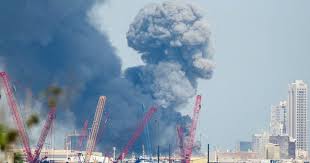
Iran has issued a stark warning to countries bordering the Persian Gulf, cautioning them against aiding or facilitating the activities of the United States military as tensions between Tehran and Washington intensify.
The warning was delivered on Wednesday, August 19, by Major General Ali Abdollahi, Chief of Staff of Iran’s Armed Forces, who said Tehran was closely monitoring military activity at American bases across the region.
Abdollahi said any assistance provided to US forces would be regarded by Iran as participation in American military operations. (Anadolu Ajansı)
The statement raises concerns about a possible widening of the conflict beyond the confrontation between Iran and the United States, particularly because several Gulf countries host American military installations and maintain close security relationships with Washington.
Iran issues warning to Gulf states
According to Iran's armed forces chief of staff, Gulf countries should not provide facilities, logistical assistance or other forms of support to American forces operating against Iran.
Abdollahi warned that Tehran was monitoring developments at military bases throughout the region and would regard assistance to the US as participation alongside American forces. (Türkiye Today)
The statement did not specify what action Iran might take against countries that ignored the warning.
However, the language represents a significant escalation because it potentially places Gulf governments in a difficult position. Countries such as the United Arab Emirates, Qatar, Bahrain, Kuwait and Saudi Arabia have varying degrees of military and strategic cooperation with Washington, while also having a direct interest in avoiding a broader regional war.
US military presence across the Gulf
The United States maintains a substantial military presence in the Middle East, including facilities and personnel in several Gulf states.
American bases in the region provide Washington with logistical, intelligence, air and naval capabilities that are critical to US operations in the Middle East.
For Iran, these bases represent potential military targets if the conflict with Washington expands.
Tehran's latest warning therefore appears designed partly to discourage Gulf governments from allowing their territory or military infrastructure to be used against Iran.
The warning also reflects Iran's broader concern about the movement of US military aircraft and other assets across the region. Iranian officials say they are closely monitoring American deployments and preparations.
Strait of Hormuz remains central to crisis
The warning comes amid a continuing confrontation over the Strait of Hormuz, one of the world's most strategically important waterways.
The narrow passage between Iran and Oman is a critical route for global energy supplies, with large quantities of crude oil and liquefied natural gas traditionally passing through it.
Iran and the United States have made competing claims over control and security in the waterway.
Reuters reported that Iranian officials have insisted that the strait is under Tehran's control, while US President Donald Trump has made opposing claims and Washington has imposed a naval blockade around Iranian ports. (Reuters)
The dispute has already disrupted shipping and raised fears of further pressure on global energy markets.
Any military confrontation involving Gulf countries could therefore have consequences far beyond the Middle East.
UAE suspends economic ties with Iran
Iran's latest warning also comes at a particularly sensitive moment in its relationship with the Gulf states.
On Wednesday, the United Arab Emirates announced a suspension of financial and economic transactions with Iran, citing security concerns following reported missile activity.
The UAE said two ballistic missiles had been launched from Iran towards maritime traffic near its coast. Iran denied responsibility for the alleged attacks.
The development is particularly significant because the UAE has historically maintained extensive commercial relations with Iran despite political disagreements.
Dubai has served as an important commercial and re-export centre for Iranian goods.
The suspension of economic ties could therefore impose additional pressure on Iran while further complicating relations between Tehran and Abu Dhabi.
Gulf states caught between Washington and Tehran
Gulf governments now face a difficult strategic calculation.
Many depend on the United States for defence and security guarantees, while Iran remains a powerful regional neighbour.
Countries such as Qatar, Bahrain, Kuwait and the UAE host American military facilities, making them potentially important to US military operations.
At the same time, Gulf governments have generally sought to avoid being dragged directly into a war between Washington and Tehran.
Iran's latest warning makes that balancing act even more complicated.
If Gulf states continue allowing American forces to operate from their territory, Tehran could potentially regard that as hostile involvement. But reducing cooperation with Washington could undermine their security arrangements and expose them to additional strategic risks.
Oman occupies a particularly sensitive position
Oman is another important actor in the current crisis because of its long-standing role as a diplomatic intermediary between Iran and the United States.
Muscat has historically maintained working relationships with both Tehran and Washington and has played a role in facilitating indirect communication.
Recent tensions have nevertheless placed Oman under increasing pressure.
The Guardian reported that Trump had threatened military action against Oman if it obstructed US and Israeli efforts regarding the conflict with Iran, although Oman itself has not been a direct party to the war.
The combination of pressure from Washington and warnings from Tehran illustrates the increasingly difficult environment facing Gulf governments.
Iran threatens a broader confrontation
The warning is also part of a broader pattern of increasingly aggressive statements from Tehran.
Earlier this week, Iranian officials threatened to adopt a more offensive military posture if diplomatic efforts with Washington failed.
Reuters reported that Iran had threatened to launch military attacks to challenge the US naval blockade if negotiations did not produce an acceptable outcome.
The threats came after diplomatic efforts between the two countries were stalled.
Washington and Tehran have disagreed over several issues, including sanctions, military activity and the future status of the Strait of Hormuz.
With negotiations struggling to produce a breakthrough, military threats have increasingly dominated the relationship.
Risk of attacks on Gulf infrastructure
The greatest concern for Gulf governments is that the confrontation could spill over into their territory or economic infrastructure.
The region contains major oil fields, refineries, ports, airports and shipping routes.
Any attacks against such facilities could have serious consequences for global energy supplies.
The Strait of Hormuz is particularly vulnerable because of its strategic importance and narrow geography.
Recent attacks on shipping have already increased concerns among international businesses and governments.
The Wall Street Journal reported that Iran has intensified attacks on shipping in and around the Strait, while the US has attempted to enforce restrictions on Iranian trade and maritime activity. (The Wall Street Journal)
Global economic consequences
A wider Gulf conflict could affect global oil prices, shipping costs, insurance premiums and food prices.
The Gulf remains one of the world's most important energy-producing regions, meaning disruptions to exports could quickly affect economies far beyond the Middle East.
Asian countries would be particularly exposed because they account for a substantial proportion of global oil imports from the Gulf.
European economies could also face higher energy costs, while developing countries could experience additional inflationary pressure.
For Nigeria and other oil-producing countries, higher crude prices could provide some short-term revenue benefits, but a major disruption to global trade could also increase import and transportation costs.
Diplomatic efforts face growing pressure
Despite the increasingly hostile rhetoric, diplomatic efforts have not completely disappeared.
Several countries have continued to encourage dialogue between Iran and the United States.
Austria and Greece have recently become involved in diplomatic outreach as Washington seeks ways to reopen the Strait of Hormuz and revive negotiations. (AP News)
However, the latest military threats demonstrate how fragile those efforts remain.
Iran's warning to Gulf states could be interpreted both as a deterrent and as a message that Tehran will not accept regional cooperation with American military operations.
A dangerous warning for the Gulf
Iran's warning to Gulf countries represents another potentially dangerous development in an already volatile regional crisis.
By declaring that assistance to US forces would amount to participation in American military operations, Tehran has effectively sought to draw a line around the activities it considers unacceptable.
The challenge for Gulf governments will be maintaining their security relationships with Washington without becoming direct targets in the confrontation with Iran.
With American military assets deployed across the region, the Strait of Hormuz remaining a major flashpoint and diplomatic negotiations stalled, the risk of miscalculation remains high.
For now, Gulf countries face the difficult task of balancing relations with two powerful and increasingly hostile actors.
Whether Iran's warning succeeds in discouraging Gulf cooperation with the United States or instead pushes more regional governments closer to Washington could become one of the defining questions in the next stage of the Middle East crisis.