Iran Search For New Supreme Leader: Transition Begins After Khamenei’s Death
Following the death of long-time Supreme Leader Ayatollah Ali Khamenei, Iran has begun a constitutional leadership transition with an interim council. Learn who is leading Iran now, how a new supreme leader will be chosen, and what it means for the country’s future.
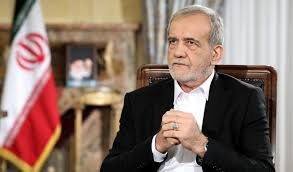
In the wake of the sudden and unprecedented death of Ayatollah Ali Khamenei - Iran’s Supreme Leader since 1989 - the Islamic Republic has entered a historic political transition, activating constitutional mechanisms to ensure continuity of governance and begin the search for a permanent successor. The process, involving the formation of a temporary leadership council and the pending role of the Assembly of Experts, marks a defining moment in Iran’s modern history.
Khamenei’s Death and Immediate Power Vacuum
Iran’s Supreme Leader Ayatollah Ali Khamenei, who held ultimate political and religious authority for nearly 37 years, was confirmed killed early on March 1, 2026, following a controversial joint U.S.–Israeli airstrike campaign. State media reported his death and announced a national mourning period.
The sudden loss of Iran’s highest authority - a position that oversaw the military, judiciary, and foreign policy - triggered constitutional procedures designed to handle such a leadership void. Under Article 111 of Iran’s Constitution, when the supreme leader’s office becomes vacant, a temporary governing body takes over until a new leader is selected. (AP News)
Interim Leadership: A Three-Member Council
To provide continuity, Iran’s political system has established an interim leadership council - a constitutional mechanism that temporarily carries out the responsibilities of the supreme leader. This three-member body is currently composed of:
- President Masoud Pezeshkian - representing the executive branch;
- Chief Justice Gholamhossein Mohseni Ejei - head of the judiciary;
- Ayatollah Alireza Arafi - jurist member chosen from the powerful Guardian Council. (The Business Standard)
Ayatollah Alireza Arafi was appointed on March 1, 2026 as the religious jurist member of the council - a key step that activates the interim leadership structure. Arafi, a senior cleric on both the Guardian Council and the Assembly of Experts, joins the presidency and judiciary leadership in a collective capacity to govern Iran during the transition.
This transitional authority ensures that the functions and institutional roles of the supreme leader - including command of the armed forces and supervision of state affairs - remain operational while the succession process unfolds.
How Iran Will Choose Its Next Supreme Leader
While the interim council holds authority for the present, Iran’s constitution places responsibility for choosing a permanent successor with the Assembly of Experts - an 88-member body of Shiite clerics elected to eight-year terms. The Assembly is specifically empowered to appoint and, if necessary, dismiss the supreme leader. (Saudi Gazette)
Once convened, the Assembly of Experts will deliberate behind closed doors to select the new supreme leader. Criteria include religious scholarship, political authority, and commitment to the principles of the Islamic Republic. Historically, the Assembly’s deliberations take place out of public view, and Iran rarely discloses details of internal discussions. (www.israelhayom.com)
The process is urgent but constitutionally structured: the Assembly must select a new leader “as soon as possible” to provide stability and avert prolonged uncertainty at the top of the Iranian political hierarchy.
Potential Successors and Factional Dynamics
At this stage, no official successor has been publicly named. Before his death, Khamenei had not formally designated a successor, leaving Iran’s powerful clerical establishment to decide. Analysts have mentioned possible contenders, but speculation remains premature and contingent on the Assembly’s deliberations.
Among individuals discussed informally in political circles are senior clerics aligned with Iran’s conservative establishment. There was previous speculation about figures such as Mojtaba Khamenei - the late leader’s son - but his candidacy has been controversial and unconfirmed by official sources.
The process involves negotiation between hard-line and more moderate factions within Iran’s clerical elite - a dynamic that could significantly shape the future trajectory of the Islamic Republic.
Significance of the Interim Council
The creation of the interim leadership council underscores Iran’s constitutional resilience amid crisis. By placing executive, judicial, and religious authority into a collective body, Tehran aims to maintain stability and continuity of government functions while larger geopolitical pressures swirl around the country.
The interim council also signals to both domestic and international audiences that Iran’s political system remains intact and capable of managing its own constitutional transition, even in the face of extraordinary external events.
Regional and Domestic Implications
The process of selecting a new supreme leader carries significant implications:
- Domestically, the choice will influence Iran’s internal policies, direction on civil liberties, and response to ongoing protests and unrest.
- Regionally, it will affect Tehran’s relationships with neighbouring states and non-state actors, especially regarding its nuclear programme and involvement in Middle Eastern conflicts.
- Internationally, the identity of the next leader will be watched closely by global powers, especially the United States and European countries, navigating sanctions and diplomacy.
The transition marks only the second leadership change since the Islamic Republic’s founding in 1979, first when Ruhollah Khomeini died, and Khamenei succeeded him in 1989, and now in 2026 under extraordinary circumstances.
Conclusion: A Nation at a Crossroads
Iran’s leadership transition following the death of Ayatollah Ali Khamenei represents a pivotal moment in its political history. With an interim leadership council now governing, the stage is set for the Assembly of Experts to choose a new supreme leader whose identity will shape Iran’s domestic and foreign policy for years to come.
As Tehran navigates this constitutional process amid regional tension and international scrutiny, the world watches closely - aware that the appointment of a new supreme leader is far more than a ceremonial succession. It is a moment that could redefine the future of Iran and influence geopolitical dynamics across the Middle East.