Iran Says Hormuz Will Stay Closed Despite Temporary Route Agreement With Oman
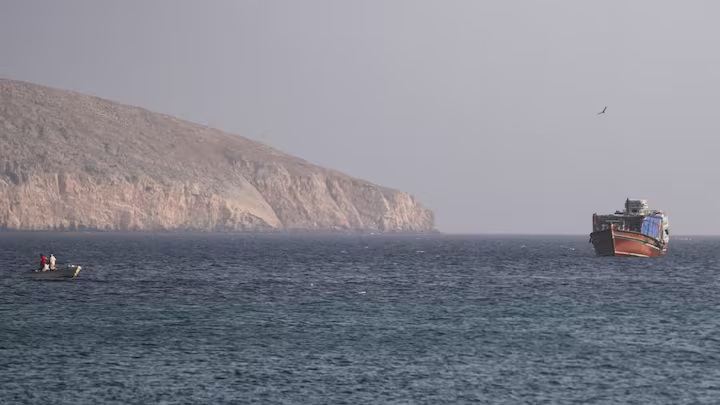
Iran has insisted that the Strait of Hormuz remains closed to normal shipping, despite a new agreement with Oman to establish a temporary maritime route through the strategic waterway.
The development has complicated hopes that one of the world's most important energy corridors could quickly return to normal after months of disruption caused by the war involving Iran, Israel and the United States.
Iranian Deputy Foreign Minister Kazem Gharibabadi said on Wednesday, August 26, that the arrangement reached with Oman should not be interpreted as a reopening of the strait. According to Iranian officials, the temporary route is a limited transit arrangement rather than a decision to restore unrestricted navigation. (Al Jazeera)
The distinction is important because the Strait of Hormuz is a critical artery for global energy supplies. Before the conflict, roughly a fifth of global oil and liquefied natural gas shipments passed through the waterway. (Reuters)
Iran sets conditions for reopening
Tehran's position is that the waterway will not fully reopen until Washington meets commitments connected to the broader conflict.
Gharibabadi reportedly said the United States must return to its commitments under a memorandum of understanding before Iran will consider the strait fully open. That condition means the temporary Oman arrangement does not represent a breakthrough in the wider confrontation between Tehran and Washington. (Al Jazeera)
Iran's position has been consistent with earlier statements from its officials and the Islamic Revolutionary Guard Corps, which have linked the reopening of Hormuz to demands directed at the United States.
Those demands have included compensation for war-related damage and guarantees concerning US military actions and sanctions. (Gulf News)
The result is a complicated situation in which a route can exist for selected vessels while the waterway is still officially considered closed by Iran.
Oman agreement creates temporary corridor
The latest development follows talks in Tehran between Iranian Foreign Minister Abbas Araghchi and Oman's Foreign Minister Badr al-Busaidi.
The two countries agreed to work on a temporary navigational corridor through the Strait of Hormuz and on efforts to clear mines from the area.
Oman has traditionally played an important diplomatic role between Iran and Western governments, making Muscat an important intermediary in efforts to reduce tensions. (Al Jazeera)
The proposed corridor is intended to provide a controlled mechanism for vessels to move through the waterway while broader political and security disagreements remain unresolved.
Iranian officials said the route would involve Iranian territorial waters at its entrance and part of its exit, highlighting Tehran's continued insistence on exercising control over how maritime traffic is managed. (Al Jazeera)
A route is not the same as reopening
The distinction between a temporary transit corridor and a full reopening is at the centre of the latest dispute.
For shipping companies, a temporary route could allow selected vessels to move through the region, but it does not necessarily provide the certainty needed for normal commercial operations.
Tankers, insurers and cargo operators need assurances that vessels will be protected from mines, missiles, drones, naval confrontations and possible detention.
The latest discussions therefore represent progress in practical navigation but not necessarily a resolution of the political crisis.
Associated Press reported that the proposed corridor comes as the countries also work on mine clearance, while maritime dangers remain significant. An oil tanker was recently struck near Oman, reinforcing concerns about the safety of commercial shipping. (AP News)
Trump claims the mines have been cleared
The Iranian position also contrasts sharply with statements from US President Donald Trump.
Trump said on August 25 that US forces had removed or detonated mines in the international waters of the Strait of Hormuz.
He warned Iran against attempting to lay new mines and said that vessels involved in such activity would face a severe US military response. (Axios)
The US assessment could encourage shipping companies to consider returning to the waterway.
However, Iran's continued declaration that the strait remains closed demonstrates that mine clearance alone cannot resolve the dispute.
The central issue is now both security and political control.
Why Hormuz is so important
The Strait of Hormuz is one of the world's most strategically important maritime chokepoints.
It connects the Persian Gulf with the Gulf of Oman and the Arabian Sea, providing the main sea route for petroleum exports from major producers including Saudi Arabia, Iraq, Kuwait, the United Arab Emirates and Qatar.
Its importance extends beyond oil.
Large volumes of liquefied natural gas also pass through the waterway, making disruption potentially damaging to electricity markets, industrial production and household energy costs around the world.
The prolonged reduction in shipping has therefore contributed to higher energy costs and increased uncertainty in international markets.
Reuters reported that oil prices fell by about 2% on August 26 as investors reacted to renewed hopes that Iran and Oman could facilitate movement through Hormuz. (AOL)
Global markets remain cautious
The oil-price reaction demonstrates how sensitive global markets are to developments around the strait.
Even the possibility of increased shipping can reduce concerns about supply shortages.
However, traders remain cautious because the diplomatic progress does not mean that normal shipping has resumed.
The continued closure also means that global energy companies must consider alternative routes, higher insurance costs and longer shipping times.
The longer the disruption continues, the greater the incentive for Gulf producers and energy companies to develop alternative export infrastructure.
Iran's strategic dilemma
Iran's insistence on keeping Hormuz closed gives Tehran considerable leverage because of the waterway's importance to global energy markets.
At the same time, prolonged closure carries risks for Iran itself.
The country depends on energy exports and regional trade, and continued instability could encourage Gulf states to develop alternative pipelines and shipping arrangements that reduce their dependence on the strait.
The Guardian reported that some Gulf countries are already pursuing alternative export routes, potentially weakening Iran's long-term strategic leverage over Hormuz. (The Guardian)
This creates a difficult calculation for Tehran.
Maintaining control over Hormuz provides bargaining power today, but keeping the waterway disrupted for too long could encourage other countries to reduce their reliance on it.
Shipping companies face uncertainty
For commercial operators, the latest developments offer both hope and uncertainty.
A designated corridor could eventually provide a safer route for selected tankers.
But shipping companies are unlikely to treat the Oman agreement as equivalent to unrestricted navigation until the security situation stabilises.
The risks remain particularly serious because Iran has also warned vessels it believes have violated its maritime rules.
Reuters reported that Iran recently placed 45 ships on a blacklist, threatening penalties including fines, detention and cargo seizures. Some of the vessels are connected to major Gulf energy companies. (Reuters)
Such threats could discourage shipowners and charterers from immediately returning to the area.
US-Iran tensions remain unresolved
The Hormuz dispute cannot be separated from the broader confrontation between Iran and the United States.
Washington has continued to impose sanctions on Tehran, while Iran has rejected American pressure and accused the United States of violating commitments.
The two sides have also disagreed over whether the Strait of Hormuz is actually open.
Trump previously insisted that the waterway was open, while Tehran maintained that it remained closed. (Reuters)
The conflicting statements illustrate how the strait has become both a maritime security issue and a powerful political bargaining tool.
What happens next?
The immediate challenge is implementing the temporary route agreed by Iran and Oman.
Mine clearance will be crucial, while the two countries must determine which vessels can use the corridor, how traffic will be monitored and what security guarantees will apply.
More importantly, the arrangement will have to survive the unresolved confrontation between Iran and Washington.
If the corridor functions successfully, it could become the first step towards restoring broader commercial traffic.
But if negotiations fail or military tensions rise again, the temporary arrangement could collapse quickly.
For now, Iran's message is clear: the Oman route does not mean the Strait of Hormuz has reopened.
Tehran continues to link full reopening to its demands of Washington, while Oman works to keep a narrow channel for maritime traffic alive.
The outcome will have consequences far beyond the Middle East. The future of Hormuz will influence global oil prices, shipping costs, inflation and energy security.
The temporary corridor therefore represents a potentially important development but until Iran agrees to restore normal navigation, the world's most closely watched energy chokepoint remains effectively caught between diplomacy, military pressure and economic leverage.