Iran Responds to Latest U.S. Peace Proposal as Tensions Over Nuclear Deal and Gulf Security Intensify
Iran has officially responded to the latest U.S. peace proposal amid escalating tensions in the Middle East, with Tehran pushing back on key demands over nuclear restrictions, sanctions relief, and regional security guarantees.
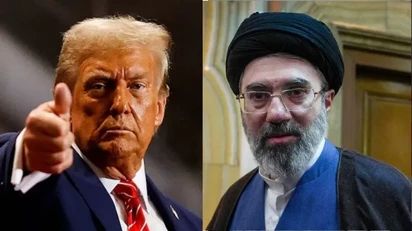
Iran has formally delivered its response to the latest United States peace proposal aimed at ending the ongoing conflict and stabilizing tensions in the Middle East, marking another critical moment in a fragile and complex diplomatic process that continues to shape global security and energy markets.
The response, conveyed through mediators in Pakistan, comes amid rising pressure from Washington for Tehran to accept stricter limits on its nuclear programme, reduce regional military activities, and agree to security arrangements in the Gulf.
However, Iranian officials have maintained that while diplomacy remains open, several elements of the U.S. proposal are unacceptable in their current form.
The development signals both progress in communication channels and a deepening divide between the two sides over core strategic issues.
Iran Confirms Submission of Response
According to diplomatic sources and state-linked media reports, Tehran submitted its formal response to the latest U.S. proposal through Pakistani intermediaries, who have played a central role in facilitating indirect talks between both sides.
The exchange forms part of an ongoing series of proposals and counterproposals aimed at ending hostilities and establishing a new framework for regional stability.
The Ministry of Foreign Affairs of Iran confirmed that its position had been relayed after reviewing Washington’s latest 14-point proposal, which outlines strict conditions on Iran’s nuclear enrichment activities and regional military influence. (Al Jazeera)
Iranian officials described the process as “ongoing review and engagement,” suggesting that diplomatic channels remain open despite significant disagreements.
Key Points of the U.S. Peace Proposal
The latest U.S. plan reportedly demands major concessions from Tehran, including:
- A long-term suspension or significant reduction of uranium enrichment
- Transfer or reduction of Iran’s existing enriched uranium stockpile
- Guarantees restricting Iran’s regional military operations
- Reopening of critical maritime routes, including the Strait of Hormuz
- Expanded verification mechanisms to ensure compliance
In return, Washington has proposed a gradual lifting of sanctions, unfreezing of Iranian assets abroad, and partial normalization of trade relations.
The proposal also includes security arrangements aimed at reducing naval tensions in the Gulf region, where military confrontations have intensified in recent months.
The United States has maintained that its conditions are necessary to prevent nuclear escalation and restore long-term stability in the region.
Iran Pushes Back on “Maximalist” Demands
Despite confirming receipt of the proposal, Iranian officials have strongly criticized several of its provisions, describing them as unrealistic and heavily skewed toward U.S. interests.
A senior Iranian diplomatic source said the plan contains demands that would effectively undermine Iran’s sovereignty and defensive capabilities.
Iran’s parliament and foreign policy establishment have repeatedly argued that nuclear enrichment is a “non-negotiable right” under international agreements, particularly the Nuclear Non-Proliferation Treaty (NPT).
Iranian lawmakers have also accused Washington of using negotiations as political leverage while maintaining economic pressure through sanctions.
Earlier diplomatic assessments from Tehran described similar U.S. proposals as “one-sided” and lacking balance, particularly on issues involving sanctions relief and military withdrawal guarantees. (Investing.com)
Pakistan’s Role as Mediator
Pakistan continues to play a key diplomatic role as an intermediary between Washington and Tehran, transmitting proposals and responses while attempting to bridge widening gaps in negotiations.
Officials in Islamabad have reportedly intensified diplomatic outreach in recent weeks, engaging both sides to prevent further escalation.
The mediation channel has become one of the few consistent lines of communication amid broader geopolitical tensions in the Middle East.
Diplomatic observers say Pakistan’s involvement reflects its strategic interest in preventing regional instability that could spill over into neighboring countries.
Nuclear Issue Remains the Core Dispute
At the center of the standoff remains Iran’s nuclear programme, which Western governments fear could eventually lead to weapons capability.
The U.S. proposal reportedly calls for strict limitations on uranium enrichment levels, potentially reducing them to near-zero thresholds.
Iran, however, insists that it will not abandon its enrichment programme entirely, arguing that it is for peaceful energy and scientific purposes.
This fundamental disagreement continues to block progress, despite multiple rounds of indirect talks.
Analysts note that both sides remain entrenched, with neither willing to concede on what they consider core national security interests.
Rising Tensions in the Gulf
The diplomatic exchange comes amid continued instability in the Gulf region, where naval activity and missile-related incidents have increased tensions.
Maritime routes, particularly the Strait of Hormuz, remain a critical flashpoint due to their importance in global oil transportation.
Any disruption in this corridor has immediate implications for global energy markets, often triggering spikes in oil prices and economic uncertainty worldwide.
Security experts warn that without a diplomatic breakthrough, the risk of further escalation remains high.
Global Reactions and Market Impact
International reactions to the latest developments have been cautious but closely monitored.
Energy markets have responded with volatility, reflecting concerns about potential disruptions in oil supply chains.
Investors are particularly sensitive to signals from Washington and Tehran, as even minor shifts in negotiations can influence global crude prices.
The United Nations has repeatedly called for restraint and renewed dialogue, urging both sides to prioritize diplomacy over confrontation.
What Happens Next
While Iran has submitted its response, officials have not confirmed whether a new round of direct or indirect negotiations will follow.
Diplomatic analysts suggest that further back-and-forth exchanges are likely before any comprehensive agreement can be reached.
The next phase of discussions is expected to focus on narrowing differences over nuclear restrictions, sanctions relief, and regional security guarantees.
However, the gap between both sides remains significant, and the timeline for any potential breakthrough remains uncertain.
For now, the situation reflects a delicate balance between diplomacy and confrontation, with global stakeholders watching closely as one of the world’s most sensitive geopolitical disputes continues to unfold.