Iran Begins Public Mourning for Ayatollah Ali Khamenei Months After February Assassination
Iran has launched a week-long period of public mourning for late Supreme Leader Ayatollah Ali Khamenei, months after he was killed in February airstrikes, with millions expected to participate in funeral ceremonies across the country.
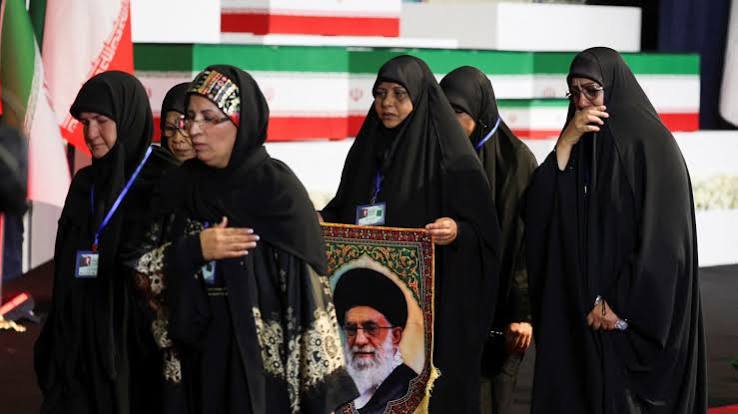
Iran has begun an elaborate week of public mourning and funeral ceremonies for its late Supreme Leader, Ayatollah Ali Khamenei, more than four months after he was killed in a February airstrike that dramatically reshaped the country's political landscape.
The ceremonies, which started in Tehran on Friday, are expected to attract millions of mourners from across Iran and neighboring countries. Officials say the events are intended to honor Khamenei's nearly four decades of leadership while demonstrating national unity during a period of heightened regional tensions and political uncertainty. (Reuters)
Coffin Lies in State in Tehran
Khamenei's body was placed in state at the Grand Mosalla prayer complex in Tehran, where senior clerics, government officials, military commanders, foreign dignitaries, and thousands of ordinary citizens gathered to pay their respects.
Television footage broadcast by Iranian state media showed mourners filing past the flag-draped coffin, many carrying portraits of the late leader and reciting prayers. Some were seen weeping openly, while others chanted slogans expressing loyalty to the Islamic Republic.
The remains of several members of Khamenei's family, who were also killed in the February attack, were displayed alongside his coffin during the opening ceremony.
Funeral Delayed by Months of Conflict
Although Khamenei was killed on February 28 during the opening stages of the conflict involving Iran, the United States, and Israel, funeral ceremonies were postponed because of months of intense fighting and continuing security concerns.
Only after a fragile ceasefire took effect in June were Iranian authorities able to organize a full state funeral befitting the country's highest-ranking political and religious figure.
Officials have described the ceremonies as one of the largest public events in Iran since the funeral of Ayatollah Ruhollah Khomeini in 1989. (AP News)
Nationwide Mourning Planned
Iranian authorities have announced an extensive six-day programme of public mourning.
Following ceremonies in Tehran, Khamenei's coffin is scheduled to travel to the holy city of Qom, one of Shiite Islam's most important religious centers.
Additional memorial events are expected to take place in the Iraqi cities of Najaf and Karbala, both revered by Shiite Muslims worldwide, before the late leader is buried in Mashhad, his hometown and the location of the revered Imam Reza shrine.
Government officials estimate that millions of people could participate in various stages of the funeral procession throughout the week. (Financial Times)
Tight Security Across Tehran
Authorities have implemented extensive security measures for the ceremonies.
Major roads in central Tehran have been closed to private vehicles, while public offices and many businesses have suspended operations during key funeral events.
Officials have also imposed temporary restrictions on airspace over parts of the capital and deployed large numbers of security personnel to manage crowds and guard against potential security threats.
Emergency medical teams have been stationed throughout the city following concerns about overcrowding, particularly considering deadly stampedes that occurred during previous high-profile funerals in Iran.
Foreign Delegations Attend
Numerous foreign delegations have arrived in Tehran to participate in the ceremonies.
Representatives from several regional allies, including Iraq, Pakistan, Turkey, Oman, Armenia, Tajikistan, and China, are among those expected to attend.
However, officials noted the absence of representatives from Western governments and many Gulf Arab states, reflecting the continuing diplomatic divisions surrounding Iran and its regional policies. (Financial Times)
Symbol of National Unity
Iranian leaders have portrayed the funeral as more than a religious ceremony.
State media has described the week of mourning as an opportunity to reaffirm the country's revolutionary values and demonstrate resilience following months of war and international pressure.
Throughout Tehran, giant banners bearing Khamenei's image have been erected alongside flags, religious symbols, and slogans emphasizing sacrifice, resistance, and national unity.
Large crowds attending the ceremonies have echoed those themes, with many participants describing Khamenei as a defender of Iran's independence and Islamic identity.
Political Uncertainty Persists
The funeral also comes at a sensitive political moment for Iran.
Khamenei's death ended a leadership that lasted nearly 37 years and left the country facing significant economic challenges, international sanctions, and lingering domestic unrest.
Attention has focused on the country's new Supreme Leader, Mojtaba Khamenei, who succeeded his father but has remained largely absent from public view after reportedly sustaining injuries during the February attack.
His absence has fueled speculation about the country's political transition, although Iranian officials have continued to stress that state institutions remain stable and fully operational.
Looking Beyond the Funeral
Analysts say the coming days will test the government's ability to project stability while managing one of the most significant political transitions in modern Iranian history.
For supporters of the Islamic Republic, the ceremonies represent a final farewell to a leader who shaped Iran's domestic and foreign policies for nearly four decades.
For others, they mark the beginning of a new and uncertain chapter for a nation navigating regional conflict, economic hardship, and evolving political dynamics.
As the funeral procession moves from Tehran to some of Shiite Islam's holiest sites before concluding with burial in Mashhad next week, millions of Iranians are expected to take part in what authorities’ hope will be a powerful demonstration of national solidarity and continuity