Iran Bans Popular Online Debate Show Over ‘False Information’ as Media Crackdown Intensifies
Iran has banned popular YouTube debate programme Azad over alleged “false information” and ordered its founder, Mehdi Ahmadi, to stop media activities, raising fresh concerns over press freedom.
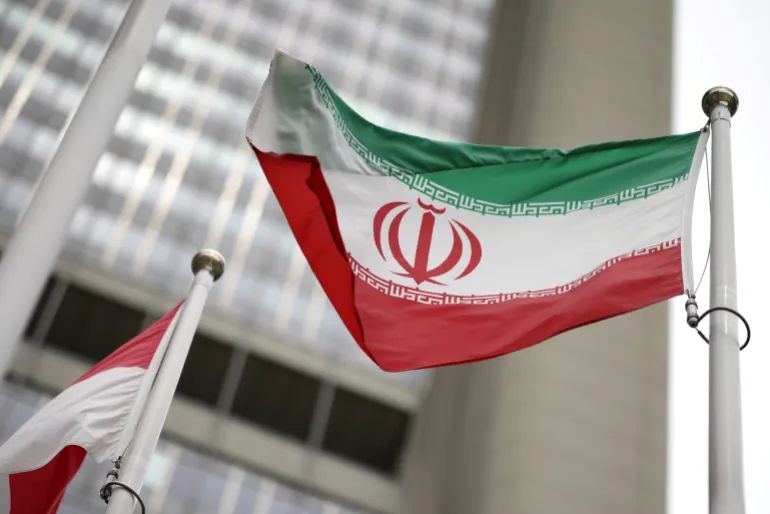
Iranian authorities have banned a popular YouTube debate programme and opened a case against its founder over allegations of spreading “false information”, in the latest move to tighten control over independent and online media in the country.
The Iranian judiciary announced the action against Azad, a YouTube-based discussion programme that had gained attention for hosting debates on politically and socially sensitive subjects. Its founder and presenter, Mehdi Ahmadi, said he was questioned by authorities and charged with disseminating false information before being released on bail.
The development comes as Iran's authorities have intensified scrutiny of media and online activity following the US-Israeli attacks on Iran that began on February 28, 2026, and the wider regional conflict that followed. (Malay Mail)
Iran orders Azad debate shows to stop operating
Iran's judiciary said on Monday that it had launched an investigation into Azad following the broadcast of an episode that allegedly contained false information.
According to Mizan Online, the judiciary's news outlet, the programme was also considered an unauthorised media organisation because it lacked an official licence from Iran's Ministry of Culture, which regulates media activities in the country. (Punch Newspapers)
Authorities subsequently issued a judicial supervision order preventing the programme's director from carrying out media-related activities until the necessary licence is obtained.
Mizan also accused the channel of committing “numerous violations” of media regulations during its operation.
The action effectively prevents Azad from continuing its activities in its previous form and places its founder under legal scrutiny.
Founder Mehdi Ahmadi questioned
Ahmadi, who founded and presented the programme, confirmed that authorities had questioned him on Sunday and Monday.
He said he was charged with spreading false information, although authorities later released him on bail.
The case against Ahmadi highlights the risks facing Iranian journalists, commentators and online content creators who discuss politically sensitive issues outside the traditional state-controlled media structure.
Azad had attracted attention partly because of its willingness to host discussions on subjects considered difficult or controversial within Iran's political system.
The programme's growing audience on YouTube also meant that conversations taking place on the platform could reach audiences beyond Iran's tightly regulated domestic media environment.
What is Azad?
Azad is an online debate and discussion programme distributed primarily through YouTube.
The programme had become known for tackling controversial subjects and bringing different viewpoints into public discussion. A recent New York Times report described the show as one that addressed topics that pushed the boundaries of Iran's authoritarian political system.
That positioning made Azad unusual within Iran's media environment.
Unlike state broadcasters, online programmes can potentially offer more room for debate and audience interaction. But this also places them under greater scrutiny from authorities, particularly when discussions involve politics, government policy, national security or sensitive events.
The banning of Azad therefore illustrates the tension between the growing popularity of independent digital media and Iran's existing system of media regulation.
‘False information’ becomes central to crackdown
The Iranian government's use of the term “false information” is particularly significant because Tehran has increasingly focused on controlling what authorities consider misleading or destabilising information.
The issue has become even more sensitive during the ongoing regional conflict.
Since the outbreak of the war involving Iran, Israel and the United States, competing claims, unverified reports and manipulated images have circulated widely online. Researchers and fact-checking organisations have documented extensive misinformation surrounding the conflict.
NewsGuard, for example, reported in August that it had identified 146 false claims connected to the 2026 Iran war, with the narratives collectively attracting hundreds of millions of views. Some involved manipulated photographs and videos, while others used AI-generated imagery. (NewsGuard)
The spread of misinformation provides governments with a legitimate reason to be concerned about inaccurate information. However, critics of restrictive media policies argue that broad definitions of “false information” can also be used to suppress legitimate criticism and political debate.
Wider restrictions on Iranian media
The Azad case comes amid a broader tightening of Iran's restrictions on media and communication.
On August 16, Iran's parliament approved the general framework of legislation designed to further restrict contact between Iranians and foreign media organisations considered hostile to the Islamic Republic.
The proposed law would criminalise unauthorised interviews and media participation involving outlets regarded as hostile, including US and Israeli organisations. It still requires detailed parliamentary consideration and approval by the Guardian Council before becoming law.
The proposed legislation reportedly includes prison terms ranging from six months to two years for certain unauthorised interactions with hostile media.
It would also introduce requirements for prior notification regarding interactions with other foreign media organisations.
The parliamentary move illustrates the increasingly restrictive environment in which Iranian journalists and media personalities are operating.
Previous attempt to regulate ‘fake news’
Iran's latest actions also revive a debate that intensified in 2025, when authorities pursued legislation aimed at combating online “fake news”.
That proposed cyber legislation generated widespread concern among press-freedom advocates and civil society groups, who warned that vague definitions of false content could give authorities broad powers to prosecute online speech.
The Iranian government eventually withdrew the bill in July 2025 following significant public criticism. (RadioFreeEurope/RadioLiberty)
The controversy demonstrated the difficulty of balancing the government's stated objective of combating misinformation with concerns about freedom of expression.
The Azad case suggests that authorities can still rely on existing media and judicial regulations to act against online programmes without necessarily introducing a new comprehensive internet law.
Implications for freedom of expression
The banning of Azad is likely to attract renewed international attention because of the programme's role as an alternative platform for public discussion.
Iran already maintains significant restrictions on traditional media, while internet access and social media platforms have also faced extensive government controls.
The emergence of YouTube-based programmes such as Azad has nevertheless created new spaces for Iranians to discuss issues outside conventional broadcasting structures.
The authorities' decision to shut down the programme signals that such digital platforms are not beyond the reach of government regulation.
For journalists and online presenters, the case could encourage greater caution when discussing political or controversial subjects.
Digital media faces uncertain future
The Azad controversy also highlights the growing importance of digital media in countries where traditional journalism is heavily regulated.
YouTube, podcasts and social media have made it possible for independent presenters to reach large audiences without operating a conventional television station or newspaper.
But the same platforms can also expose creators to government scrutiny, especially where authorities consider content politically sensitive or harmful to national security.
For Iran, the challenge will be to determine how to address genuine misinformation without eliminating legitimate debate.
For critics of the government, the concern is that accusations of spreading “false information” could become a broad tool for silencing dissent.
Conclusion
Iran's decision to ban the Azad online debate programme and charge its founder with spreading false information represents another significant development in the country's increasingly restrictive media environment.
Authorities say the programme violated media regulations and broadcast false information, while Ahmadi has been released on bail after questioning.
The case comes against the backdrop of war, misinformation and growing government concern over information control.
As Iran continues to tighten regulations surrounding domestic and foreign media, the future of independent online debate remains uncertain.
The Azad case could therefore become an important test of how far Iranian authorities are prepared to go in controlling digital speech and how online media platforms respond to growing pressure from governments seeking to regulate what citizens can say, watch and discuss.