Investigators Recover Flight Recorders in Asaba Aircraft Incident as Probe Into Crash Cause Begins
Aviation investigators have secured flight recorders from an aircraft involved in an incident in Asaba, Nigeria, as authorities begin a full probe to determine the cause of the crash and ensure aviation safety improvements.
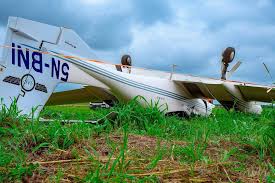
Aviation safety investigators have successfully recovered the flight recorders from an aircraft involved in an incident in Asaba, Delta State, as a formal investigation begins into what caused the aircraft to experience a serious in-flight emergency.
The Aircraft Accident Investigation Bureau (AAIB), working alongside other aviation safety agencies, confirmed that both the cockpit voice recorder (CVR) and the flight data recorder (FDR) were retrieved from the aircraft wreckage shortly after emergency response teams secured the site.
The recovery of the so-called “black boxes” marks a critical step in the investigation process, as officials aim to reconstruct the final moments of the flight and determine whether mechanical failure, human error, or environmental factors contributed to the incident.
Emergency Response and Site Securing
The incident occurred at the Asaba International Airport area, where the aircraft reportedly encountered difficulties during its approach phase. Emergency services were immediately deployed following distress signals, with airport fire and rescue teams arriving at the scene within minutes.
Authorities confirmed that passengers and crew were safely evacuated, although some sustained minor injuries and were treated by medical personnel at nearby facilities.
Security personnel cordoned off the crash area to prevent interference with potential evidence, while aviation investigators began preliminary documentation of the wreckage.
Officials described the response as swift and coordinated, noting that the priority was to ensure the safety of survivors and preserve evidence for investigation.
Flight Recorders Key to Investigation
The AAIB stated that the recovered flight recorders would now undergo detailed analysis at its technical facility.
The cockpit voice recorder contains audio from the flight deck, including pilot communications, alarms, and ambient cockpit sounds. The flight data recorder, meanwhile, captures thousands of parameters such as altitude, air speed, engine performance, and control inputs.
Together, these devices are expected to provide investigators with a comprehensive reconstruction of the flight’s final moments.
A senior investigator explained that the decoding process could take several days or weeks depending on the condition of the devices.
“Once we extract the data, we will be able to understand exactly what happened in the cockpit and how the aircraft systems behaved during the incident,” the official said.
Preliminary Theories Under Review
While investigators have not yet issued a final report, early assessments suggest that multiple factors are being considered, including possible technical malfunction, weather conditions, and operational procedures.
Aviation experts caution that it is too early to draw conclusions until data from the flight recorders is fully analyzed.
Meteorological reports from the time of the incident indicated moderate weather conditions, though officials are examining whether wind shear or sudden atmospheric changes may have played a role during the landing approach.
Engine performance and maintenance history of the aircraft are also being reviewed as part of the broader investigation.
Regulatory Oversight and Safety Standards
The Nigerian Civil Aviation Authority (NCAA) has confirmed its collaboration with the AAIB, emphasizing that safety oversight remains a top priority.
Authorities stated that all operators involved in domestic aviation must adhere strictly to international safety standards, including regular maintenance checks and pilot training requirements.
The incident has renewed public attention on aviation safety in Nigeria, particularly the importance of continuous monitoring of aircraft systems and adherence to global best practices.
Passenger Safety and Airline Response
The airline operating the aircraft has expressed relief that all passengers and crew survived the incident.
In a statement, the airline said it is fully cooperating with investigators and has grounded similar aircraft in its fleet pending preliminary safety reviews.
“We are committed to ensuring the highest safety standards and are working closely with regulatory authorities to determine the cause of this event,” the airline stated.
Passengers who were onboard described moments of panic as the aircraft experienced unusual movement before the emergency landing attempt. However, many also praised the professionalism of the flight crew, who reportedly maintained calm and guided evacuation procedures effectively.
Importance of the Black Box Data
Aviation analysts emphasize that flight recorders are the most important tools in understanding aircraft incidents.
Unlike visual inspection alone, black box data provides precise technical insights that help investigators identify root causes and recommend safety improvements.
In past aviation investigations worldwide, findings from flight recorders have led to major regulatory changes, including updates to pilot training, aircraft design improvements, and enhanced maintenance protocols.
Broader Aviation Safety Context
Nigeria’s aviation sector has made significant improvements in safety over the past decade, with international audits recognizing progress in regulatory compliance and operational standards.
However, isolated incidents continue to highlight the need for ongoing investment in infrastructure, training, and technology upgrades.
Experts say that while air travel remains one of the safest modes of transportation, continuous vigilance is required to maintain and improve safety outcomes.
Next Steps in the Investigation
The AAIB has confirmed that a preliminary report will be released once initial data analysis from the flight recorders is complete. A final comprehensive report, including safety recommendations, will follow a full technical review.
Investigators are expected to interview flight crew members, maintenance personnel, and air traffic controllers as part of the ongoing inquiry.(Premium Times)
Authorities have urged the public to avoid speculation until official findings are released.
Conclusion
The recovery of flight recorders in the Asaba aircraft incident represents a breakthrough in the ongoing investigation. As experts begin the detailed analysis of cockpit data and flight performance records, the focus remains on determining the exact cause of the emergency and preventing similar occurrences in the future.
For now, aviation authorities continue to prioritize transparency, safety assurance, and public confidence as the investigation unfolds.