Infantino Slams World Cup Critics for ‘Spreading Hate,’ Defends FIFA After Historic 2026 Tournament
FIFA President Gianni Infantino has lashed out at critics of the 2026 FIFA World Cup, accusing them of "spreading hate and false rumours" while defending the tournament's success, inclusivity, and global impact.
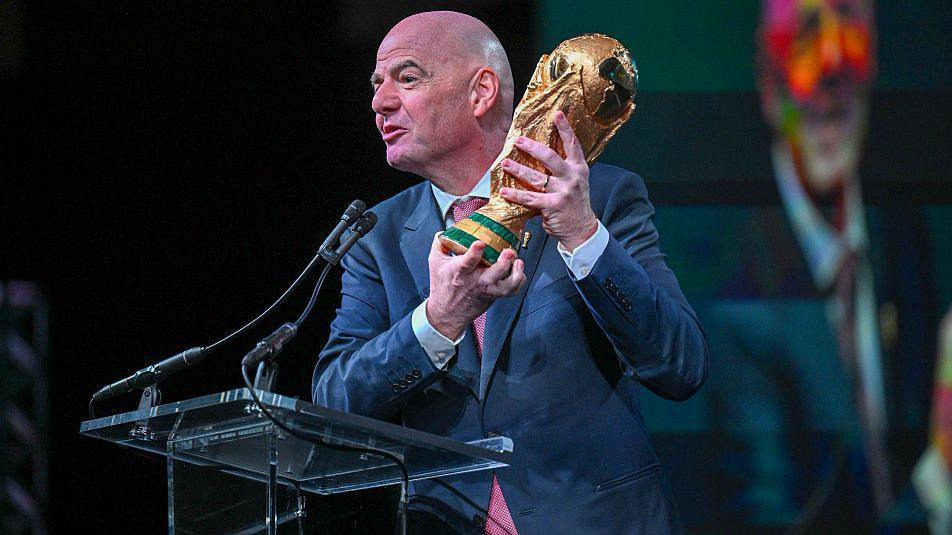
FIFA President Gianni Infantino has launched a robust defence of the 2026 FIFA World Cup, accusing critics of "spreading hate and false rumours" in the aftermath of what he described as one of the most successful tournaments in football history.
In a lengthy open letter published on FIFA's official platforms and his Instagram account following the conclusion of the tournament, Infantino argued that detractors had focused excessively on controversy while ignoring what he said was the competition's overwhelming success in bringing people together through football. (Reuters)
The 2026 FIFA World Cup, jointly hosted by the United States, Canada, and Mexico, concluded with Spain defeating Argentina in the final, capping off the first expanded 48-team edition of the tournament. Despite record attendances and global television audiences, the competition was accompanied by debate over immigration policies, refereeing decisions, visa restrictions, security concerns, and FIFA's governance.
Infantino Hits Back at Critics
In his strongly worded message, Infantino said many critics had been "consumed by hate" instead of recognising the tournament's achievements.
According to the FIFA president, those questioning the event had chosen to amplify negative narratives while overlooking millions of positive experiences enjoyed by players, supporters and host communities.
He insisted that the World Cup had delivered "joy and happiness" to football fans across the globe and rejected suggestions that the tournament had been overshadowed by controversy.
Infantino argued that while no major global event is free from challenges, criticism should be based on facts rather than misinformation or political agendas.
Defending FIFA's Decisions
The FIFA chief also used the statement to defend several decisions that attracted widespread scrutiny during the tournament.
Among the most controversial was the reversal of a suspension involving United States striker Folarin Balogun, a move that generated criticism from several football associations and commentators.
Infantino maintained that disciplinary decisions are part of football and argued they should not overshadow the broader success of the competition.
He also defended FIFA's handling of officiating decisions, noting that debates over refereeing have always been part of the sport and are not unique to the 2026 World Cup.
Responding to Visa Controversies
Another major issue during the tournament involved visa restrictions affecting supporters, officials and participants from certain countries.
Human rights organisations and some football stakeholders questioned whether the host nations had ensured equal access for all eligible participants.
Infantino acknowledged that challenges existed but argued that the tournament still welcomed millions of visitors from more than 200 countries.
He pointed to the participation of teams from politically sensitive regions including Iran, Haiti and the Democratic Republic of Congo as evidence that football continues to unite people despite international tensions.
According to him, these examples demonstrated the game's unique ability to bridge political and cultural divides.
Record-Breaking Tournament
Despite the controversies, FIFA has highlighted several milestones achieved during the tournament.
The expanded 48-team competition attracted record crowds, generated enormous global television audiences and featured more participating nations than any previous World Cup.
FIFA officials have repeatedly described the tournament as a landmark event that expanded football's global reach while creating new opportunities for emerging football nations.
Infantino argued that these accomplishments should remain the defining legacy of the competition rather than the political disputes that surrounded it.
Critics Remain Unconvinced
Not everyone accepted Infantino's assessment.
Several journalists and commentators argued that legitimate questions surrounding governance, ticket prices, officiating, and political influence deserve scrutiny rather than dismissal.
Some critics also questioned FIFA's close relationship with political leaders and suggested that concerns about transparency, human rights and tournament administration remain valid topics of public debate.
Others maintained that acknowledging the tournament's sporting success does not prevent meaningful discussion about organisational shortcomings.
Sports commentators noted that major sporting events inevitably attract both celebration and criticism, particularly when hosted across multiple countries with differing political and legal systems. (The Independent)
Football's Power to Unite
Throughout his statement, Infantino returned repeatedly to football's role as a force for unity.
He argued that millions of fans from diverse cultures celebrated together peacefully during the month-long tournament, demonstrating the sport's unique capacity to transcend politics and conflict.
According to the FIFA president, that spirit of unity represents the true legacy of the World Cup and should outweigh attempts to portray the tournament negatively.
He urged football supporters to focus on the memories created on the pitch rather than what he described as divisive narratives promoted by critics.
Looking Ahead
With the 2026 World Cup now complete, FIFA is expected to begin evaluating lessons learned from the first 48-team tournament while preparing for future global competitions.
Although Infantino believes the tournament will be remembered for its sporting excellence and global celebration, debates surrounding governance, human rights, tournament logistics and political influence are unlikely to disappear.
His latest remarks underscore FIFA's determination to defend its flagship competition against criticism, even as observers continue to assess both its successes and its shortcomings.
For supporters, the tournament delivered memorable football and historic moments. For critics, it also highlighted unresolved issues that continue to shape the governance of the world's most popular sport.