Indonesian President Prabowo Nominates Destry Damayanti as Central Bank Governor
Indonesian President Prabowo Subianto has nominated acting Bank Indonesia Governor Destry Damayanti as the sole candidate to lead the central bank after Perry Warjiyo’s resignation.
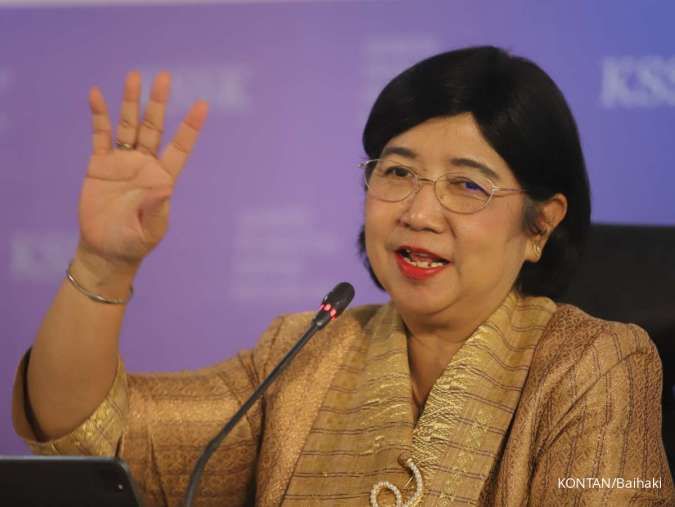
Indonesian President Prabowo Subianto has nominated Destry Damayanti, the acting governor of Bank Indonesia, as the sole candidate to become the country's next central bank governor.
The nomination follows the unexpected resignation of Perry Warjiyo, who stepped down as governor in July after leading Bank Indonesia for about seven years.
Destry's nomination was announced by Indonesia's State Secretary Prasetyo Hadi on Monday, August 10, 2026. She must now undergo a parliamentary fit-and-proper process before she can formally take over the position. (Reuters)
If approved, Destry would make history as the first woman to permanently serve as governor of Bank Indonesia, one of the most important economic positions in Southeast Asia's largest economy.
Who is Destry Damayanti?
Destry is a veteran economist and financial-sector professional who has held senior positions in Indonesia's economic and banking institutions.
She has served as Senior Deputy Governor of Bank Indonesia since 2019 and became acting governor after Warjiyo's resignation.
Her professional background includes work as an economic adviser and researcher as well as serving as a chief economist at major Indonesian banks. She was also appointed a commissioner at Indonesia's Deposit Insurance Corporation in 2015.
Destry's long experience within the central bank makes her a relatively familiar figure to financial markets and monetary-policy observers.
Her nomination is consequently being viewed as a continuity choice at a time when investors are closely watching Indonesia's economic policy direction. (The Wall Street Journal)
Why Perry Warjiyo resigned
Warjiyo's departure came unexpectedly in July.
Indonesia's government officially confirmed on July 27 that President Prabowo had accepted Warjiyo's resignation. The State Secretariat said the president thanked him for approximately seven years of service leading Bank Indonesia.
Under Indonesian law, the central bank's Senior Deputy Governor assumes the governor's duties temporarily when the position becomes vacant. Destry therefore took over as acting governor following Warjiyo's departure. (Setneg)
The sudden change initially created uncertainty in financial markets because the governor plays a central role in determining monetary policy, managing currency stability and maintaining investor confidence.
The nomination of Destry is intended to bring greater certainty to the leadership transition.
Markets welcome Destry's nomination
Financial markets responded positively to the announcement.
Reuters reported that the Indonesian rupiah strengthened to its highest level against the US dollar since June 18 after Prabowo nominated Destry.
The reaction suggests that investors viewed the nomination as relatively reassuring, particularly because Destry is already familiar with Bank Indonesia's operations and monetary-policy framework.
Her selection also reduces uncertainty over who will guide monetary policy during a period when Indonesia faces competing demands for economic growth and financial stability.
Investors have been particularly sensitive to signs that the central bank could come under political pressure to support the government's economic ambitions.
Concerns over central bank independence
Although Destry is considered a technocratic and experienced candidate, her nomination comes amid a broader debate about Bank Indonesia's independence.
Prabowo's administration has ambitious economic objectives, including faster economic growth and stronger job creation.
The government has also expanded the central bank's mandate to place greater emphasis on supporting real-sector growth, a development that has attracted attention among economists and investors.
The central bank must nevertheless continue to manage inflation, maintain currency stability and preserve financial-system confidence.
Analysts therefore see Destry as someone who could help coordinate monetary and fiscal policy while maintaining a degree of continuity.
However, some observers remain concerned that closer coordination between the government and central bank could weaken perceptions of monetary-policy independence.
Balancing growth and inflation
Destry will face a difficult balancing act if parliament confirms her appointment.
Prabowo has set ambitious economic targets and wants monetary policy to support investment, employment and growth.
At the same time, Bank Indonesia must prevent excessive inflation and protect the value of the rupiah.
Central banks typically face difficult choices when governments want faster economic expansion while inflationary pressures remain present.
Destry's experience could become particularly valuable in navigating these competing objectives.
Her approach is expected to remain broadly focused on currency stability, inflation management and economic growth, although the exact policy direction will become clearer if she receives parliamentary approval.
Parliament must approve the nomination
Prabowo's nomination does not automatically make Destry the permanent governor.
Under Indonesia's appointment process, the candidate must undergo a parliamentary fit-and-proper test before lawmakers vote on the appointment.
Indonesia's parliament, which is dominated by parties supporting Prabowo's government, has about a month to consider the nomination, according to Reuters.
The parliamentary process will therefore be closely watched by investors and economists, particularly because questions surrounding central bank independence could form part of the broader debate.
Potential first woman to lead Bank Indonesia
One of the most significant aspects of Destry's nomination is its historical importance.
If parliament confirms her, she will become the first woman to permanently lead Bank Indonesia.
Her appointment would represent a major milestone for women in Indonesia's economic and financial institutions and could increase the visibility of women in senior central-banking roles across the region.
Destry's extensive experience also means the appointment would combine a historic breakthrough with a continuity-focused leadership transition.
Challenges awaiting the new governor
If confirmed, Destry will inherit an institution facing several economic pressures.
Indonesia must manage exchange-rate stability, inflation, interest rates and capital flows while supporting Prabowo's growth ambitions.
The central bank must also maintain investor confidence at a time when markets are sensitive to government policy and concerns about institutional independence.
Another immediate issue will be the monetary policy meeting scheduled for August 18 - 19, which will provide an early test of the central bank's direction under its acting leadership.
Her ability to reassure markets while maintaining effective cooperation with the government could determine how investors view Indonesia's economic policy in the months ahead.
Conclusion
President Prabowo Subianto's nomination of Destry Damayanti as the sole candidate to lead Bank Indonesia marks a significant moment for Indonesia's economy and financial markets.
Destry, who has been serving as acting governor following Perry Warjiyo's resignation, brings years of central-banking and financial-market experience to the position.
Markets have largely welcomed her nomination, seeing it as a sign of continuity and stability. However, her potential appointment also comes amid questions about Bank Indonesia's independence and the government's desire for stronger economic growth.
If parliament confirms her, Destry will become the first woman to permanently serve as governor of Bank Indonesia.
Her biggest challenge will be balancing the government's growth ambitions with the central bank's responsibilities for inflation control, currency stability and financial credibility.
For Indonesia, the appointment could ultimately become a test of whether the country can pursue faster economic growth while maintaining confidence in the independence and effectiveness of its central bank.