Indonesia Earthquake Kills 54, Displaces 12,800 as Rescue Teams Race to Reach Survivors
A powerful 7.7-magnitude earthquake has killed at least 54 people and displaced 12,800 others on Indonesia’s Flores Island, as rescuers battle aftershocks, landslides and damaged roads to deliver aid.
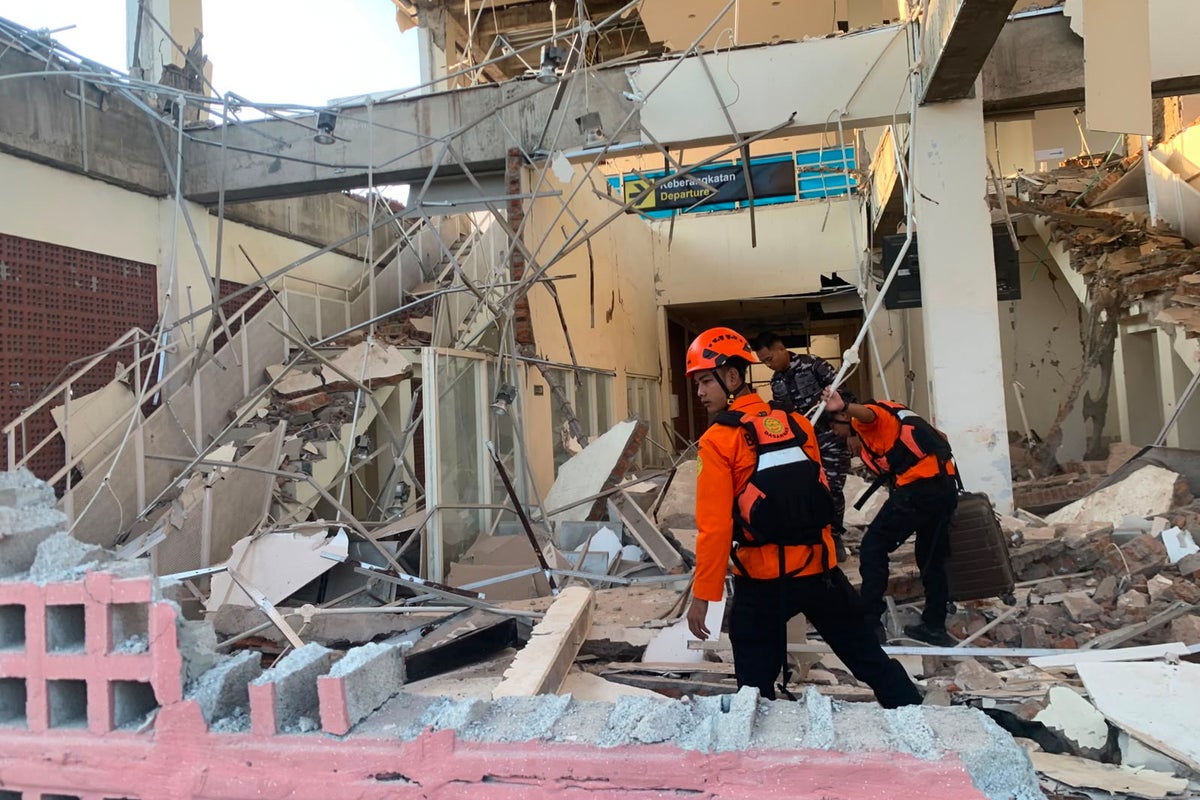
A powerful 7.7-magnitude earthquake in eastern Indonesia has killed at least 54 people and displaced about 12,800 others, leaving thousands of survivors sheltering in schools, public buildings and makeshift camps while rescue teams struggle to reach isolated communities.
The earthquake struck early Saturday, August 15, off the coast of Flores Island in East Nusa Tenggara province, one of Indonesia's regions most exposed to seismic activity. The disaster triggered landslides, numerous aftershocks and damage to homes and infrastructure, complicating rescue and relief operations.
The rising displacement figure represents one of the clearest indications of the scale of the disaster. While earlier assessments had placed the number of evacuated people at around 5,000, officials said the number of people unable to return to their homes had risen to 12,800 by Monday. (ABS-CBN News)
Powerful earthquake strikes Flores
The earthquake struck at about 5:58 a.m. local time on August 15, with its epicentre located off Flores Island. The shallow nature of the earthquake intensified its impact on communities close to the epicentre.
According to reports, the tremor caused buildings to collapse, damaged roads and triggered landslides across several districts, including Sikka, Nagekeo, Manggarai and East Manggarai.
The earthquake was followed by hundreds of aftershocks, some of which were strong enough to frighten residents and prevent many survivors from returning home.
Reuters reported that the earthquake generated nearly 1,600 aftershocks, while rescue operations were complicated by blocked roads, landslides and damaged communications infrastructure. (Reuters)
Death toll rises as rescuers search for victims
The death toll increased as emergency workers reached communities that had initially been difficult to access.
The latest reported toll of 54 deaths was accompanied by more than 100 injuries, although officials continued assessing the damage and casualties.
The earthquake has been described as one of Indonesia's deadliest seismic disasters in recent years. Earlier reports had put the death toll at 47 and later 53 as rescue teams recovered more bodies from damaged areas. (AP News)
Authorities have continued deploying search-and-rescue personnel to areas where landslides and damaged roads prevented immediate access.
The difficult terrain has been a major obstacle. Some communities can only be reached after roads are cleared, while others require assistance by sea or air.
12,800 people were displaced
The humanitarian impact of the disaster extends well beyond those killed or injured.
Authorities said approximately 12,800 people had been displaced by Monday, with many unable to return to their homes because buildings were damaged or because residents feared further collapses caused by continuing aftershocks.
Many survivors have been sleeping outdoors or in temporary shelters. Schools, police stations and government buildings have reportedly been used to accommodate displaced residents.
For people living in rural and remote areas, access to necessities has become a major concern.
Survivors have appealed for food, drinking water, medicines, blankets and other emergency supplies. Reuters reported that some villages were experiencing shortages of clean water, food and medical assistance as rescue teams worked to expand relief operations.
Landslides and damaged roads hamper relief
One of the biggest challenges facing emergency authorities is the condition of the road network.
Landslides caused by the earthquake blocked important roads and isolated communities, making it difficult for rescue workers and aid deliveries to reach affected areas.
The situation has been particularly challenging in parts of East Nusa Tenggara, where mountainous terrain and dispersed settlements already make transportation difficult.
Authorities have deployed thousands of military and police personnel to support rescue operations and the delivery of emergency supplies. Aircraft and other transport assets are also being used to reach areas that remain difficult to access by road.
Tsunami warning briefly issued
The earthquake also prompted concerns about a possible tsunami.
Authorities issued a temporary tsunami warning following the earthquake, with waves reported in some coastal areas. The largest reported wave reached approximately 1.61 metres in Riung village.
The warning was later lifted after authorities determined that the immediate tsunami threat had subsided.
The tsunami concern was particularly significant because Indonesia has experienced some of the world's deadliest earthquake-triggered tsunamis, including the catastrophic 2004 Indian Ocean tsunami.
Indonesia's vulnerability to earthquakes
Indonesia's geographical location makes it highly vulnerable to earthquakes.
The country lies along the Pacific Ring of Fire, a zone stretching around much of the Pacific Ocean that is characterised by intense seismic and volcanic activity.
Flores itself has a painful history of major earthquakes and tsunamis. The latest disaster has revived memories of the devastating 1992 Flores earthquake and tsunami, which killed thousands of people.
The combination of strong earthquakes, shallow epicentres, mountainous terrain and densely populated coastal communities creates significant disaster risks across the Indonesian archipelago.
Independence Day celebrations overshadowed
The disaster came as Indonesia marked its 81st Independence Day on August 17.
Instead of joining nationwide celebrations, many communities in East Nusa Tenggara were mourning victims and waiting for emergency assistance.
President Prabowo Subianto led national mourning efforts as authorities continued rescue and relief operations. The government has mobilised personnel and supplies while emergency authorities work to assess the full extent of the damage.
The earthquake has therefore transformed what would normally be a major national celebration into a period of mourning and humanitarian response for thousands of Indonesians.
Rescue operation continues
Despite the rising death toll, authorities have continued searching damaged communities for survivors and victims.
The immediate priorities are to locate anyone still trapped, provide emergency medical care, restore roads and communications, and deliver food and clean water to displaced residents.
The large number of aftershocks remains a major concern. Many residents are reluctant to sleep inside buildings, fearing that additional tremors could cause further collapses.
The coming days will be critical as emergency workers attempt to reach isolated communities and prevent the humanitarian situation from deteriorating.
For the thousands displaced by the Indonesia earthquake, the crisis is only beginning. Beyond the rescue operation will come the enormous task of rebuilding homes, roads, schools and health facilities and helping communities recover from one of the country's most devastating earthquakes in years.