India’s ‘Cockroach’ Protesters Set to Return Despite Police Crackdown
India’s Cockroach Janta Party protesters plan fresh demonstrations in Delhi despite mass detentions, as controversy over voter-list revisions intensifies.
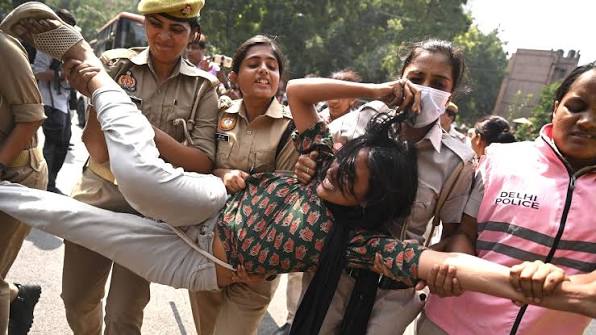
Thousands of members and supporters of India’s youth-led “Cockroach” protest movement are preparing to return to the streets of New Delhi despite a sweeping police crackdown, the detention of demonstrators and the jailing of two prominent organisers.
The Cockroach Janta Party (CJP) has called for a fresh gathering at Central Park in Connaught Place on Friday, October 16, to demand the resignation of Chief Election Commissioner Gyanesh Kumar over controversial revisions to India’s voter lists.
The planned demonstration comes days after police deployed extensive security measures to prevent an earlier rally, detaining thousands of people across the capital and disrupting access to major roads, transport hubs and protest locations.
The Delhi High Court declined to issue an order restraining the latest protest after a trader sought intervention over concerns about traffic congestion and disruption to businesses. However, police have warned the movement’s founder, Abhijeet Dipke, against proceeding with an unauthorised gathering.
According to Reuters, security has been strengthened in the capital as authorities prepare for another possible mass demonstration.
The confrontation is becoming a wider debate about electoral accountability, freedom of assembly and the ability of young people to challenge political institutions in the world’s largest democracy.
How the ‘Cockroach’ Movement Began
The unusual name of the movement emerged from an insult directed at unemployed young people. In May 2026, India’s Chief Justice likened some unemployed youths to cockroaches, prompting Dipke to embrace the label and transform it into a symbol of resistance.
Rather than retreating from the derogatory comparison, supporters adopted the name Cockroach Janta Party, using social media and street demonstrations to highlight youth unemployment, alleged examination irregularities and concerns about government accountability.
The movement gained national attention in July when protests over examination paper leaks intensified. The demonstrations contributed to mounting pressure on the government and preceded the resignation of Education Minister Dharmendra Pradhan.
That episode gave the protesters a sense that sustained public pressure could produce political consequences.
Their latest campaign, however, is directed at the electoral system, raising the stakes for the movement and the administration of Prime Minister Narendra Modi.
In an October 11 report, Al Jazeera described how the movement and student organisations continued to mobilise after police detained activists and opposition figures during the previous weekend’s demonstrations.
Controversial Voter-List Revision Fuels Protests
At the centre of the dispute is a nationwide electoral-roll revision exercise known as the Special Intensive Revision (SIR).
Critics allege that the process has removed more than 130 million names from voter lists, raising fears that eligible citizens could lose their opportunity to participate in elections. The CJP accuses the Election Commission of favouring Modi’s ruling Bharatiya Janata Party (BJP) and wants Kumar to resign.
The allegations have intensified concerns about electoral transparency, particularly as India prepares for future state and national political contests.
However, the claims remain contested. The Election Commission and the BJP deny wrongdoing, while electoral authorities maintain that the revision process is intended to improve the accuracy of voter records and that eligible people whose names are incorrectly excluded can seek re-enrolment.
The distinction is important: the reported removal of names from electoral records does not, by itself, establish that every removal was unlawful or politically motivated.
Nevertheless, the scale of the revision has become a major rallying point for opposition groups, students and young activists who want greater transparency and accountability from election officials.
Police Crackdown Intensifies Political Tensions
The latest confrontation follows a major security operation in Delhi on October 10, when authorities moved to prevent a planned demonstration near Jantar Mantar, a recognised protest location close to the seat of government.
Police and paramilitary personnel established barricades, restricted movement and searched vehicles as protesters attempted to reach the area. Public transport was disrupted, and mobile internet services were suspended in some locations.
Reuters reported that more than 2,000 people were detained during the crackdown, including protesters and political figures. Journalists and members of civil society were also reportedly caught up in the operation.
Dipke and fellow organisers Saurav Das and Ashutosh Ranka were detained after arriving in Delhi by air. They were subsequently released, but the confrontation continued.
On October 14, Das and Ranka were sent to Tihar Jail for five days in judicial custody after allegedly violating restrictions connected to their earlier release by entering the prohibited Jantar Mantar site. Police said the organisers had breached conditions imposed on them.
Human Rights Watch criticised the authorities’ response. In its October 13 statement, the organisation called for an end to arbitrary detentions and urged the government to respect peaceful assembly.
Delhi Police, meanwhile, have defended restrictions as necessary to maintain public order and prevent unauthorised gatherings.
Court Decision Leaves Uncertainty Over Friday Rally
The planned Central Park demonstration presents another test for the movement and the authorities.
Although the Delhi High Court declined to restrain the protest through the order sought by a local trader, that decision does not automatically mean the gathering has received police authorisation. Central Park is not an officially approved protest venue, according to reports.
Authorities have also warned Dipke against unlawful activity, while security officials have discussed possible traffic restrictions around Connaught Place, one of the capital’s busiest commercial districts.
The CJP founder has nevertheless indicated that he is prepared to face arrest rather than abandon the campaign. He has also encouraged supporters who cannot reach Delhi to display India’s national flag and demonstrate peacefully in their own communities.
The movement’s determination to continue reflects the challenge facing authorities when restrictions on physical gatherings collide with activists’ demands for political accountability. (The Indian Express)
A Test for Democracy and Civil Liberties
The standoff has implications beyond the future of the CJP. It raises questions about how Indian authorities balance public order, commercial activity and the constitutional right to peaceful assembly.
For the protesters, the demand for Kumar’s resignation is tied to wider concerns about the credibility of electoral institutions and the protection of voting rights. For the government and police, the immediate challenge is managing demonstrations without allowing the capital’s transport network and commercial districts to descend into disorder.
The coming days will show whether the movement can sustain its momentum despite the detention of key organisers and restrictions on protest locations.
For now, the ‘Cockroach’ protesters’ planned return signals that the crackdown has not ended their campaign. Instead, the dispute over voter-list revisions has become a broader confrontation over electoral trust, youth activism and the space available for dissent in India (Associated Press)