Incoming El Niño Is So Extreme It Has Outgrown Existing Scientific Categories
An exceptionally strong El Niño is developing in the Pacific, with scientists warning of record-breaking heat, floods, droughts and extreme weather through 2027.
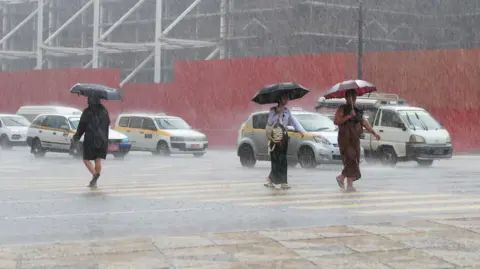
An exceptionally powerful El Niño is developing in the tropical Pacific, with climate scientists warning that the event could push the planet into another period of record-breaking global temperatures and intensify extreme weather across several regions.
The phenomenon has attracted attention because scientists say its projected intensity is so far beyond historical observations that existing ways of describing the strength of El Niño struggle to capture it. That is the basis behind the striking headline that the incoming event “doesn’t have a scientific name.”
The statement does not mean scientists have failed to identify the phenomenon. It is still El Niño, part of the naturally occurring El Niño-Southern Oscillation (ENSO) climate pattern. Rather, researchers are warning that its intensity could exceed the range represented by conventional categories.
According to Inside Climate News, climate scientist Daniel Swain said the event was entering “extreme territory” and could become record-breaking. He explained that, when measured using some traditional indicators, its intensity is already so far outside previous observations that it does not fit comfortably on the historical scale.
What Makes This El Niño Different?
El Niño occurs when unusually warm surface waters develop across the central and eastern tropical Pacific Ocean. The shift changes atmospheric circulation and can influence weather patterns far beyond the Pacific.
The National Oceanic and Atmospheric Administration explains that El Niño can increase the likelihood of extreme weather in particular regions, including flooding and drought.
What makes the current event particularly significant is the combination of an unusually warm Pacific Ocean and a warming global climate.
Swain describes the tropical Pacific as a kind of enormous “battery” that stores heat. During El Niño, some of that accumulated ocean heat is released into the atmosphere, influencing weather patterns around the world.
Global warming is making that background ocean system warmer, meaning the amount of energy available in the climate system is increasing.
Scientists See Unprecedented Changes
A major scientific study published in Science in August 2026 provides important context.
Researchers reconstructed El Niño variability over the past 1,000 years using high-resolution coral records from the Galápagos Islands. Their findings indicate that El Niño variability during the past four decades has been approximately 36.5% higher than during the pre-industrial millennium.
The research, titled “Recent strengthening of eastern Pacific ENSO in the last millennium paleorecord,” found that the recent increase exceeded the range expected from natural variability in climate-model simulations. The study therefore provides evidence that modern warming is associated with a substantial increase in ENSO variability. (Science study information)
The findings do not mean every future El Niño will necessarily be stronger than the previous one. ENSO remains a naturally variable climate system, and scientists continue to study how warming will affect its frequency, intensity and impacts.
But the research provides a broader scientific context for why the current event is attracting unusual attention.
WMO Warns of Exceptional Conditions
The World Meteorological Organization has also warned about the strength and persistence of the current El Niño.
In its September update, the WMO said there was an “exceptionally high likelihood of nearly 100%” that El Niño would persist through February 2027.
The organisation said sea-surface temperatures in the tropical Pacific were already well above average and continuing to rise.
WMO Secretary-General Celeste Saulo described the situation as exceptional, highlighting the potential consequences for communities already dealing with climate-related extremes.
The agency's warnings are significant because El Niño affects different parts of the world in very different ways.
Floods in Some Regions, Drought in Others
One of the defining characteristics of El Niño is that it does not produce the same weather everywhere.
Some regions can experience increased rainfall and flooding, while others face drought, heat and wildfire risks.
Swain told Inside Climate News that the intensity of the current event could increase the overall strength of these weather extremes because a warmer atmosphere can hold more moisture.
For California, coastal flooding is a particular concern. Swain said the combination of El Niño-related temporary sea-level increases, existing climate-driven sea-level rise, high tides and powerful storms could produce serious flooding during the coming winter.
Other parts of the world may experience very different consequences.
El Niño can disrupt rainfall patterns across Africa, Asia, Australia and the Americas, affecting agriculture, water supplies, fisheries and food security.
Why the “No Scientific Name” Claim Matters
The phrase that the El Niño “doesn't have a scientific name” is therefore best understood as a description of the limitations of existing intensity scales rather than a claim that scientists have discovered an entirely new climate phenomenon.
There is no universally recognised category above “very strong” El Niño. Swain told Inside Climate News that informal labels such as “Godzilla El Niño” have been used to describe exceptionally powerful events, but such terminology is not an official scientific classification.
The current event could ultimately establish new benchmarks for El Niño intensity, depending on how it develops over the coming months.
A Warning for 2027
Scientists are particularly concerned about what the event could mean for global temperatures later this year and into 2027.
El Niño temporarily transfers enormous amounts of heat from the ocean into the atmosphere. Combined with the long-term warming trend caused by greenhouse-gas emissions, that can push global temperatures to exceptionally high levels.
The coming months will therefore be closely monitored by meteorological agencies, governments and researchers.
For communities around the world, the key issue is not what scientists eventually call this El Niño. The more immediate question is how governments, businesses and households prepare for the floods, droughts, heat, storms, food and water pressures that can accompany an exceptionally strong ENSO event.