IMF Advises Nigeria Against Restoring Blanket Petrol Subsidy, Urges Targeted Relief for Vulnerable Citizens
The IMF has warned Nigeria against restoring blanket petrol subsidies, urging targeted support for vulnerable households as rising fuel prices increase living costs and fiscal pressures.
The International Monetary Fund (IMF) has advised the Federal Government of Nigeria against restoring a blanket petrol subsidy, warning that the policy could deepen fiscal pressures while providing disproportionate benefits to wealthier consumers.
Instead, the Fund is urging the government to direct assistance towards vulnerable households struggling with rising petrol prices, transport fares and the broader cost of living.
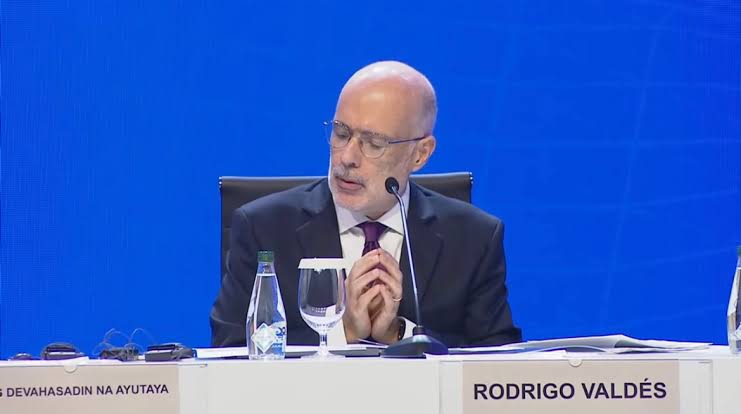
Rodrigo Valdés, Director of the IMF’s Fiscal Affairs Department, gave the advice on Wednesday during a press briefing on the Fund’s Fiscal Monitor at the 2026 Annual Meetings of the IMF and World Bank Group in Bangkok, Thailand. His comments came amid renewed calls for the return of petrol subsidies ahead of Nigeria’s forthcoming election cycle.
According to reports by PUNCH and Channels Television, Valdés acknowledged the political difficulty of allowing fuel prices to rise but maintained that protecting citizens should not mean artificially suppressing prices for everyone.
“Protecting people is not the same as protecting the price of fuels,” he said.
The IMF’s position highlights the growing challenge facing Nigerian policymakers: how to shield households from the effects of higher energy costs without reversing reforms intended to ease pressure on public finances.
Why the IMF Opposes Blanket Fuel Subsidies
The IMF argues that universal fuel subsidies are expensive, place pressure on government budgets and often disproportionately benefit higher-income consumers, who generally purchase more fuel.
Valdés said fuel subsidies and other measures that prevent energy prices from fully adjusting to global supply shocks had cost countries between one per cent and 1.5 per cent of gross domestic product (GDP) in 2026.
The Fund believes that when governments keep fuel prices artificially low, they weaken the price signals that would otherwise encourage consumers and businesses to adjust their consumption in response to limited supplies.
Valdés explained that when fuel becomes scarce globally, subsidising prices can discourage demand from adjusting, potentially contributing to higher market prices and shifting more of the adjustment burden onto other consumers.
The IMF’s broader recommendation is that governments should allow energy prices to reflect prevailing market conditions while using carefully designed social protection programmes to assist those who cannot afford the increase.
In its 2026 assessment of Nigeria’s economy, the Fund also urged the authorities to resist election-related spending pressures and maintain their commitment not to reintroduce fuel subsidies. It recommended temporary, targeted support for households facing greater risks of poverty and food insecurity.
Nigeria’s Fuel Subsidy Debate Returns
Nigeria’s petrol subsidy debate has intensified as higher energy costs place additional pressure on household budgets and businesses.
The removal of the longstanding petrol subsidy in 2023, announced under President Bola Tinubu’s administration, was presented as a major fiscal reform intended to reduce government expenditure and free up resources for other priorities.
However, the reform was followed by a sharp increase in petrol prices, contributing to higher transport costs and adding to the cost of moving food and other essential goods. Households and businesses that rely on petrol for transportation and electricity generation have faced particularly difficult adjustments.
The resulting hardship has kept subsidy restoration at the centre of political and economic discussions. Some political figures have advocated a return to subsidy arrangements, arguing that government intervention is needed to ease the burden on ordinary Nigerians.
The IMF’s latest advice signals that it considers a universal subsidy an inefficient way to address these concerns. Rather than spending public funds to lower the price of petrol for all consumers, it wants Nigeria to identify those most affected by higher prices and provide assistance directly.
Government Introduces Temporary Petrol Price Relief
The IMF’s recommendation comes as the Federal Government pursues temporary measures to reduce the immediate impact of rising petrol prices without formally restoring the former blanket subsidy.
According to THISDAY, the government recently announced a 30-day petrol discount at Nigerian National Petroleum Company Limited (NNPC) retail outlets, prioritising public transport operators.
Finance Minister Taiwo Oyedele said NNPC retail would sell petrol at cost by foregoing its retail profit margin. The measure was described as temporary relief, rather than a reversal of the subsidy-removal policy.
The government has also proposed negotiating a ceiling of ₦1,350 per litre on petrol’s ex-gantry or landing cost, subject to monthly reviews. The proposal is intended to help moderate price pressures, although its implementation and effect on retail prices remain important considerations.
These measures illustrate the government’s attempt to respond to public concern over fuel costs while maintaining the broader reform agenda. However, they also raise questions about how temporary interventions will be funded, who will benefit and whether relief can reach households that need it most.
For the IMF, the distinction is important: targeted, time-limited assistance can protect vulnerable people without committing the government to subsidising fuel consumption across the economy.
What Targeted Support Could Look Like
Davide Furceri, a division chief in the IMF’s Fiscal Affairs Department, said governments could redirect part of the resources otherwise spent on universal fuel subsidies towards more focused support for households and groups most exposed to rising transport costs.
As reported by Premium Times, possible interventions include transport assistance, school feeding programmes, geographically targeted support and help for vulnerable farmers.
For Nigeria, transport support could be particularly significant because petrol price increases can affect bus fares, the movement of agricultural produce and the cost of commuting to work or school. Supporting public transport users or operators could therefore offer relief to many people without subsidising every litre of petrol purchased by private motorists and businesses.
The IMF has also emphasised the importance of household data and social safety nets in identifying people who need assistance. Direct cash transfers and other targeted programmes may help households manage higher prices while allowing the government to limit the cost and duration of its intervention.
However, implementing such programmes is not straightforward. Furceri acknowledged that some countries lack complete household registries and reliable digital payment systems. Nigeria would therefore need effective beneficiary identification, transparent distribution and monitoring to minimise exclusion, duplication and misuse of public funds.
The IMF’s advice is that support should be limited, targeted and temporary, with delivery mechanisms adapted to local conditions.
Balancing Economic Reforms with Public Hardship
Although the IMF’s position centres on fiscal sustainability, Nigeria’s policymakers must also contend with the immediate consequences of rising living costs. Higher petrol prices can push up transport fares and the prices of food and other essentials, placing a heavier burden on low-income families whose earnings may not rise at the same pace.
The policy challenge is therefore not simply whether to subsidise fuel, but how to protect vulnerable Nigerians effectively without creating an expensive and potentially unsustainable commitment.
The Fund’s 2026 Article IV assessment of Nigeria acknowledges the country’s high poverty and food insecurity risks. It recommends prioritising social protection spending and providing temporary, targeted assistance within the government’s available budget.
For Nigeria, this would require transparent management of any savings from subsidy removal, adequate funding for social programmes and clear communication about who qualifies for support. It would also require monitoring whether assistance actually offsets the effects of higher transport and essential-goods costs.
Without credible implementation, targeted relief could fail to reach the people most in need, leaving the public unconvinced that the benefits of economic reforms outweigh their immediate costs.
Conclusion: Targeted Relief Over Universal Subsidies
The IMF’s warning against restoring a blanket petrol subsidy places the focus on a difficult but central question in Nigeria’s economic policy: how to ease household hardship while maintaining fiscal discipline.
The Fund argues that universal subsidies are costly, can disproportionately benefit higher-income consumers and may interfere with adjustments to global energy shortages. It recommends that Nigeria instead strengthen social protection, support vulnerable transport users and direct temporary assistance towards poorer households and farmers.
The Federal Government’s temporary petrol discount demonstrates that it is exploring ways to cushion consumers without formally reversing subsidy removal. Whether such interventions provide meaningful relief will depend on their reach, duration, transparency and effect on prices.
Ultimately, the IMF’s advice is not that government should ignore the hardship caused by rising fuel costs. It is that public support should be designed to reach people who need it most, rather than reducing petrol prices for every consumer.
For Nigerians facing higher transport and living expenses, the critical test will be whether targeted measures deliver timely, measurable relief while helping the country avoid a return to the fiscal pressures associated with blanket subsidies.