“I Won’t Be Intimidated”: Seun Okinbaloye’s Defiance Sparks Debate on Press Freedom in Nigeria
Channels TV anchor Seun Okinbaloye responds to Nyesom Wike’s controversial “shoot” remark, declaring he won’t be intimidated. Analysis of reactions, implications for press freedom, and Nigeria’s political climate.
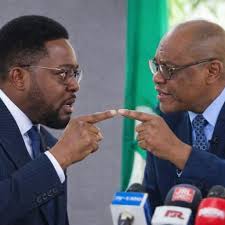
Nigeria’s political and media landscape witnessed a defining moment in early April 2026 when Channels Television anchor Seun Okinbaloye publicly responded to a controversial remark made by Nyesom Wike. In a firm and widely applauded stance, Okinbaloye declared: “I’m not afraid, and I will never be intimidated.”
This response has since evolved into more than a personal rebuttal that it has become a symbol of resistance, press freedom, and the ongoing struggle between power and accountability in Nigeria.
The Background: A Comment That Sparked Outrage
The controversy began when Wike, during a media interaction, reacted angrily to comments made by Okinbaloye on the political direction of Nigeria. The journalist had raised concerns about the country drifting toward a one-party system ahead of the 2027 elections.
In response, Wike said he would have “shot” the journalist if it were possible to break through the television screen. The statement, though later described by his aides as hyperbolic, triggered widespread condemnation across political and civil society circles. (The Guardian Nigeria)
Critics warned that such rhetoric even when not literal could embolden hostility toward journalists and weaken democratic norms.
Okinbaloye Breaks His Silence
During a broadcast on Channels Television, Okinbaloye addressed the controversy directly. He expressed gratitude for the widespread support he received from Nigerians, civil society organizations, and viewers across the country.
But his strongest message was one of defiance:
“Let me be clear, I’m not afraid, and I will never be intimidated.” (Punch Newspapers)
He emphasized that journalism is a duty rooted in ethics and accountability - not a concession to political power. He also reaffirmed his commitment to asking tough questions and holding leaders accountable, regardless of pressure.
A Broader Warning About Democracy
Beyond defending himself, Okinbaloye raised a deeper concern about Nigeria’s democratic trajectory. He warned that democracy could be endangered if dissenting voices are suppressed or discouraged.
According to him, the issue was not about political parties or individuals, but about safeguarding the principle of open discourse:
- A system where journalists can question authority
- A society where differing opinions are tolerated
- A democracy where power is scrutinized, not shielded
He cautioned that allowing a “one-way narrative” in political discourse could undermine the very foundation of democratic governance.
Support, Reassurance, and Tension
Following the backlash, Okinbaloye revealed that he received reassurances from security agencies regarding his safety. He also confirmed that Wike personally reached out to clarify that his statement was not intended as a literal threat. (Punch Newspapers)
However, the clarification has done little to quiet the broader debate.
Civil society groups, including press freedom advocates, maintain that such statements regardless of intent are inappropriate and dangerous. They argue that words from powerful figures carry weight and can influence behavior, especially in a politically charged environment.
The Role of Channels Television in Nigerian Democracy
Channels Television has long been regarded as one of Nigeria’s most credible news platforms, known for its critical and balanced political coverage.
Okinbaloye, as one of its leading anchors, represents a brand of journalism that prioritizes accountability and public interest. His stance in this controversy reinforces the role of the media as a watchdog - an institution that must remain independent, even in the face of intimidation.
This incident, therefore, is not just about one journalist - it is about the broader role of the media in Nigeria’s democracy.
The Power of Words in a Fragile System
One of the key lessons from this episode is the power of political language.
Analysts warn that even metaphorical references to violence can have real-world consequences. When leaders use such language, it can:
- Normalize hostility toward journalists
- Encourage attacks by overzealous supporters
- Create an atmosphere of fear within the media
As one analyst noted, rhetoric can quickly become “permission” in a polarized society. (The Guardian Nigeria)
In a country already grappling with insecurity and political tension, such signals can be particularly dangerous.
What This Means for Nigeria
1. A Test for Press Freedom: Okinbaloye’s response has become a rallying point for press freedom advocates. It highlights the need to protect journalists from both physical and psychological intimidation.
2. Reinforcing the Watchdog Role: The incident underscores the importance of journalists asking difficult questions. Without this function, governance becomes less transparent and more prone to abuse.
3. A Reflection of Political Intolerance: Wike’s reaction and the backlash it generated reveal a deeper issue within Nigerian politics: a growing intolerance for criticism.
4. Public Awakening: The widespread support for Okinbaloye suggests that Nigerians are increasingly aware of the importance of a free press. This could strengthen civic engagement and democratic participation.
5. The Danger of Escalation: If such rhetoric becomes normalized, it could lead to more serious threats against journalists, further shrinking the democratic space.
Between Courage and Consequence
Okinbaloye’s statement - “I won’t be intimidated” - is more than a personal declaration. It reflects the courage required to practice journalism in challenging environments.
However, it also raises a critical question:
Should journalists have to be this brave just to do their jobs?
In a healthy democracy, the answer should be no.
Conclusion: A Defining Moment for Media and Democracy
The confrontation between Wike and Okinbaloye may fade from headlines, but its implications will endure.
It has exposed the fragile balance between power and accountability, highlighted the risks faced by journalists, and sparked a national conversation about the future of Nigeria’s democracy.
For many Nigerians, Okinbaloye’s defiance represents hope - a reminder that despite pressure, intimidation, and political tension, the voice of truth can still stand firm.
As Nigeria approaches another election cycle, the message is clear:
democracy survives not when power is unchallenged, but when it is questioned - fearlessly.