“I Did My Best as President” - Jonathan Counters Atiku in Fresh Political Exchange Ahead of 2027 Race
Former President Goodluck Jonathan has responded to Atiku Abubakar’s criticisms, insisting he did his best while in office. The exchange reignites debate over Nigeria’s past leadership as 2027 politics heats up.
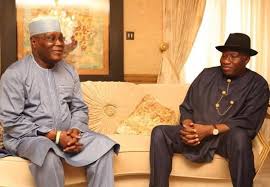
Nigeria’s political scene has once again been stirred by a familiar rivalry of former presidential contenders, as ex-President Goodluck Jonathan pushed back against recent comments made by former Vice President Atiku Abubakar, insisting that he “did his best” while leading the country.
The exchange, which has quickly gained traction in political circles and social media, reflects the intensifying positioning among Nigeria’s political heavyweights ahead of the 2027 general elections.
Jonathan Responds to Atiku’s Criticism
Atiku Abubakar, who has contested multiple presidential elections since leaving office as Vice President from 1999 to 2007, recently made remarks suggesting that Nigeria’s governance under Jonathan’s administration (2010 - 2015) fell short in key areas such as economic management, security, and anti-corruption efforts.
In response, Jonathan defended his tenure, insisting that his administration operated in good faith and made decisions in the best interest of the country at the time.
He stated that leadership is often judged unfairly in hindsight, adding that no administration can claim perfection in a complex country like Nigeria. According to Jonathan, “I did my best as president given the circumstances and challenges we faced.”
The remarks were seen as a direct counter to Atiku’s criticisms, reigniting a long-standing political tension between the two figures who have both played major roles in Nigeria’s Fourth Republic politics.
A History of Political Rivalry
Jonathan and Atiku have both been central figures in Nigeria’s democratic evolution since 1999, though they have rarely aligned politically.
Jonathan served as vice president under the late President Umaru Musa Yar’Adua before becoming president in 2010 following Yar’Adua’s death. He went on to win the 2011 election but lost his re-election bid in 2015 to Muhammadu Buhari, marking the first time an incumbent president was defeated in Nigeria.
Atiku, on the other hand, has been one of Nigeria’s most persistent presidential aspirants, contesting under multiple parties including the People’s Democratic Party (PDP) and more recently the Labour Party-aligned coalition efforts in opposition politics.
Their political paths have frequently crossed in debates over governance, party leadership, and Nigeria’s direction, particularly within the PDP, where both men remain influential figures.
What Sparked the Latest Exchange
The latest disagreement reportedly stems from Atiku’s recent political commentary in which he revisited Nigeria’s governance challenges during previous administrations, including Jonathan’s tenure.
Atiku’s remarks focused on issues such as corruption perception, economic instability, and insecurity, suggesting that stronger leadership decisions could have altered Nigeria’s current trajectory.
Jonathan’s rebuttal, however, emphasized context, arguing that his administration inherited and confronted deep-rooted structural problems, including militancy in the Niger Delta, Boko Haram insurgency in its early expansion phase, and global oil price volatility.
He maintained that his government made significant efforts to stabilize the economy, invest in infrastructure, and expand democratic space, even if not all outcomes met public expectations.
Revisiting Jonathan’s Presidency
Goodluck Jonathan’s presidency (2010 - 2015) remains one of the most debated periods in Nigeria’s modern political history.
Supporters credit his administration with expanding electoral reforms, strengthening the independence of the electoral commission, and overseeing one of Nigeria’s most peaceful democratic transitions in 2015.
His decision to concede defeat to Muhammadu Buhari is widely praised as a landmark moment for democracy in Africa.
However, critics argue that his tenure was marred by corruption scandals, rising insecurity, and economic mismanagement during the oil boom and subsequent crash in global crude prices.
This dual legacy continues to shape how his presidency is remembered in political discourse, particularly in comparison to his predecessors and successors.
Atiku’s Political Position
Atiku Abubakar remains one of Nigeria’s most enduring opposition figures. His political career spans decades, including his time as Vice President under President Olusegun Obasanjo from 1999 to 2007.
Over the years, Atiku has positioned himself as a pro-market reformer, consistently advocating for privatization, economic liberalization, and decentralization of power.
His repeated presidential bids have kept him at the center of national debate, even as he faces criticism for frequently switching political platforms.
Supporters view him as experienced and economically savvy, while critics argue that his long political career has yet to produce a clear electoral victory at the presidential level.
Rising Political Temperature Ahead of 2027
The exchange between Jonathan and Atiku comes at a time when political activities are quietly intensifying ahead of the 2027 general elections.
Although Jonathan has not formally declared interest in returning to electoral politics, he remains a respected figure within the PDP and a frequent subject of speculation regarding possible roles in future political alignments.
Atiku, meanwhile, is widely expected to remain active in opposition politics, either as a candidate or coalition strategist.
The renewed attention on their exchange highlights how Nigeria’s political elite continues to shape national discourse even outside formal campaigns.
Public Reaction and Political Interpretation
Reactions to Jonathan’s statement have been mixed across political and public spheres.
Supporters of the former president have praised his response as calm and statesmanlike, arguing that it reflects his consistent preference for dialogue over confrontation.
Others, however, interpret the exchange as a subtle preview of future political realignments, especially within the PDP, where internal divisions and leadership debates continue to simmer.
Political analysts suggest that such exchanges are not unusual in Nigeria’s pre-election cycle, where former leaders often revisit their records as part of broader narrative shaping.
The Bigger Picture: Leadership and Legacy
At its core, the Jonathan - Atiku exchange reflects a broader national conversation about leadership accountability and legacy in Nigeria.
As the country prepares for another electoral cycle, debates over past administrations are likely to intensify, with political actors seeking to redefine their roles in shaping Nigeria’s democratic journey.
Jonathan’s insistence that he “did his best” underscores a common theme among former leaders: the tension between intent and outcome in governance.
Atiku’s criticisms, on the other hand, reflect the persistent opposition narrative that Nigeria’s development has been hampered by missed opportunities at key moments in its political history.
Conclusion
The latest verbal exchange between Goodluck Jonathan and Atiku Abubakar is more than a personal disagreement - it reflects Nigeria’s ongoing struggle to evaluate its political past while preparing for its future.
As 2027 draws closer, such debates are likely to become more frequent and more politically charged, especially among figures who continue to wield significant influence despite no longer holding office.
For now, Jonathan’s defense of his presidency and Atiku’s criticisms of it have reopened familiar questions about governance, legacy, and accountability in Africa’s largest democracy.