Hannibal Gaddafi’s Release After a Decade Raises Bigger Questions About Justice, Politics, and Middle Eastern Power Dynamics
Hannibal Gaddafi, son of Libya’s former leader Muammar Gaddafi, has been released after 10 years of detention in Lebanon without trial. His case exposes deep flaws in Lebanon’s justice system, revives old Libya–Lebanon tensions over a missing cleric, and raises new geopolitical questions.
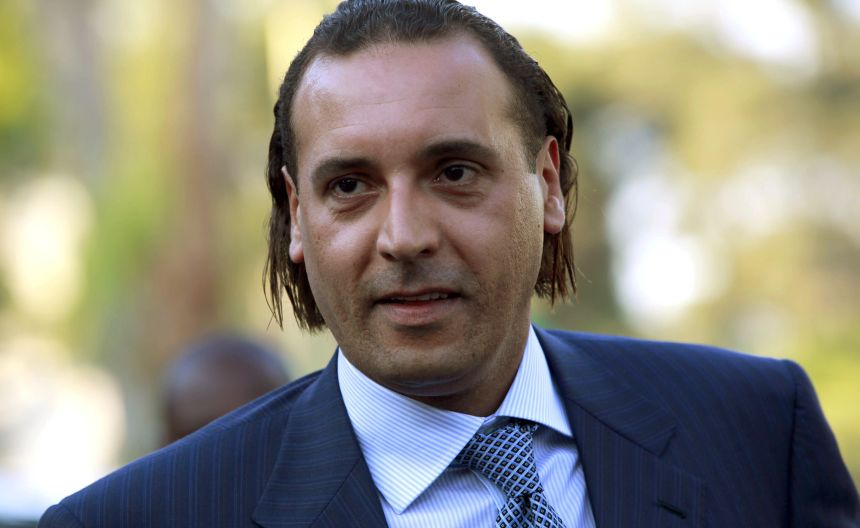
After nearly a decade behind bars without a formal trial, Hannibal Gaddafi, the youngest son of late Libyan leader Muammar Gaddafi, has finally been released by Lebanese authorities. His detention, which began in 2015, was tied to accusations that he withheld information about the disappearance of Shia cleric Imam Musa al-Sadr, who vanished during a 1978 visit to Libya.
However, Hannibal Gaddafi - now 49 years old - was just two years old at the time of the cleric’s disappearance.
For many human rights groups, his prolonged detention became a symbol of politicized justice, sectarian tensions, and the weakness of Lebanon’s legal institutions. Now, his release - secured after payment of a reduced bail - is stirring fresh debates across the Middle East. - BBC News, AFP , Al Jazeera
The Long Road to Freedom: A Decade of Uncertainty
Hannibal Gaddafi’s ordeal began dramatically in 2015 when he was abducted in Lebanon by an armed group believed to be linked to factions demanding answers about Imam Musa al-Sadr’s fate. He was soon recovered by Lebanese authorities, only to be detained again, this time on charges of concealing information related to the decades-old disappearance.
For ten years, Gaddafi remained imprisoned without trial, a situation condemned by international human rights organizations.
His lawyer, Laurent Bayon, called the release “the end of a nightmare,” noting that a $900,000 bail had finally secured his freedom after an earlier, much higher bail demand of $11 million was overturned on appeal.
Bayon’s sharp criticism of Lebanon’s judiciary was clear: “If Gaddafi was able to be arbitrarily detained in Lebanon for 10 years, it’s because the justice system was not independent.”
The statement reflects growing concerns about Lebanon’s judiciary, which has long been accused of political interference, corruption, and vulnerability to sectarian pressure.
Where Will Gaddafi Go Next? A “Confidential” Destination
Gaddafi’s lawyer confirmed that his client will immediately leave Lebanon for a confidential location, raising speculation about which nation would be willing to host him.
Before his detention, Hannibal lived in Oman, under house arrest with his wife Aline Skaf, after escaping Libya during the 2011 uprising that led to the fall and killing of his father. Whether Oman or another state has agreed to receive him remains unknown.
A Case Bigger Than One Man: The Shadow of Musa al-Sadr
At the heart of the controversy is Shia cleric Imam Musa al-Sadr, who vanished in 1978 after arriving in Libya for talks. His disappearance remains one of the most sensitive and emotionally charged political mysteries in Lebanon.
For decades, many in Lebanon’s Shia community - including powerful groups like Amal - have insisted that Muammar Gaddafi’s government bears responsibility for the cleric’s disappearance, though Libya under Gaddafi consistently denied involvement.
What is indisputable is that Hannibal Gaddafi was a toddler at the time, with no involvement in Libyan state affairs until adulthood. Yet he has spent ten years paying a political price for a crime that predates his conscious memory.
A Window Into Lebanon’s Legal and Political Crisis
Viewed from a wider angle, Hannibal’s detention and release highlight several troubling realities about Lebanon:
A Politicized Judiciary
Lebanon’s justice system has faced intense criticism for yielding to political, sectarian, and armed-group pressures rather than following due process. The Gaddafi case, like the stalled investigation into the Beirut Port explosion, shows how fragile legal institutions are.
Sectarian Sensitivities
The disappearance of Musa al-Sadr remains central to Lebanese Shia identity. Any perceived lack of justice can inflame political tensions - making Hannibal’s detention a symbolic bargaining chip rather than a strictly legal matter.
The Influence of External Actors
Lebanon’s internal factions often align with powerful external benefactors - Iran, Saudi Arabia, Western states - creating an environment where legal decisions may reflect regional politics more than justice. Gaddafi’s release, therefore, could signal shifting alliances or behind-the-scenes diplomatic pressure.
Libya Reacts Quietly - For Now
In Libya, the reaction is more complicated and politically sensitive. Today’s Libya is deeply divided between competing governments in Tripoli and Benghazi, and the Gaddafi name remains polarizing.
Some Libyans view Hannibal’s release as overdue justice; others see it as irrelevant to the country’s current crises. A small but vocal group still loyal to the Gaddafi-era political order may interpret the release as symbolic vindication.
Meanwhile, attention has also turned to Saif al-Islam Gaddafi, Hannibal’s older brother, who still maintains political ambitions and attempted to run for president in 2021. The family remains a powerful symbol in Libya’s fractured political landscape.
A Reminder of the Gaddafi Legacy and the Region’s Turbulence
Before Libya’s collapse in 2011, Hannibal Gaddafi was known for a lavish lifestyle, high-profile scandals, and diplomatic immunity as part of the ruling clan.
His fall - from opulence to abduction, imprisonment, and now fragile freedom - mirrors the trajectory of many members of the former Libyan elite whose lives were upended by regional upheaval and shifting political tides.
His release now raises questions about whether Lebanon will pursue the Sadr case more aggressively, or quietly drop it, what role foreign governments played in negotiating his bail, and how a symbolic figure like Hannibal might be used politically in the future.
Conclusion: More Than an Individual Case - A Regional Fault Line Exposed
From one perspective, Hannibal Gaddafi’s release is simply the end of a decade-long legal saga. But from another, it is a window into the failures of Lebanon’s judiciary, the unresolved wounds of Libyan-Lebanese relations, and the manipulation of legal processes for political ends.
His freedom may close one chapter, but it reopens decades-old questions on what happened to Musa al-Sadr? Will Lebanon reform its judiciary? And what future, if any, do the surviving Gaddafi family members have in Middle Eastern politics?
One thing is clear: this case was never just about Hannibal Gaddafi - it was about the systems and power struggles that shaped his fate.