Gloria Steinem Dies at 92: Feminist Movement Icon Leaves Lasting Legacy of Women’s Rights Activism
Gloria Steinem, a pioneering feminist, journalist, and co-founder of Ms Magazine, has died at 92 in New York City, leaving a six-decade legacy of women’s rights activism.
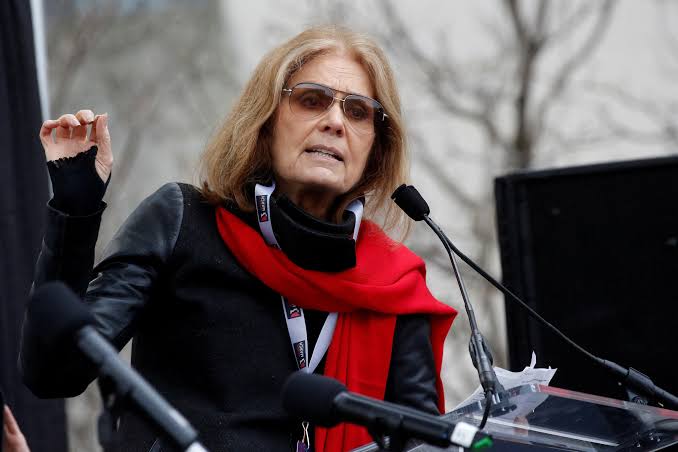
Gloria Steinem, the pioneering American journalist, author, and feminist activist who became one of the most recognisable faces of the modern women’s rights movement, has died at age 92.
Steinem died peacefully at her home in New York City on Wednesday, September 2, 2026, according to a statement shared through her social media accounts and confirmed by multiple reports. She had been in declining health, although no specific cause of death was immediately disclosed. (AP News)
Her death marks the passing of one of the most influential figures of second-wave feminism and closes a remarkable six-decade chapter in the struggle for gender equality in the United States and beyond.
A Defining Voice of Modern Feminism
Born Gloria Marie Steinem on March 25, 1934, in Toledo, Ohio, Steinem developed an interest in writing and social issues at an early age. Her unconventional childhood, including years spent travelling with her father and caring for her mother after her parents separated, helped shape her independent outlook.
After graduating from Smith College, she spent two years in India on a fellowship. The experience broadened her understanding of social organisation, inequality and non-hierarchical thinking and later influenced her political and social activism.
Steinem began her professional life as a journalist at a time when female reporters were frequently confined to stories about fashion, food, relationships and domestic life. She later became increasingly interested in politics and social inequality.
One of her most famous early assignments came in 1963, when she went undercover as a Playboy Bunny to investigate working conditions at Playboy Clubs. The resulting article brought her national attention, although she later said she regretted the assignment because it was subsequently used to ridicule her.
Her transformation from journalist to activist accelerated in 1969 after she attended a meeting where women publicly shared their experiences with illegal abortions.
That experience profoundly affected her. Steinem subsequently became a prominent advocate for reproductive rights, gender equality and women's control over their own bodies.
The Birth of Ms Magazine
Perhaps one of Steinem's most enduring contributions was her role in establishing Ms. Magazine.
Launched initially as a preview issue in 1971 before becoming a full publication in 1972, Ms. provided a national platform for feminist ideas at a time when mainstream media frequently dismissed or trivialised the women's liberation movement.
Steinem became one of the publication's best-known figures and remained associated with it for decades. The magazine helped bring issues including abortion rights, workplace discrimination, sexual harassment, domestic inequality and women's political participation into mainstream public debate.
For Steinem, Ms. was more than a magazine. It was part of a broader movement designed to give women space to tell their stories and challenge established assumptions about their roles in society.
In a reflection published by Ms. following her death, the publication noted that Steinem helped bring feminist ideas and voices into the mainstream through journalism, organising and activism. (Ms. Magazine)
Building Women's Political Power
Steinem also understood that social change required political organisation.
In 1971, she joined Betty Friedan, Shirley Chisholm, Bella Abzug and others in founding the National Women's Political Caucus, an organisation created to increase women's participation and influence in American politics.
She became an important campaigner for the Equal Rights Amendment and worked alongside activists from different racial, political and social backgrounds.
Her activism increasingly extended beyond women's rights alone. She spoke about racism, civil rights, poverty, violence against women, reproductive freedom and other forms of inequality.
Although she became one of the most recognisable faces of feminism, Steinem repeatedly emphasised that the movement was larger than any individual leader.
A Lifetime of Activism
Steinem remained politically active well into her 80s and continued travelling, speaking and writing about social justice.
She was a prominent speaker at the historic Women's March in Washington in January 2017, following the election of Donald Trump. Her appearance reflected the continuing relevance of a woman who had helped define feminist activism nearly half a century earlier.
Her influence was also recognised internationally. She advocated on issues ranging from women's reproductive rights to female genital mutilation and international peace.
In 2013, President Barack Obama awarded Steinem the Presidential Medal of Freedom, the United States' highest civilian honour, recognising her contribution to the women's liberation movement.
Her life was later portrayed in the 2020 film The Glorias, introducing aspects of her career and activism to another generation.
An Optimist Until the End
Steinem's final years were marked not by retirement but by continued reflection and engagement.
She recently completed a memoir, An Unexpected Life, scheduled for publication on September 22, 2026. In the book, she reflected on her childhood, political awakening, feminism, relationships and the many people who influenced her journey.
Remarkably, Steinem wrote that she intended to live to 100. She also described herself as happier in later life than she had imagined she could be and expressed confidence in the possibility of continued social progress.
Her optimism remained one of the defining characteristics of her public philosophy.
Even as women's rights faced political setbacks, Steinem argued that progress achieved over previous decades demonstrated that social transformation was possible.
A Legacy That Extends Beyond One Generation
Tributes have poured in from politicians, activists, entertainers and women's rights advocates following news of her death. Figures including Hillary Clinton, Kamala Harris, Oprah Winfrey and others have recognised Steinem's influence on generations of women.
Yet perhaps Steinem's greatest legacy is not simply the causes she championed, but the generations of activists she helped inspire.
She encouraged women to speak publicly, organise collectively and challenge institutions that excluded them. She helped transform feminism from a movement often dismissed by mainstream society into a powerful force in American politics, journalism and culture.
Her death at 92 therefore represents more than the loss of a famous activist. It is the passing of a woman whose journalism, organising and advocacy helped reshape the conversation about women's rights for more than half a century.
Gloria Steinem leaves behind books, institutions, journalism and movements that will continue to influence debates about equality. But perhaps her most enduring contribution is the idea that social change belongs not to one celebrated leader, but to ordinary people willing to speak, organise and demand something better.
As the feminist movement continues to evolve, Steinem's life offers both a historical record of how far the struggle has come, and a reminder of how much work remains.