Global Energy Markets Reshapes as Ukraine Strikes on Russian Oil Facilities
Ukrainian strikes on Russian oil facilities are disrupting production and exports, shaking global energy markets. This analysis explores the damage, strategic impact, and implications for oil prices worldwide. Includes source links.
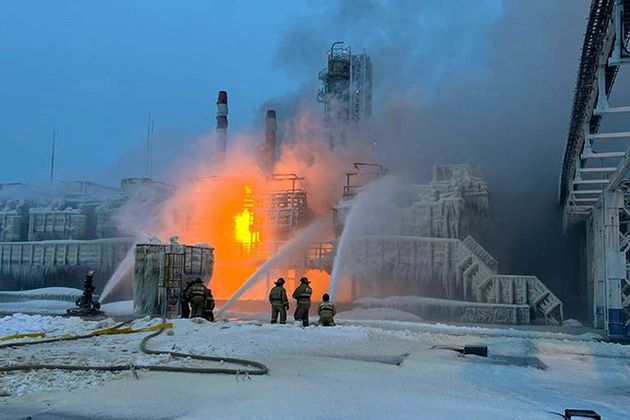
The ongoing war between Russia and Ukraine has entered a new strategic phase, with Kyiv increasingly targeting Russia’s oil infrastructure. These strikes - aimed at refineries, storage depots, and export terminals - are not only altering the battlefield but also sending ripples through global energy markets.
What was once a largely land-based conflict has evolved into a war on energy capacity, with significant implications for oil supply, pricing, and geopolitical stability.
A Shift in Ukraine’s War Strategy
Over the past months, Ukraine has intensified long-range drone and missile attacks on Russian oil facilities. These operations have targeted key refineries deep inside Russian territory, including sites in regions such as Ryazan, Krasnodar, and even areas close to Moscow.
The goal is strategic rather than symbolic. By striking energy infrastructure, Ukraine aims to reduce Russia’s refining capacity, disrupt fuel supplies for military operations, and cut off a major source of revenue funding the war.
Reports indicate that several refineries have been forced to suspend operations temporarily following damage from these strikes.
This marks a significant evolution in Ukraine’s approach - targeting not just troops and equipment, but the economic backbone of Russia’s war effort.
The Scale of Damage to Russian Oil Infrastructure
Russia remains one of the world’s largest oil producers and exporters. Its network of refineries processes millions of barrels of crude oil daily, supplying both domestic markets and international buyers.
The Ukrainian strikes have affected multiple facilities, with some estimates suggesting that a notable percentage of Russia’s refining capacity has been temporarily taken offline.
The damage varies by location. In some cases, storage tanks have been set ablaze, while in others, critical processing units have been disabled. Even when facilities are not destroyed, the need for repairs and safety checks has slowed operations significantly.
This disruption has immediate consequences. Reduced refining capacity means less fuel production, which affects both Russia’s domestic supply and its export capabilities.
Impact on Russian Oil Exports and Revenue
Oil exports are central to Russia’s economy, providing a major source of government revenue. Any disruption to production or refining directly affects the country’s financial position.
With refineries offline or operating below capacity, Russia has faced logistical challenges in processing and exporting crude oil. Some shipments have been delayed, while others have requested rerouting to alternative facilities.
The financial implications are significant. Lower export volumes translate into reduced revenue, potentially limiting Russia’s ability to sustain prolonged military operations.
At the same time, Russia has attempted to mitigate these effects by increasing crude exports and relying on alternative markets, particularly in Asia. However, these adjustments are not without cost, often involving discounted prices and longer shipping routes.
Global Oil Markets React
The impact of these strikes extends far beyond Russia. Global oil markets are highly interconnected, and any disruption to a major producer can influence prices worldwide.
Following reports of Ukrainian attacks, oil prices have shown increased volatility, with traders reacting to the potential for reduced supply. Even temporary disruptions can have outsized effects, as markets anticipate future shortages.
Compounding the situation is the broader geopolitical context, including tensions in the Middle East involving Iran. The combination of disruptions in both regions has created a perfect storm for energy markets, amplifying uncertainty and driving price fluctuations.
For consumers, this translates into higher fuel costs, increased inflation, and economic pressure.
Refining Bottlenecks and Supply Chain Disruptions
One of the less obvious but critical impacts of the strikes is the creation of refining bottlenecks. Even if crude oil production remains relatively stable, the inability to process it into usable fuels such as gasoline and diesel can create shortages.
This has implications for: domestic fuel availability in Russia, export volumes of refined products, and global supply chains reliant on Russian fuel.
In some cases, Russia has had to import fuel to meet domestic demand, an unusual situation for a major energy exporter. This underscores the severity of the disruptions caused by the strikes.
Strategic Implications: Energy as a Weapon
Ukraine’s targeting of oil infrastructure highlights a broader trend in modern warfare: the use of energy as a strategic lever.
By attacking refineries and storage facilities, Ukraine is effectively weakening Russia’s economic base, increasing the cost of war for Moscow, and forcing Russia to divert resources to protect critical infrastructure.
This approach mirrors strategies seen in other conflicts, where economic targets become as important as military ones.
For Russia, the challenge is twofold. It must not only repair damaged facilities but also enhance defenses against future attacks. This requires significant investment and may divert resources away from other priorities.
Broader Geopolitical Consequences
The strikes have also influenced geopolitical dynamics. Countries dependent on Russian oil are closely monitoring the situation, as disruptions could affect supply and pricing.
At the same time, alternative producers such as the United States and Gulf countries may benefit from higher prices and increased demand. This could lead to shifts in global energy alliances and trade patterns.
However, the overall effect is one of increased uncertainty. Markets are reacting not just to current disruptions but to the possibility of further escalation.
What It Means for the Global Energy Future
The ongoing attacks on Russian oil facilities underscore the fragility of global energy systems. They highlight how quickly supply can be disrupted and how interconnected the world’s energy markets have become.
In the short term, the likely outcomes include continued price volatility, increased energy costs for consumers, and strain on global supply chains.
In the longer term, the situation may accelerate efforts to diversify energy sources and reduce dependence on single suppliers. Governments and companies may invest more heavily in renewable energy, alternative fuels, and strategic reserves.
Conclusion: A Conflict Reshaping Energy Dynamics
Ukraine’s strikes on Russian oil facilities represent a significant escalation in the war, with consequences that extend far beyond the battlefield. By targeting the economic foundation of Russia’s war effort, Ukraine has introduced a new dimension to the conflict, one that directly impacts global energy markets.
The implications are profound. From rising oil prices to shifting geopolitical alliances, the effects of these strikes are being felt worldwide.
As the conflict continues, the role of energy infrastructure will remain central. Whether as a target, a tool, or a source of leverage, energy is now at the heart of modern warfare, and its disruption carries consequences that reach every corner of the globe.